

Introduction
In the modern powder processing industry, selecting the right milling equipment is critical for production efficiency and operational costs. Air Classifier Mills and Jet Mills are two widely used ultrafine grinding technologies, each with distinct characteristics in principle, performance, and economics.
Working Principle Overview
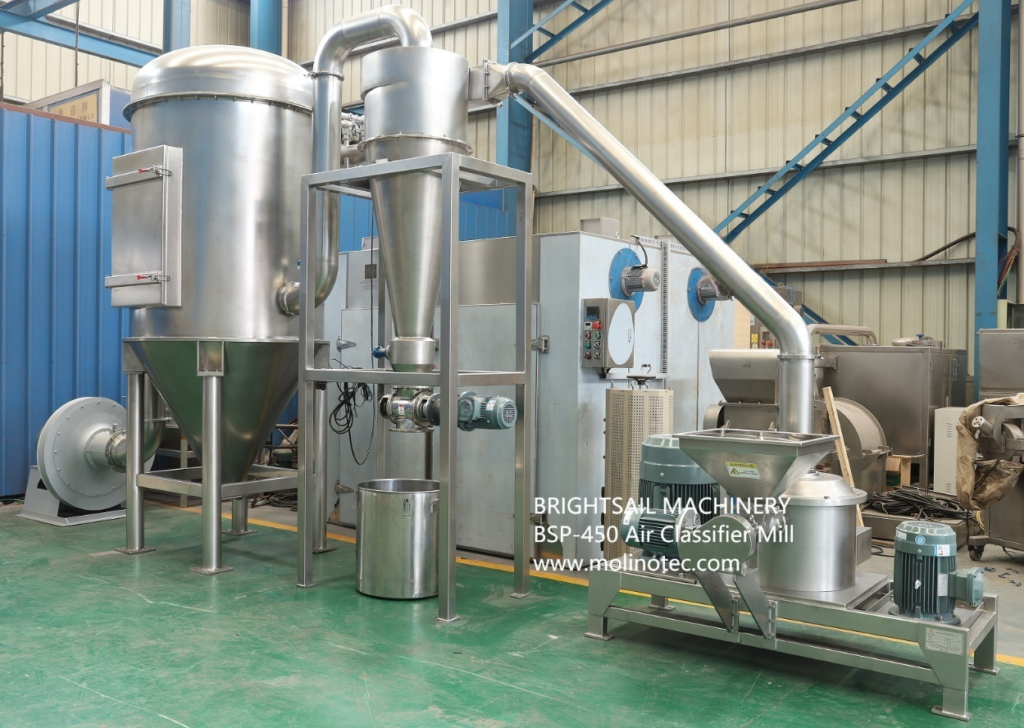
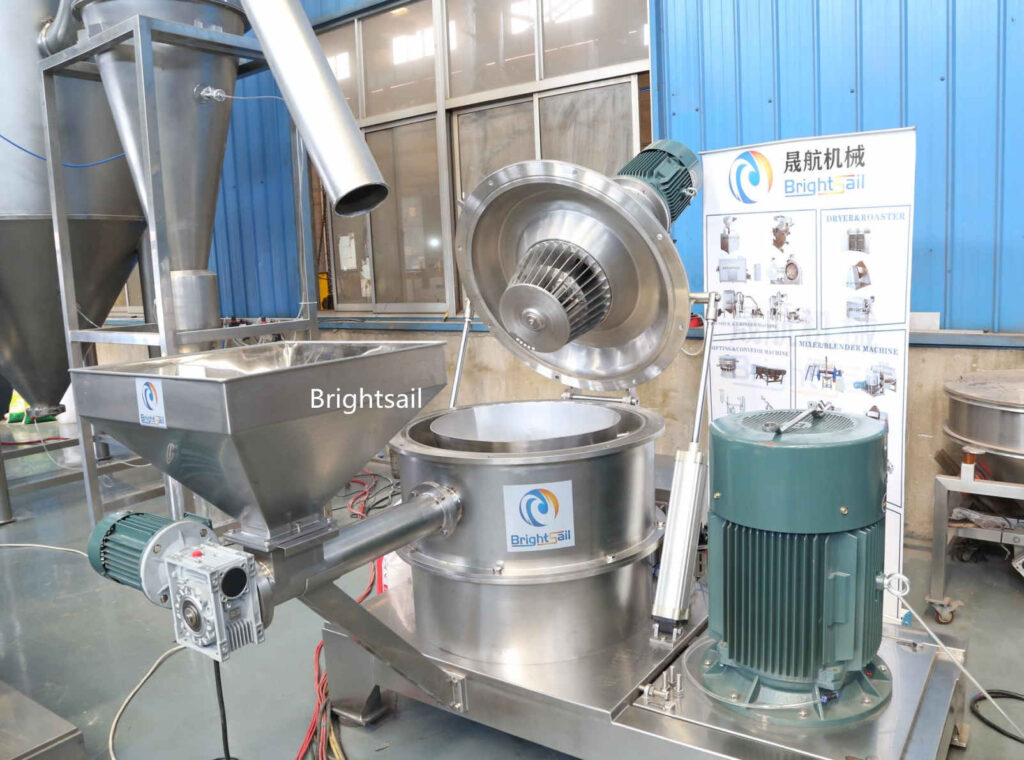
Air Classifier Mill combines impact grinding and dynamic classification. Material is fractured by a high-speed rotating rotor within the grinding chamber, while an integrated classifier wheel simultaneously separates fine product, with coarse particles recirculated for further size reduction.
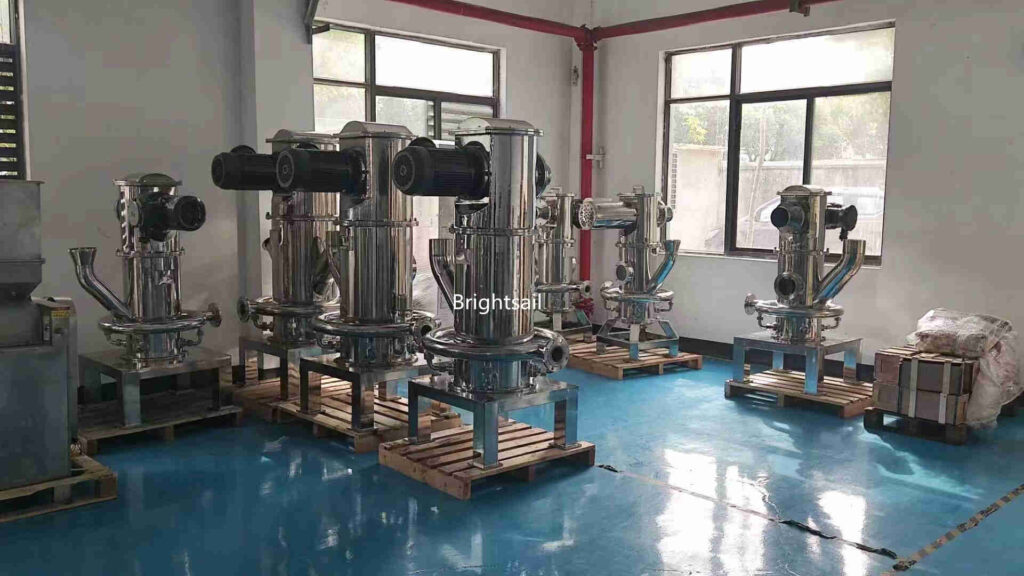
Jet Mill utilizes high-speed gas streams (typically compressed air or superheated steam) to achieve particle size reduction through inter-particle collision and attrition, without moving parts. Product fineness is controlled by adjusting gas pressure and classifier settings.
Efficiency & Cost Comparison
1. Energy Efficiency
- Air Classifier Mill: Relatively lower power consumption, suitable for medium-to-high hardness materials. Energy use is primarily for the main motor and classifier motor.
- Jet Mill: Relies on significant compressed air or steam, leading to higher specific energy consumption per unit product, especially for hard materials.
2. Fineness & Capacity
- Air Classifier Mill: Typical product fineness D97 between 10-150μm. Wide capacity range, suitable for large-volume production requiring medium fineness.
- Jet Mill: Capable of finer grinding (D97 down to 1-10μm), but with lower specific capacity. Ideal for high-value-added ultrafine powders.
3. Operational Cost Analysis
| Cost Item | Air Classifier Mill | Jet Mill |
|---|---|---|
| Power Consumption | Moderate | High (due to compressed air generation) |
| Wear Parts Replacement | Moderate (rotor, liners) | Low (no moving parts in grinding zone) |
| Maintenance Requirements | Regular bearing & drive maintenance | Simpler, mainly nozzles & piping |
| System Complexity | Moderate | Higher (requires compressed air system) |
| Product Contamination Risk | Low | Very Low |
Application Recommendations
- Choose Air Classifier Mill when: Processing medium-hardness materials, requiring controlled particle size distribution, pursuing high capacity with lower specific energy consumption.
- Choose Jet Mill when: Needing extremely fine particles (sub-micron), processing heat-sensitive materials, requiring high purity, or grinding very hard materials (Mohs hardness >7).
Conclusion
Air classifying mills typically offer greater operational cost advantages, particularly for most conventional grinding requirements. They exhibit lower energy consumption, higher throughput capacity, and shorter return on investment cycles.
Jet mills remain indispensable in specialised applications, capable of achieving ultra-fine grinding and extremely high purity standards, though at the cost of higher energy expenditure.