
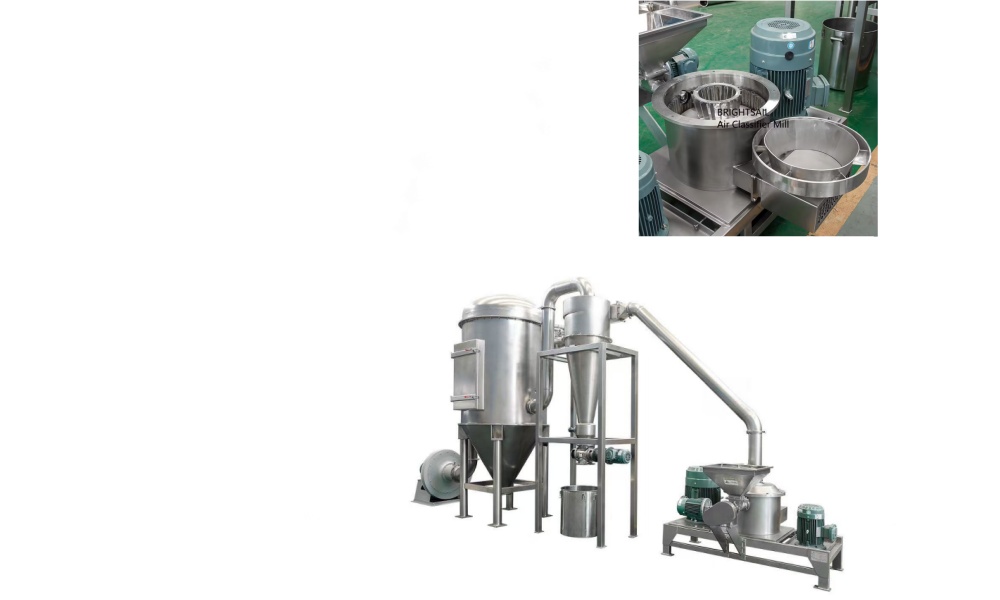
If we compare the future factory to the human body, the material handling system is its circulatory system, and the mill is the powerful heart. On the journey towards Industry 4.0, we observe two distinct evolutionary paths: one represented by the Air Classifier Mill (ACM) —the path of “Functional Integration” ; the other represented by Precision Mechanical Mills (such as CNC machining centers and injection molding machines)—the path of “Ecological Openness” .
Both embrace “Smart” and “Modular” concepts, but their underlying philosophies are fundamentally different.
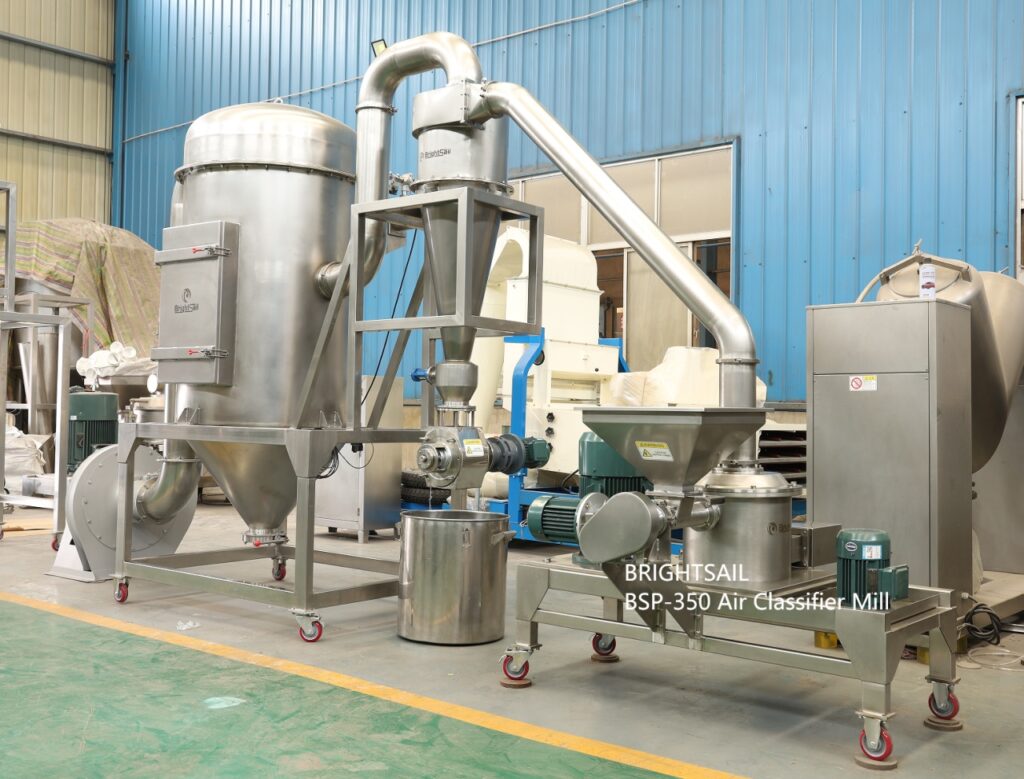
Path 1: Air Classifier Mill — The Deeply Integrated “Soloist”
1. Introverted Modularity
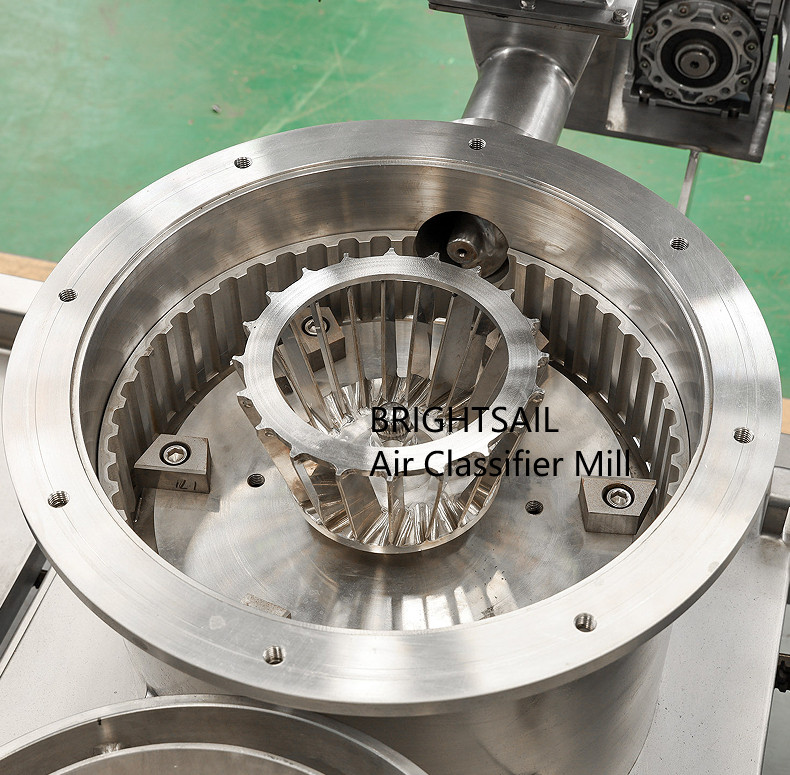
In the NETZSCH Condux® series, modularity is reflected in the quick-change rotor systems. A single base unit can accommodate up to 4 rotor types by swapping core components . This modularity is introverted—all changes occur within a single, sealed chamber.
2. Closed-Loop Intelligence
The intelligence of ACMs primarily manifests in PLC automation and real-time particle size feedback . Sensors monitor particle size and automatically adjust the classifier wheel speed or airflow. This is a one-way conquest of physical processes by algorithms, aiming to push the precision of this standalone device to its absolute limit (D97 < 5µm).
Path 2: Precision Mechanical Mill — The Openly Connected “Orchestra”
1. Extroverted Modularity
Here, modularity is not about changing a tool bit; it’s about the physical integration of machine tools with logistics systems. Fastems’ Flexible Pallet System (FPS) allows machine tools, pallet storage, and washing stations to be arranged like building blocks on all four sides of the system . Modularity here represents freedom in spatial layout.
2. Collaborative Intelligence
Chen Hsong’s iChen™ AI Molder isn’t just about controlling a single machine. Through sMolding and sTroubleshooting, it transforms the know-how of veteran engineers into data, enabling self-generation of parameters for multiple machines in the cloud . Fastems’ MMS software, via Work Cell Operations (WCO), even integrates non-automated manual workstations into the digital scheduling network .
Conclusion:
This is not a competition of one replacing the other. The future smart factory requires both types of hearts.
- Air Classifier Mills push material properties to their physical limits.
- Precision Mechanical Mills push manufacturing efficiency to its managerial limits.
Suppliers who can achieve <5μm cut points on a single device AND seamlessly integrate device data into MES/ERP systems will dominate the industry for the next two decades.