

Carob Powder: Benefits & Rising Popularity
Carob powder is a natural, nutrient dense ingredient made from dried and milled carob pods. For thousands of years, it has been used in Mediterranean and Middle Eastern cultures as both food and traditional medicine. In modern times, it has gained global attention as a healthy alternative to cocoa and other sweeteners.
Key Benefits of Carob Powder
- Caffeine free & stimulant free – Gentle on the nervous system, suitable for all ages including those sensitive to caffeine.
- Rich in dietary fiber – Supports healthy digestion, gut balance, and regular bowel movements.
- Naturally sweet & low GI – Helps stabilize blood sugar levels and reduces the need for added sugar.
- Heart friendly – Helps maintain healthy cholesterol and blood pressure due to antioxidants and soluble fiber.
- High in minerals – Good source of calcium, potassium, magnesium, and iron for bones and energy metabolism.
- Gluten free, vegan & hypoallergenic – Ideal for special diets and clean label food products.
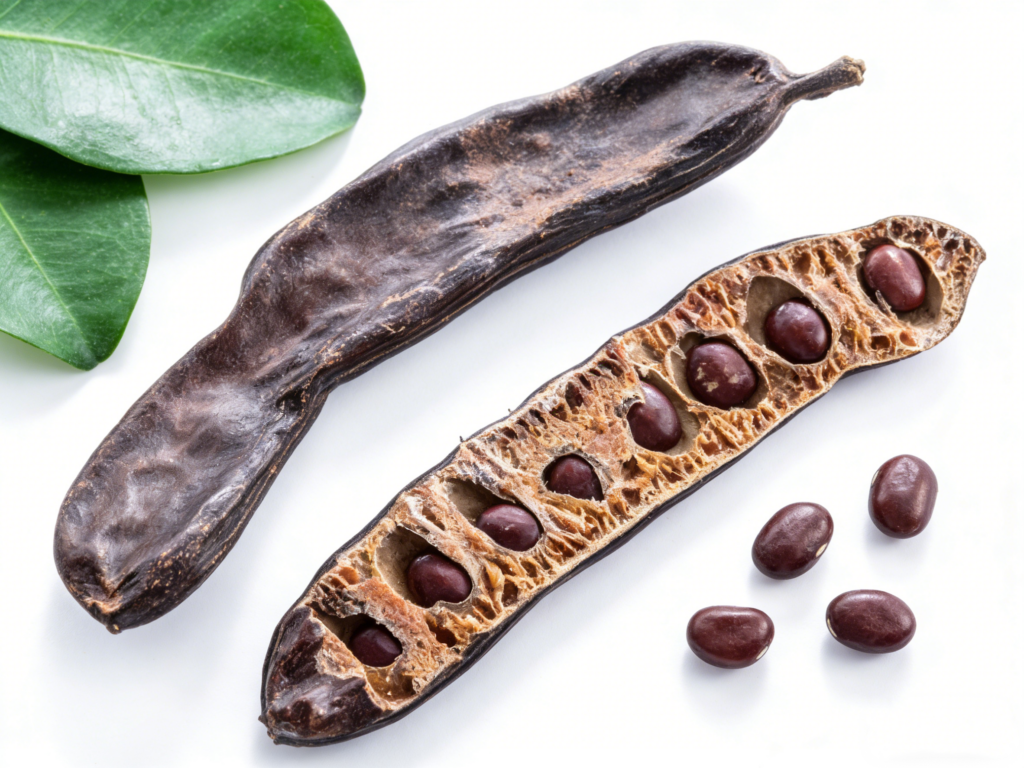
When Did Carob Powder Become Popular?
Carob has a long history, but its modern market rise began in the 1990s as health awareness grew. The real boom started around 2015–2018, driven by demand for plant based, clean label, and functional food ingredients.
From 2020 to today, popularity has surged sharply worldwide. Health-conscious consumers, bakers, supplement brands, and food manufacturers widely use carob powder as a cocoa substitute, natural colorant, flavor ingredient, and functional additive. Strong growth continues in Europe, North America, and Asia, making it one of the most promising plant based ingredients in the global food industry.
Carob Powder Process Introduction
The journey from carob pods to fine carob powder follows a careful, food-grade processing workflow. After harvesting, carob pods are cleaned and sorted to remove impurities.
They are then dried to reach optimal moisture content for stable milling.
Next, the dried carob pods go through coarse crushing to break them into smaller particles. A key step in this stage is seed separation: the hard seeds are removed from the soft pulp, as both parts have high nutritional value and separate industrial uses.
Once the seeds are separated, the carob pulp is further processed and milled into fine, uniform carob powder by Air Classifier Mill. Meanwhile, the separated carob seeds are also utilized in food, health, and industrial applications due to their rich nutrients and functional properties.
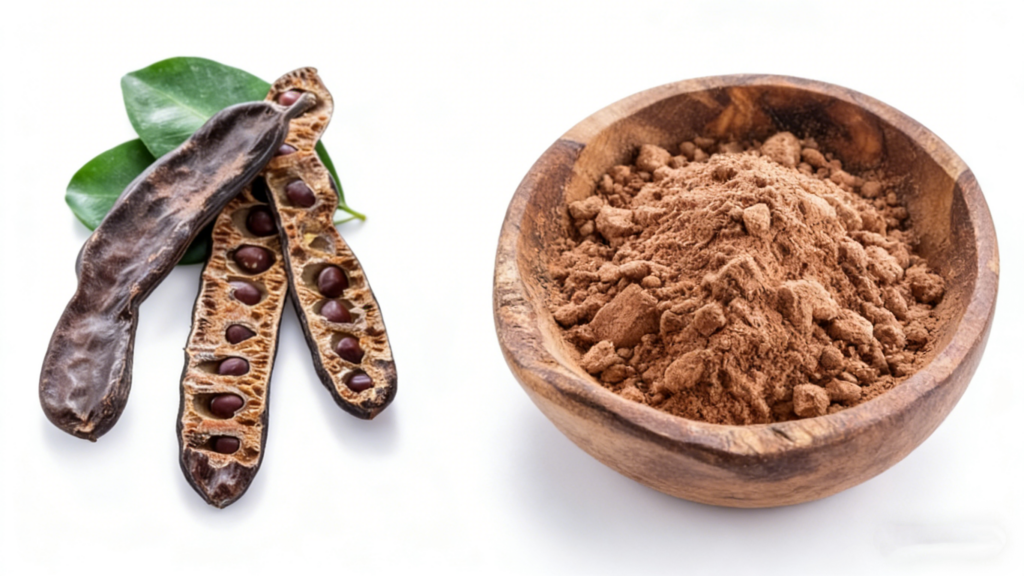
Commercial Carob Powder: Typical Particle Sizes
Most commercial food-grade carob powder is produced to meet standard fineness requirements for baking, beverages, and health products. On the market, common carob powder ranges from 100 to 180 mesh (≈150–74 μm) for general food use. For premium applications such as instant drinks, chocolate substitutes, and functional foods, manufacturers prefer a finer particle size, usually 200 to 320 mesh (≈74–48 μm), which ensures smooth texture, good dispersion, and no gritty feeling in finished products.
Just like high-quality cocoa powder, ultra-fine carob powder requires reliable industrial grinding equipment like ACM to achieve consistent particle size, uniform texture, and stable production efficiency.
Key Precautions for Carob Milling
To produce high-quality, food-safe carob powder and protect your grinding equipment – Air Classifier Mill, several important factors must be observed during processing.
First, raw materials must be fully dried. Carob pods should have low moisture content before milling. Excess water can cause clogging, poor powder flow, uneven particle size, and even reduce the shelf life of the final product.
Ideal Moisture Content for Carob Milling
Naturally sun dried carob pods typically have a moisture content of 8%–10%. For stable industrial grinding and high-quality powder production, it is highly recommended to further dry the carob pods until the moisture content is below 7% or 5% before milling.
Lower moisture ensures better flowability, prevents clogging during grinding, avoids uneven particle size, reduces bacterial growth, and extends the shelf life of the final carob powder.
Therefore, more and more modern food processing factories are introducing roasting and drying equipment to further reduce and stabilize the moisture content of carob pods before milling.
Second, the raw material must be clean and free of impurities. Hard contaminants such as stones, sand, and metal pieces must be completely removed in advance. These foreign objects can damage the grinding chamber, cutters, and screens, affect production stability, and pose serious food safety risks.
By ensuring dryness and purity of carob pods, manufacturers can achieve consistent fineness, extend equipment service life, and produce safe, high-quality carob powder that meets strict food industry standards.
What Machine Is Most Suitable for Carob Milling?
For industrial carob powder production, air classifier mills are widely recognized as the most ideal choice.
Air classifier mills combine coarse crushing, fine grinding, and automatic particle size classification in one integrated process. They can efficiently process dried carob pods into uniform, fine powder with stable fineness and high yield.
For Cocoa powder, more and more factories are using ACM, too.
Thanks to their precise particle size control, low-temperature grinding performance, and compact dust collection system, air classifier mills effectively protect the nutritional content of carob, ensure food-grade hygiene, and meet strict quality standards for food, beverage, and health product manufacturers.
This type of mill is especially suitable for continuous, large-scale carob processing, making it the top choice for modern production facilities.
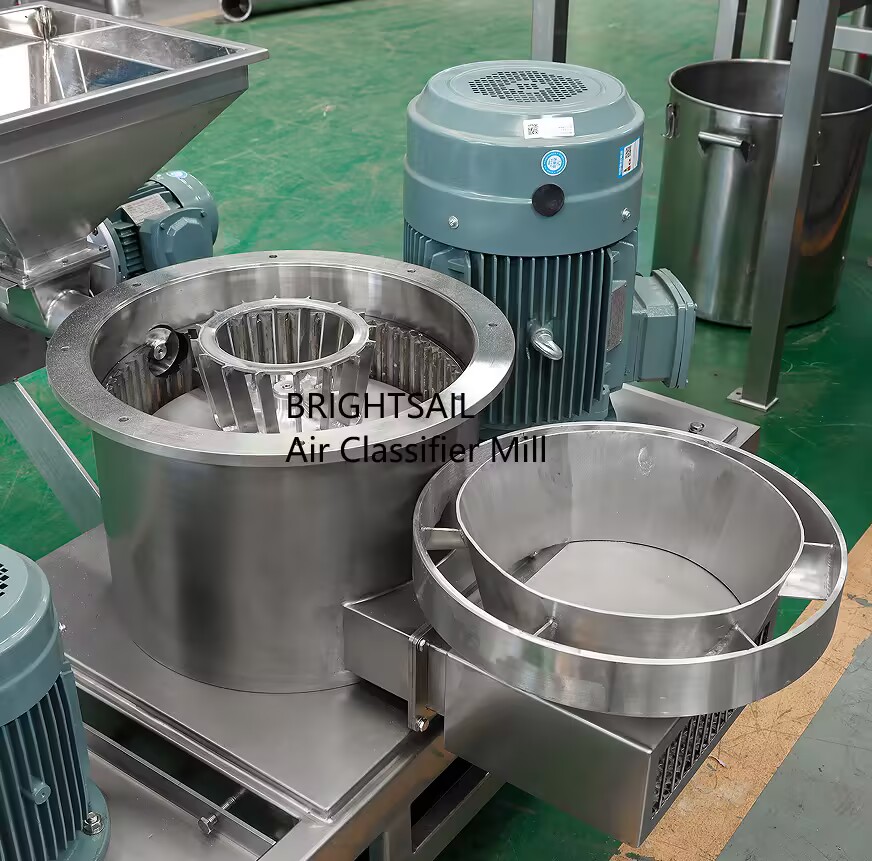
For premium carob powder production, BrightSail’s wide-chamber air classifier mill (ACM) stands out as the ideal grinding solution. This specially optimized design features a larger grinding chamber that improves airflow circulation, reduces friction heat buildup, and maintains consistently lower temperatures during processing.
The cooler grinding environment effectively preserves the natural nutrients, flavor, and color of carob powder, avoiding thermal degradation that can occur with conventional mills. Combined with precise particle size classification and stable performance, this equipment ensures uniform fineness, high output, and exceptional product quality.
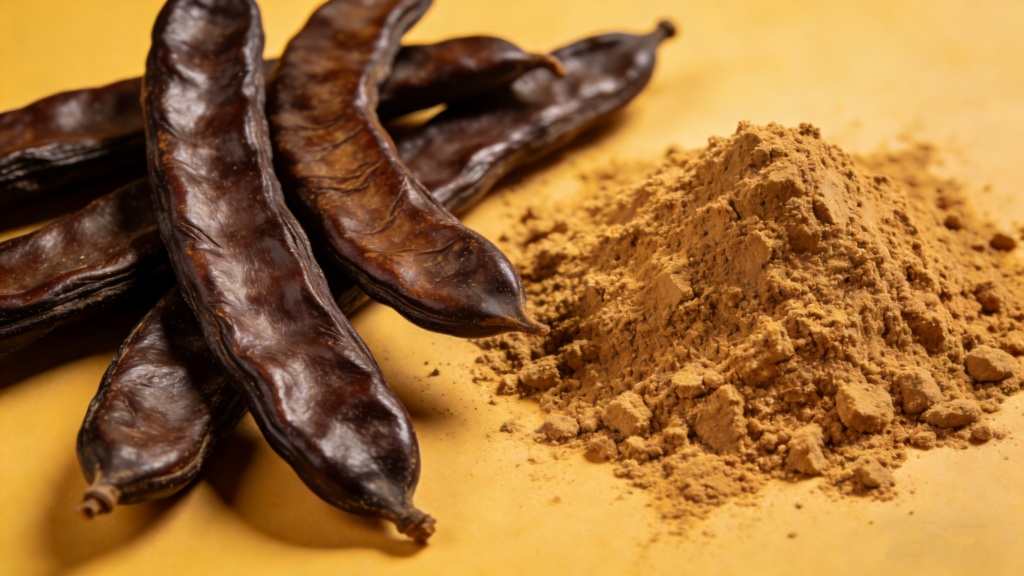
Why Low-Temperature Milling Is Essential for Carob Powder
Carob pods naturally contain sugars, which give carob powder its mild, sweet taste. However, these natural sugars are highly sensitive to heat. During the milling process, high temperatures can easily cause the sugars to melt, clump, or caramelize. This not only affects the flavor, color, and texture of the final powder but also leads to clogging inside the grinding chamber, reducing production efficiency.
Lower milling temperatures help preserve the natural sweetness and nutritional value of carob, prevent caking and melting, and maintain a free-flowing, high-quality powder. This is especially important for food-grade applications where consistent texture, clean flavor, and natural ingredients are top priorities.
In hot environments or during long production runs, maintaining stable low temperatures during milling can be challenging. That’s why our wide-chamber ACM with external cooling air integration delivers superior performance. By connecting cooled air directly into the grinding chamber, the cooling effect becomes far more efficient, consistently controlling temperature rise and protecting carob powder from heat damage. This ensures the final product retains its natural flavor, color, nutrients, and free flowing texture—even under high ambient temperature conditions.
Choosing the right milling equipment is crucial for producing high-quality, nutrient-rich carob powder that meets modern food industry standards. With proper drying, cleaning, and a reliable wide-chamber air classifier mill, manufacturers can achieve consistent fineness, low-temperature processing, and excellent product stability. As demand for healthy, clean-label ingredients continues to grow, optimizing your carob processing line will help you stay competitive in the global market.If you’re looking to improve your carob powder production efficiency and quality, exploring professional grinding solutions designed for food applications can make all the difference, just contact us to learn more.