
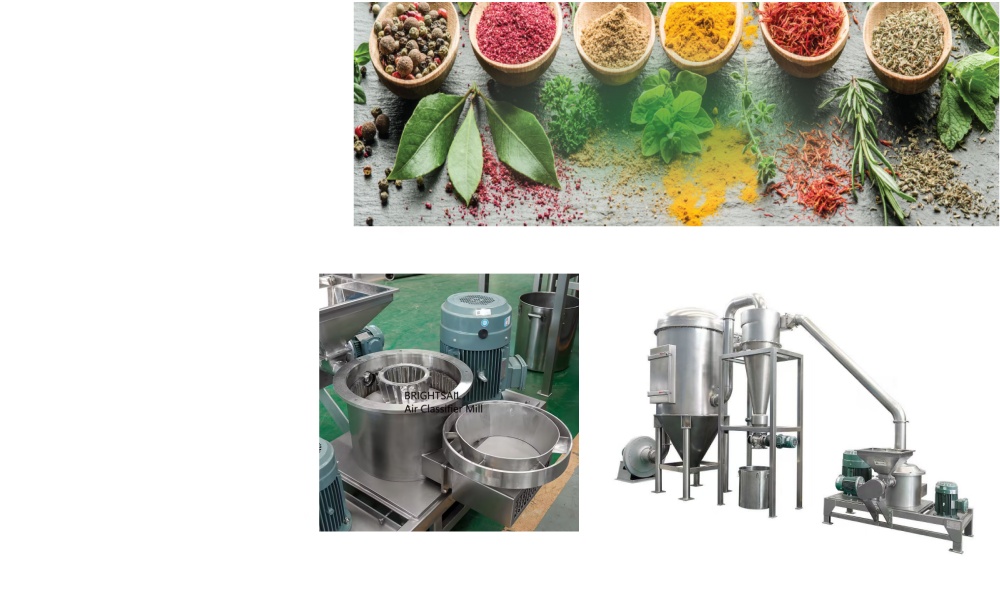
Introduction
In the world of modern phytomedicine and traditional Chinese medicine (TCM), the bioavailability of active compounds is paramount.
Medicinal herbs store their valuable secondary metabolites—such as flavonoids, saponins, and alkaloids—inside robust cells. To release these compounds, we must break through the physical barrier of the cell wall. While traditional grinding methods have been used for decades, they often fall short of achieving true “cell-wall disruption.” Enter the Air Classifier Mill (ACM) : a technology that is revolutionizing the way we process medicinal herbs by combining fine grinding with immediate classification.
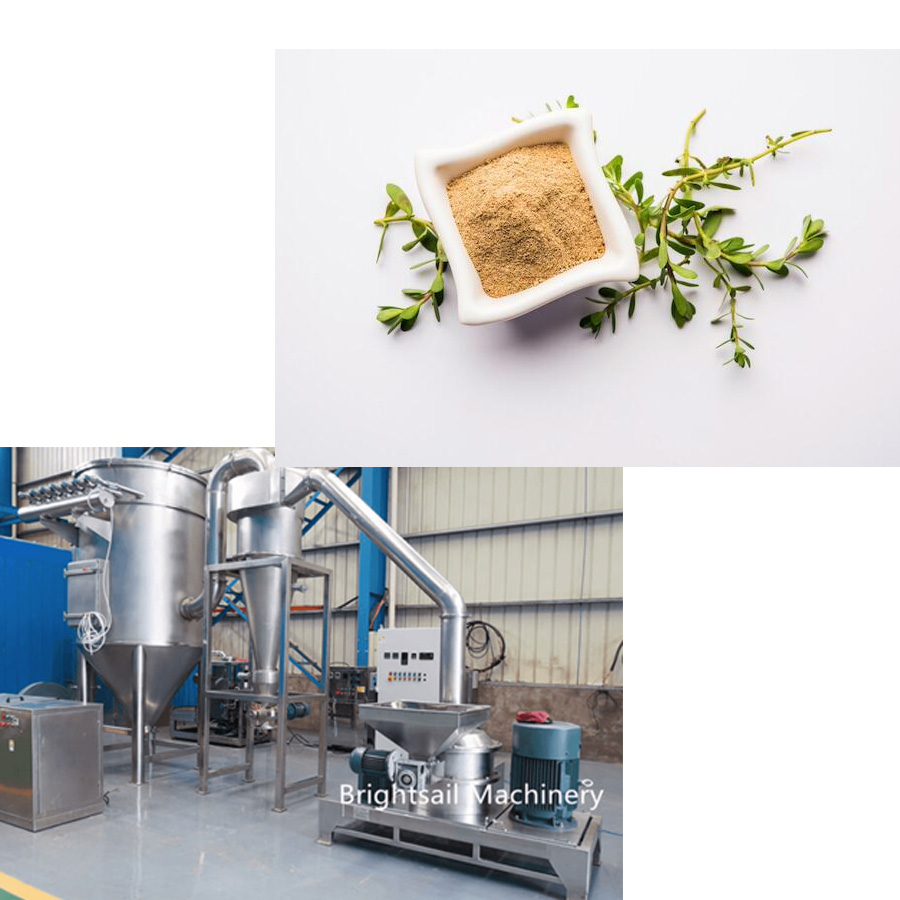
How Air Classifier Mills Achieve Cell Wall Disruption
Unlike traditional hammer mills or pin mills that rely solely on impact, the Air Classifier Mill utilizes a dual-mechanism system designed specifically for producing ultrafine powders (often 10 μm to 45 μm and even down to 3 μm).
1. The Grinding Mechanism
The heart of the ACM consists of a high-speed rotor and a toothed stator (liner). Material is fed into the grinding zone where it is subjected to:
- High-speed impact: Beating by the rotor blades.
- Powerful shear: Friction between the rotor and stator.
- Collision: Inter-particle collisions.
This intense mechanical energy is sufficient to tear apart the fibrous structure of herb cells.
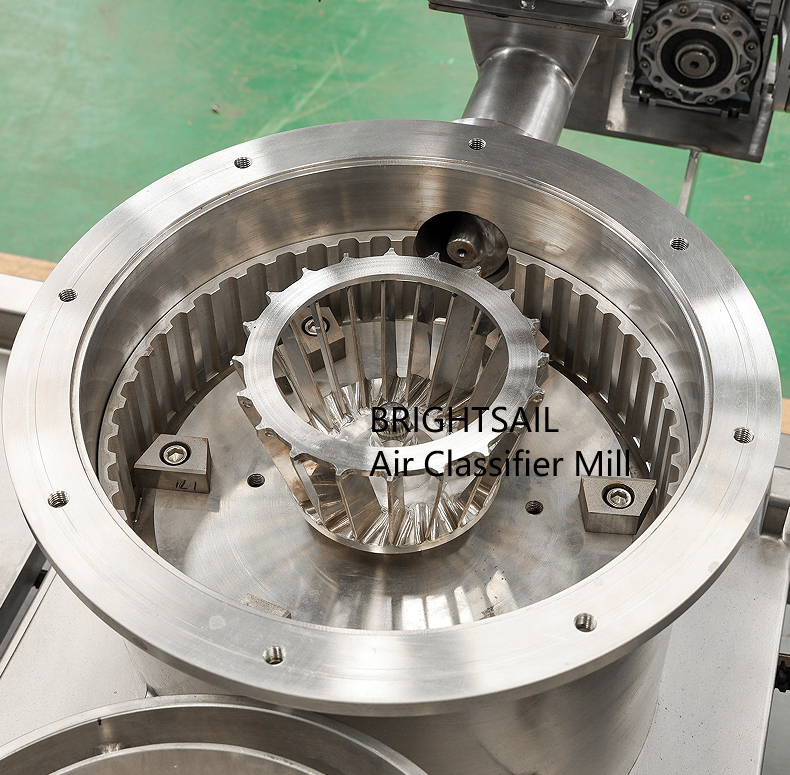
2. The Integrated Classifier
This is the defining feature of the ACM. After grinding, particles are swept up to a dynamic classifier wheel.
- Centrifugal Force: Throws large, insufficiently ground particles outward.
- Drag Force: Pulls fine particles inward toward the outlet.
This “closed-loop” sorting ensures that only particles meeting the exact size standard exit the mill. Oversized particles are immediately returned to the grinding chamber for further disruption. This prevents over-processing and maintains a steep particle size distribution.
3. Temperature Control (Cooling Systems)
Many medicinal compounds are thermolabile (heat-sensitive). Advanced ACM systems, particularly those used for herbs like ginseng, incorporate cooling jackets or even refrigerant-based cooling (e.g., R-22 systems) to maintain low temperatures. This serves a dual purpose:
- It preserves the pharmacological activity of the compounds.
- It makes the plant materials brittle, allowing them to fracture more easily and achieve finer sizes.
Applications in Herbal Medicine
The application of ACM technology spans across a vast range of materials. It is particularly effective for:
- Tonic Herbs: Ginseng (Panax ginseng), Astragalus, Reishi Mushroom.
- High-Value Materials: Pearl, pollen, and seeds where complete cell disruption is required for nutritional absorption.
- Aromatic Herbs: Spices like turmeric, ginger, and cinnamon, where essential oils need to be liberated without heat damage.
Studies have demonstrated that using an air classifier mill to produce 3 μm ginseng powder can economically destroy cell walls, setting the stage for mass production of high-grade herbal extracts.
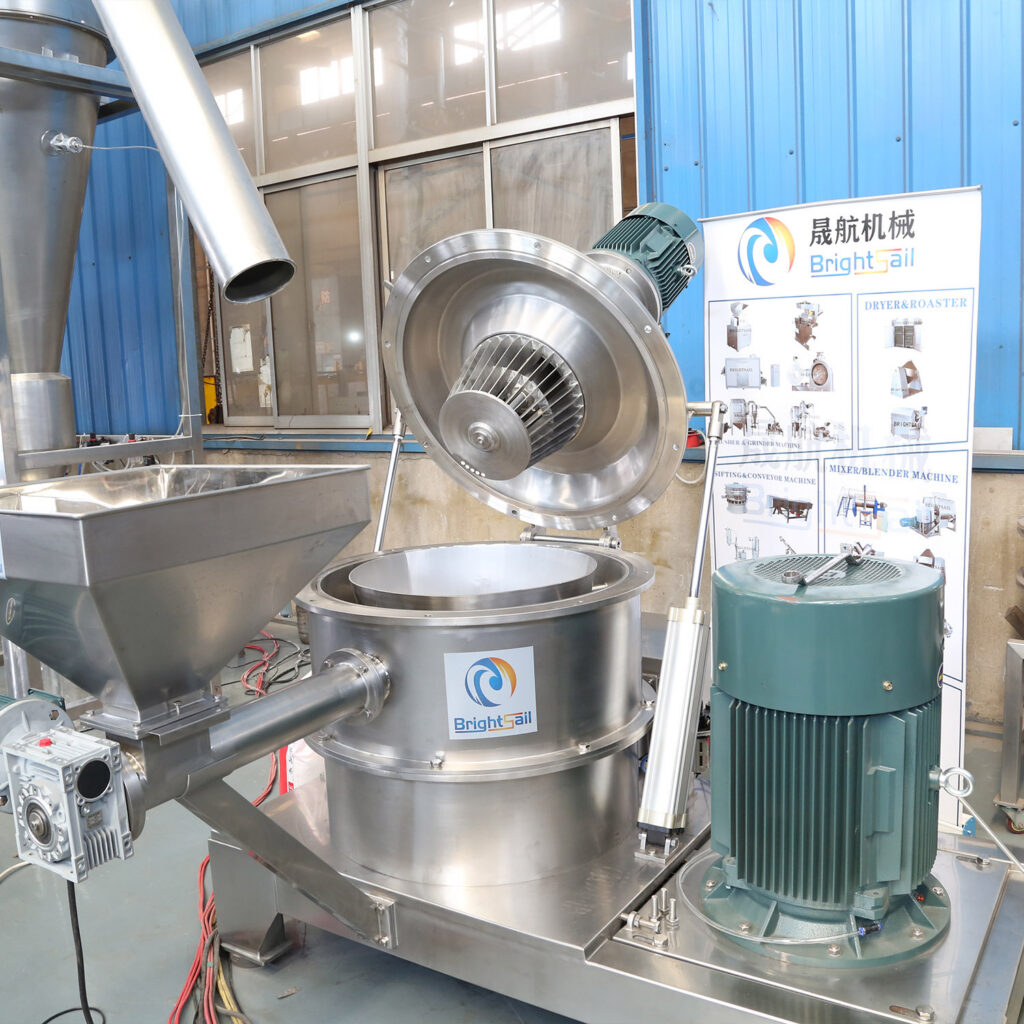
At our client’s factory
We have numerous customers from various countries who grind herbs, including Bulgaria, Ireland, Ecuador, Bahrain, France, and so forth.
This time, the customer found the grinding process exceptionally smooth and efficient, receiving unanimous praise from all clients.

Conclusion and Outlook
The Air Classifier Mill represents a significant leap forward in the pharmaceutical and nutraceutical processing of medicinal herbs. By integrating high-shear grinding with precision classification, it achieves a level of cell wall disruption that traditional milling cannot match.