
1. Introduction
We recently received an urgent after-sales inquiry from a Southeast Asian customer who uses a contraplex pin mill for curry powder processing. The machine ran smoothly for the first two hours, before suddenly generating extremely loud abnormal noise. The operator immediately stopped the equipment for inspection and found that the internal pin was completely broken.
After troubleshooting, we confirmed the root cause: a stray screw mixed into the raw materials entered the high-speed grinding chamber, causing severe impact damage to the internal wearing parts. Fortunately, the customer had stocked a full set of original spare pins, which allowed them to replace the accessories and resume production quickly. Even so, the unexpected failure still caused unnecessary production delays and equipment wear.
In actual industrial production, many factory owners face the same dilemma: some industrial grinding machine equipment runs stably for years with few failures, while others frequently suffer from broken parts, material blockage, overheating and low grinding efficiency. The service life and operational stability of all industrial pulverizer equipment largely depend on daily standardized operation and scientific maintenance.
In this article, we will share practical and targeted maintenance tips for four mainstream industrial grinding models: air classifying mill, hammer mill, pin mill, and turbo mill. Since processing materials, workshop environments and working conditions vary from factory to factory, we will continuously update this guide to cover more working scenarios in the future.
2. Keep Raw Materials Clean — Avoid Hard Foreign Matter Damage
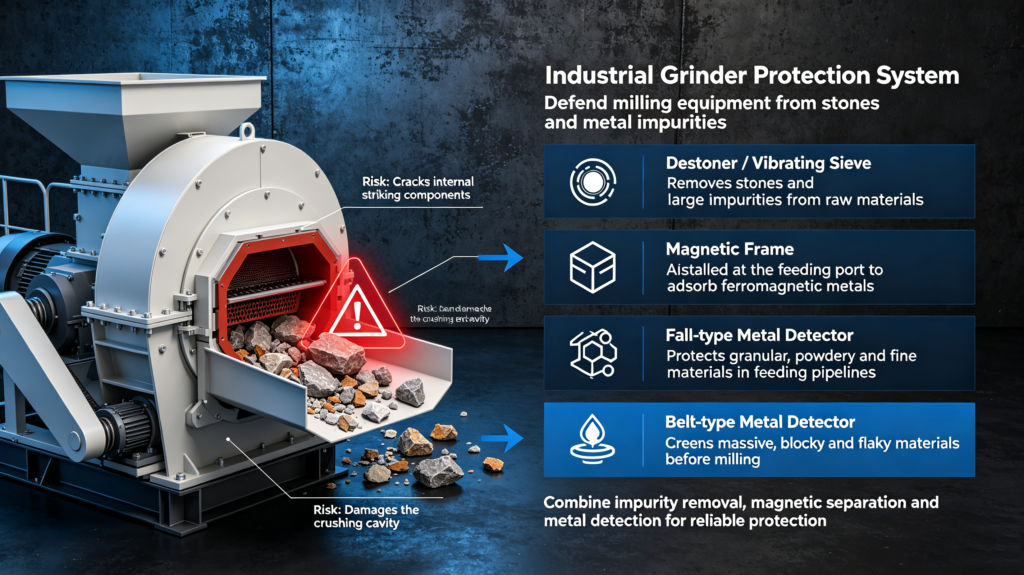
Foreign hard impurities are the biggest hidden danger for all industrial milling equipment. Stones and metal debris are the most fatal hazards for industrial grinder units, which can easily crack internal striking components and damage the crushing cavity during high-speed operation.
- 2.1 Remove Stone and Large Impurities
It is recommended to select high-purity raw materials with low impurity content. For raw materials mixed with a large amount of sediment and stones, factories can install destoners or linear vibrating sieves in the front process to complete preliminary impurity removal and reduce failure risks.
- 2.2 Three Professional Metal Removal Solutions
Different metal detection and removal devices can be configured according to material types and production budgets to protect the industrial grinding mill:
- Magnetic Frame (Economical Solution): Installed at the feeding port, it can adsorb ferromagnetic metals including iron blocks, carbon steel, iron powder and iron wires. It is a cost-effective auxiliary device for daily protection, but it cannot remove non-ferrous metals such as copper and aluminum.
- Fall-type Metal Detector: Suitable for granular, powdery and fine raw materials. Installed on the front feeding pipeline to accurately identify and reject mixed metal impurities.
- Belt-type Metal Detector: Ideal for massive, blocky and flaky materials. It performs real-time high-precision screening before materials enter the industrial milling machine, completely avoiding hard foreign matter entering the grinding chamber.
3. Never Use Custom Non-Standard Wearing Parts
We have encountered a typical faulty case caused by non-original accessories. A customer requested accessory drawings from us and processed a set of customized blades through a local processing factory. Although the appearance and size were consistent with the original parts, the processing technology, material hardness and dynamic balance standard failed to meet industrial requirements.
Once installed and started, the customized blade shattered instantly, causing severe collision and damage to the entire grinding cavity, which greatly affected the normal operation of the industrial pulverizer machine.
It is worth noting that qualified grinding accessories rely on multiple professional processes including forging, quenching and precision dynamic balance calibration, instead of simple dimensional copying. To ensure long-term stable operation, all striking and grinding wearing parts of industrial grinding equipment must adopt original manufacturer accessories, and non-standard customized parts are strictly prohibited.
4. Standard Pre-Operation Inspection to Avoid Sudden Failures
Standard pre-operation inspection is the core premise for the stable operation of all types of industrial powder grinding machine. A simple 2-minute inspection can eliminate more than 80% of sudden startup failures.
- Check all body bolts and fasteners to ensure no loosening, preventing vibration and parts falling off during high-speed operation.
- Inspect sealing rings and discharge door sealing strips to ensure complete sealing, avoiding powder leakage, abnormal air pressure and excessive operating temperature.
- Run the equipment with no load for 1 to 2 minutes, monitor abnormal noise and violent vibration, and confirm normal equipment status before formal feeding.
5. Daily Cleaning Specifications (Critical for Equipment Life & Production Safety)
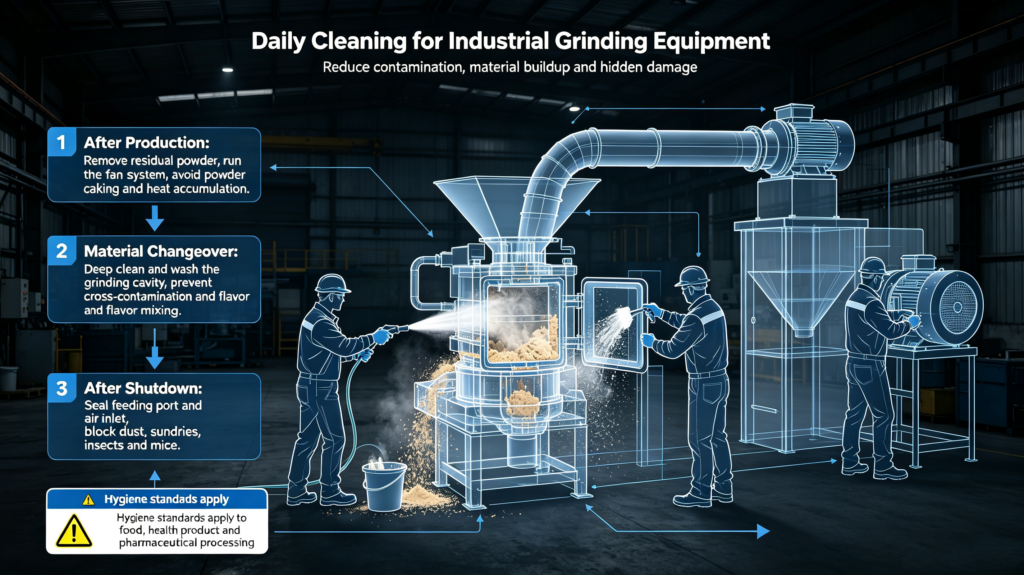
Timely and thorough daily cleaning is essential to maintain the working efficiency and service life of industrial grinding equipment, especially for food, health product and pharmaceutical processing scenarios with strict hygiene standards.
- Clean residual powder thoroughly after production: use compressed air blowing or idle the fan system to exhaust residual materials inside the cavity, preventing powder caking, deterioration and heat accumulation.
- Complete deep cleaning and water washing when switching different materials to avoid cross-contamination, flavor mixing and residual caking.
- Seal the feeding port and air inlet after shutdown to prevent dust, sundries, insects and mice from entering the grinding chamber and causing secondary damage.
6. Weekly In-Depth Maintenance to Eliminate Hidden Faults
Daily cleaning can solve superficial problems, while weekly deep maintenance can eliminate potential hidden faults of industrial grinding machine and ensure long-term high-efficiency operation.
- Wearing Parts Inspection: Check the wear degree of hammers, pins and blades regularly, turn over or replace severely worn parts in time to keep grinding accuracy stable.
- Internal Cavity Cleaning: Remove cured material caking accumulated in the dead corner of the grinding chamber to prevent excessive load, material blockage and equipment overheating.
- Transmission System Calibration: Adjust the tightness of the driving belt to prevent belt slipping, insufficient rotating speed and reduced production capacity.
7. Prepare Sufficient Spare Wearing Parts for Continuous Production
No matter how well the equipment is maintained, accidental failures cannot be completely avoided in long-term industrial production. Preparing a complete set of spare wearing parts is a necessary guarantee for uninterrupted production.
Excellent processing factories always develop the habit of regular inspection and proactive replacement. They purchase matching wearing parts every one or two years instead of waiting for parts to be completely damaged, which effectively avoids unexpected production shutdown losses.
8. Exclusive Maintenance Tips for Four Mainstream Industrial Grinding Machines
Different industrial pulverizer models have unique structural designs and working principles, so their maintenance focuses are also different. Targeted maintenance according to machine types can maximize equipment performance and service life.
- 8.1 Hammer Mill
The key maintenance point for industrial hammer mill is regular screen inspection and cleaning. The screen mesh is the core component for controlling particle size and ventilation. Blocked or worn screens will cause internal material accumulation, poor heat dissipation and rapidly rising operating temperature. In severe cases, long-term blockage may even cause equipment overheating failure. Regular screen replacement and cleaning ensure stable grinding efficiency and safe operation.
- 8.2 Turbo Mill
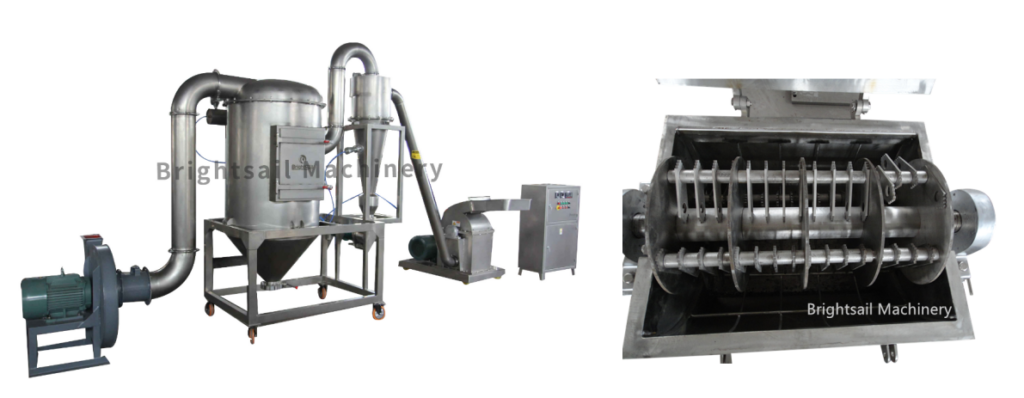
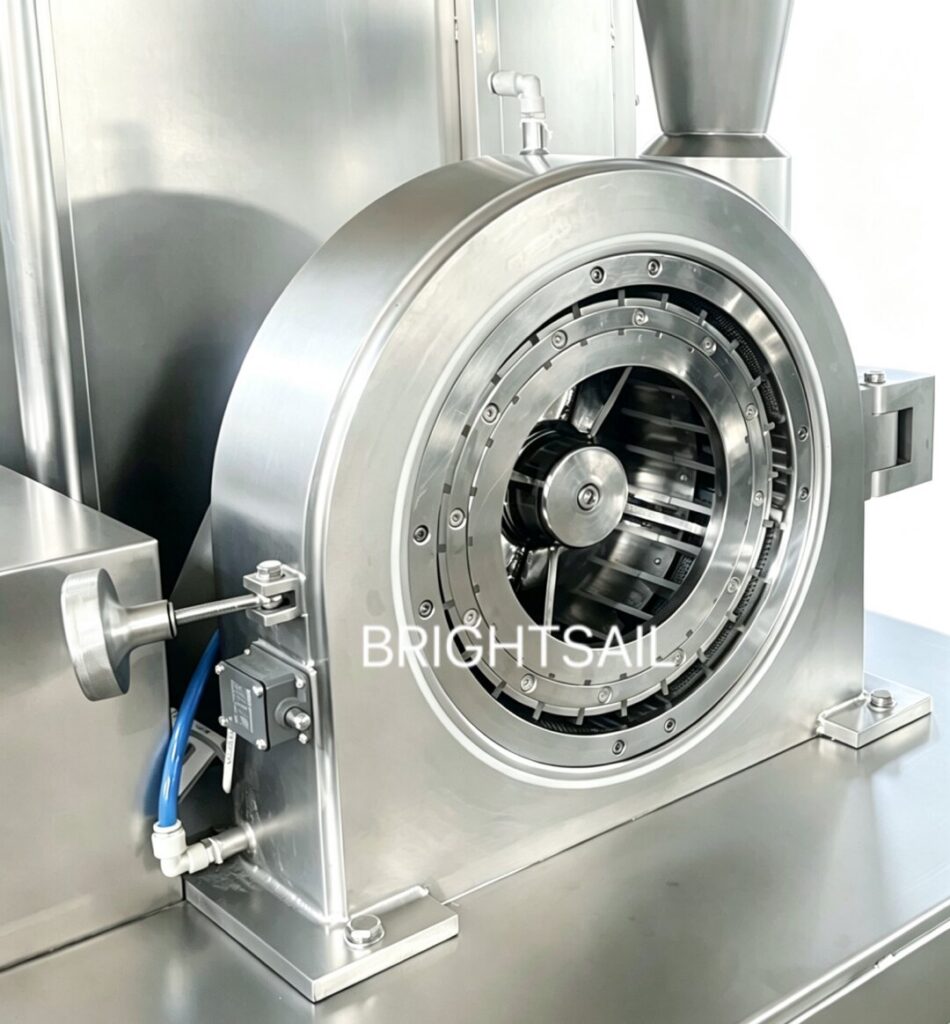
Industrial turbo mill relies on high airflow circulation to achieve low-temperature and high-efficiency grinding. Long-term material processing will cause fine powder to adhere and form caking on turbo blades and circulating air ducts. Regular cleaning of blade caking is necessary to keep the air passage unobstructed, maintain stable airflow volume, and avoid high temperature and low output caused by poor ventilation.
- 8.3 Contraplex Pin Mill
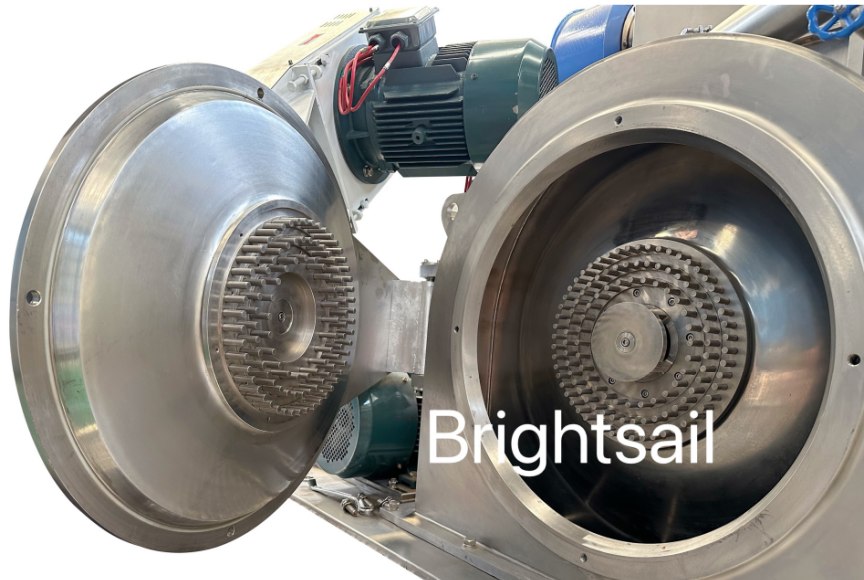
Industrial pin mill is widely used for oil-containing and adhesive raw material processing. Grease and fine powder residues easily stick to the pin disc and cavity wall. Without daily cleaning, accumulated oil caking will increase equipment operating load, affect grinding fineness accuracy, and even cause abnormal vibration and noise. Improving cleaning frequency is the core of pin mill daily maintenance.
- 8.4 Air Classifying Mill (ACM)
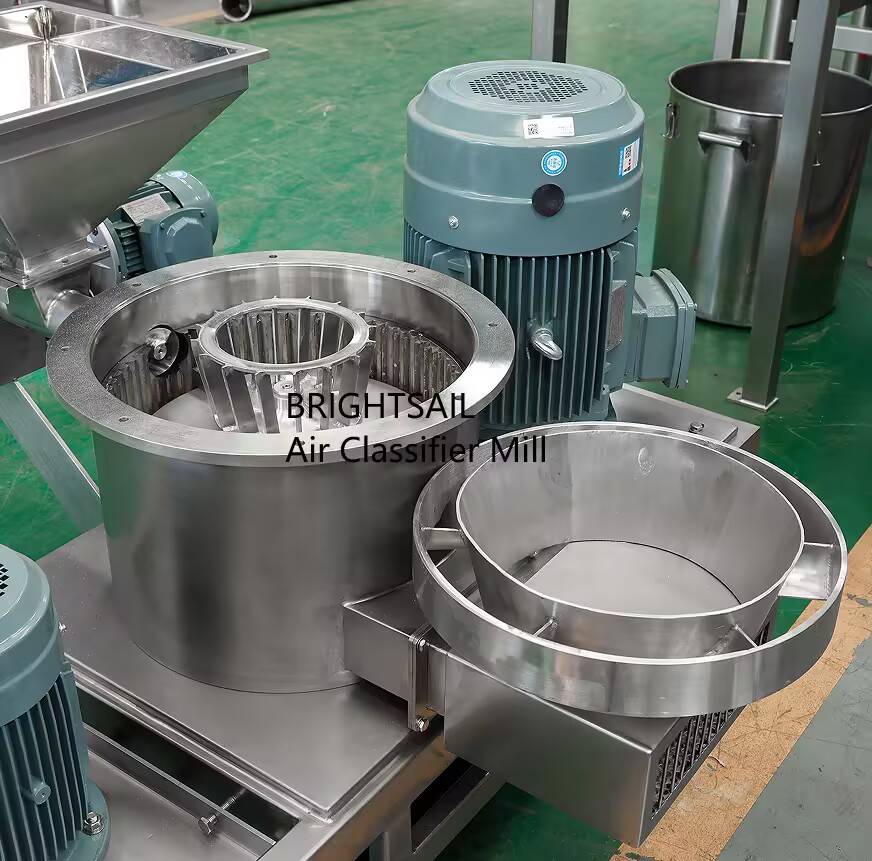
Industrial air classifying mill is specially designed for ultra-fine powder processing. Ultra-fine materials are prone to slight wall adhesion during long-term operation. Users need to observe the operating status frequently when using new equipment or switching materials. In addition, the dust removal bag is a key component for heat dissipation and dust removal. Blocked dust bags will directly lead to poor ventilation, equipment overheating and reduced production capacity. Regular inspection and replacement of dust bags are essential for stable long-term operation.
9. Special Reminder for Long-Time Continuous Operation
The conventional working cycle of most industrial milling equipment is 8 to 12 hours per day. However, many factories require 20-hour or even 24-hour continuous production. It is necessary to actively inform the equipment manufacturer of your actual working hours before purchasing industrial grinding machine units.
Brightsail supports customized configuration of special protective devices for 24-hour continuous working conditions. Even equipped with high-quality bearings such as SKF and NSK, long-term overloaded operation without targeted protective configuration will still accelerate bearing wear and shorten the overall service life of industrial pulverizer machine.
10. Maintenance Standards for Long-Term Shutdown
Reasonable shutdown protection can avoid unnecessary corrosion and damage to industrial grinding equipment during idle periods.
- Short-term overnight shutdown: Completely clean residual powder inside the grinding cavity and keep the internal environment dry and tidy to prevent moisture and mildew of residual materials.
- Long-term shutdown (more than 7 days): Conduct full equipment cleaning and dust sealing. Perform anti-rust treatment on alloy blades and metal wearing parts, especially in coastal humid areas. Keep the electric cabinet completely dust-free, as accumulated dust will damage internal electronic control components and affect subsequent startup operation.
11. Final Summary
To sum up, industrial grinding equipment operation follows the principle of “30% operation, 70% maintenance”. All mainstream industrial grinding machine, including hammer mill, turbo mill, pin mill and air classifying mill, can maintain long-term stable and high-efficiency operation only through standardized impurity removal, daily cleaning, regular inspection, scientific maintenance and original accessory replacement.
Standard maintenance can effectively avoid common faults such as tool breakage, material blockage, overheating and capacity attenuation. It not only greatly extends the service life of industrial pulverizer equipment, but also ensures stable powder quality and continuous production capacity for processing plants.
If you have any confusion about equipment operation and maintenance, or need targeted maintenance guidance according to your processing materials, grinding fineness and working conditions, feel free to contact our professional technical team for customized industrial milling equipment solutions.