
Introduction
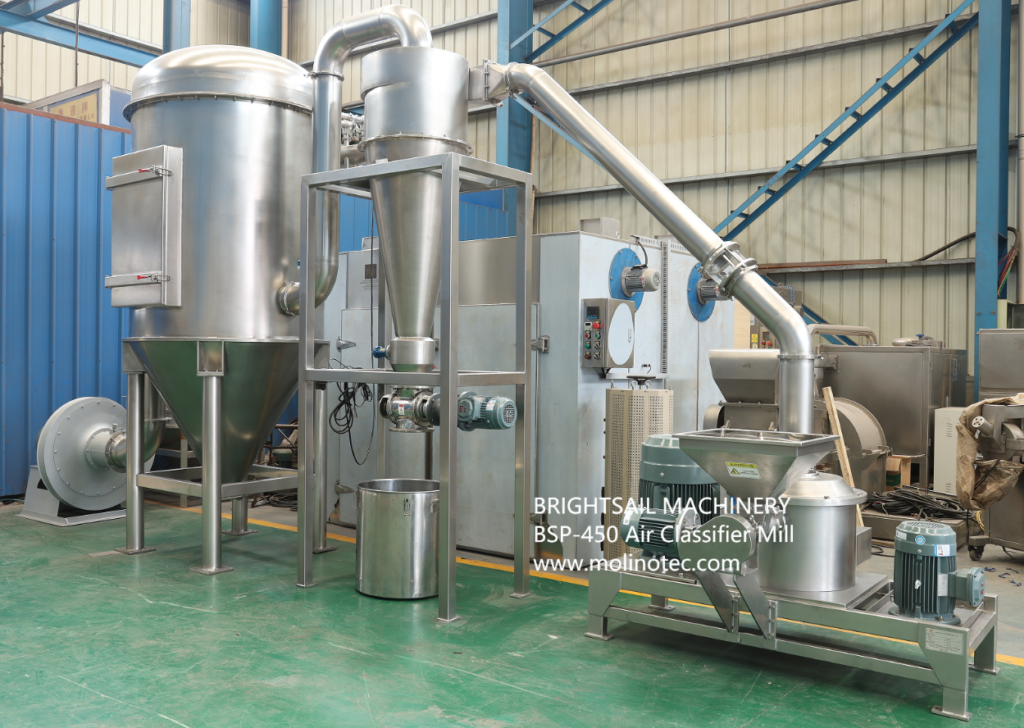
The air classifier mill is a critical piece of equipment in the food powder processing industry, used to produce fine powders such as flour, milk powder, spices, and additives. It utilizes high-speed airflow and a classifying wheel to achieve particle size reduction and separation, allowing precise control over powder fineness. However, improper operation can lead to reduced product quality, increased energy consumption, and even equipment damage. This article explores common operational mistakes and provides practical solutions.
Common Operational Errors and Preventive Measures
Mistake 1: Feed Rate
Problem: Excessively high feed rates may cause chamber blockages and motor overload; conversely, excessively low feed rates reduce throughput and lead to idle wear.
Solution: Adjust feed rate according to material characteristics. Typically commence at a lower speed, gradually optimising to the ideal setting. Variable frequency drives enable precise control.
Mistake 2: Material Pre-treatment
Problem: Materials with high moisture or oil content readily adhere to the grinding chamber walls and classification wheels, causing blockages and resulting in uneven particle size distribution.
Solution: Dry the material thoroughly prior to processing (typically maintaining moisture content below 5%). For oily materials, incorporate a small quantity of anti-caking agent (such as silica dioxide) or employ a cooling fan or liquid nitrogen.
Mistake 3: Improper Airflow Parameter Settings
Problem: Insufficient main airflow reduces grinding efficiency; inappropriate classification airflow affects particle size distribution.
Solution: Regularly inspect the blower and dust collection box to ensure stable airflow. Adjust the classification wheel speed according to fineness requirements—higher speeds yield finer particles. Finally, document optimal parameters for different materials.
Mistake 4: Inadequate Cleaning and Maintenance
Problem: Material buildup within the equipment causing accumulation
Solution: Thoroughly clean the equipment after each material changeover or batch completion. Regularly inspect wear-prone components for signs of deterioration.

Mistake 5: Inadequate Temperature Control
Problem: Certain heat-sensitive materials may overheat during the grinding process.
Solution: Install temperature sensors to monitor the grinding chamber temperature. Control temperatures by incorporating cooling fans, adjusting airflow temperature, modifying feed rates, or employing cooling jackets to ensure processing temperatures remain below the material’s sensitivity threshold.

FAQ:
Q1: How can I tell if the air classifier mill is clogged?
A1: Common signs include abnormal increase in motor current, reduced or stopped output, and unusual equipment noise. Installing pressure sensors to monitor mill chamber pressure changes can provide early warnings.
Q4: What is the relationship between classifying wheel speed and product fineness?
A4: Generally, a higher classifying wheel speed generates greater centrifugal force, allowing only finer particles to pass through, resulting in a finer product. However, excessively high speeds may reduce throughput.
Q5: How often should wear parts be replaced?
A5: There is no fixed interval. It depends on the abrasiveness of the processed material, operating hours, and maintenance conditions. Regular inspections are recommended, and a preventive replacement schedule should be based on wear observations.
Conclusion
The efficient and stable operation of air classifiers is paramount to the quality, safety, and production costs of food powders. Avoiding these errors hinges upon understanding material properties, optimising parameters, implementing rigorous maintenance, and establishing data-driven operating procedures. Through training, operating engineers can enhance equipment performance, produce compliant food powders strictly adhering to production standards, extend equipment lifespan, and reduce operational costs.