
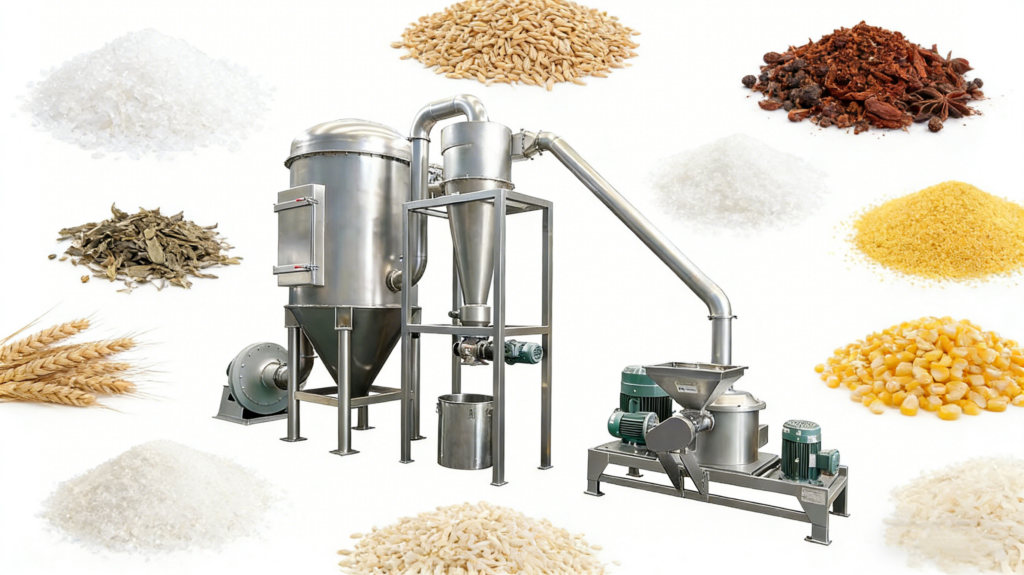
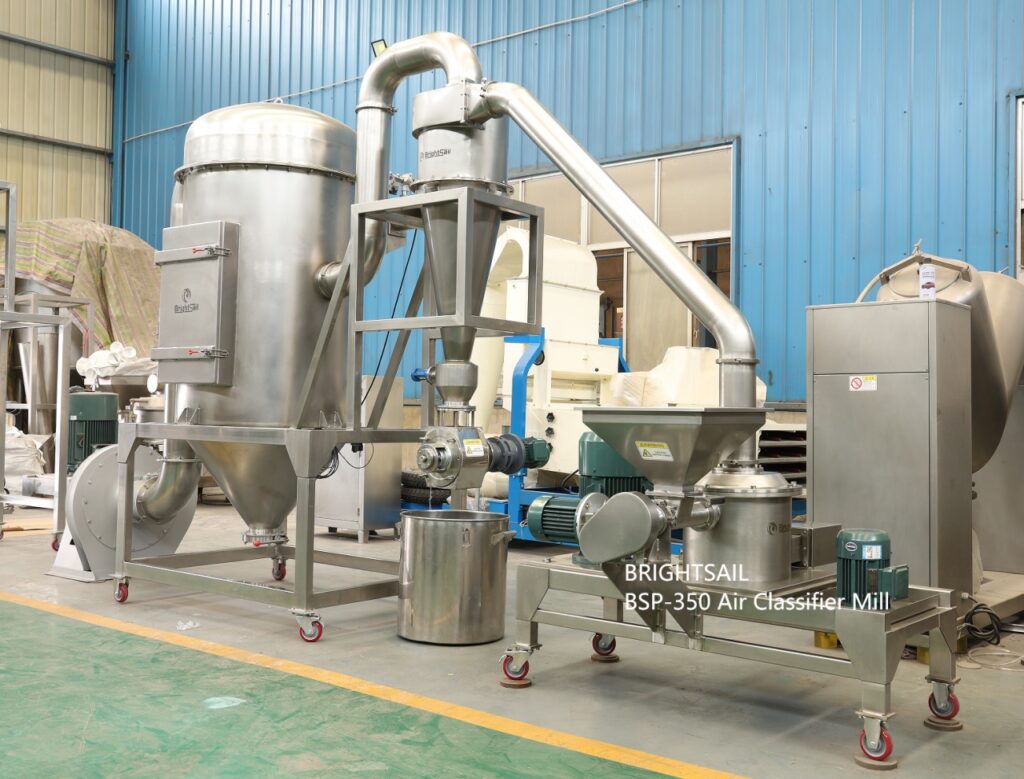
As a key equipment in powder processing industry, Air Classifying Mill (also known as Air Classifier Mill or pulverizer) plays an important role in various fields such as food, chemical industry, and pharmaceutical industry. However, many customers have misunderstandings about the actual production capacity of the equipment. Taking the BSP-500 Air Classifying Mill as an example, the production capacity marked in its technical parameters is 50-1000kg/h. It should be clearly emphasized that this parameter is only a reference range, not a fixed value. The actual production capacity of the Air Classifying Mill is comprehensively affected by many factors, and there is no absolute fixed output standard. This article will detail the core reasons for capacity fluctuations and practical improvement methods to help customers reasonably expect production capacity and optimize production efficiency.
I. Core Factors Affecting the Capacity Fluctuation of Air Classifying Mill
1. Raw Material Characteristics: Grinding Difficulty Determines Basic Capacity
There are significant differences in the texture, hardness, and fiber content of different types of raw materials, which directly determine the grinding efficiency and production capacity:
- Obvious differences in grinding difficulty of different materials: Compared with white sugar (fine texture, easy to grind), plant rhizomes (hard texture, coarse fibers) are more difficult to grind, take longer time, and their production capacity is much lower than that of white sugar;
- The inherent characteristics of raw materials (hardness, humidity, fiber content) are the core factors affecting production capacity. The harder the texture and the higher the water content, the lower the grinding efficiency and the corresponding decrease in production capacity;
- Differences in varieties of the same raw material also affect production capacity. For example, different varieties of rice have different particle hardness and fiber content, leading to differences in grinding efficiency and production capacity.

2. Target Requirements: Fineness and Particle Size Requirements Widen the Capacity Gap
The fineness and particle size requirements of the finished product are key factors affecting production capacity, and also the link where customers are most likely to have cognitive deviations:
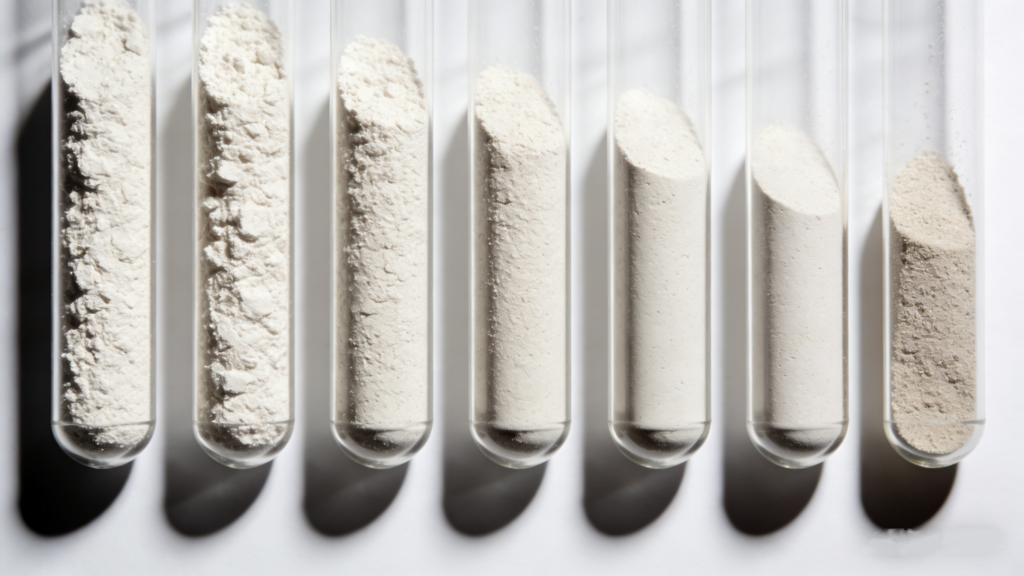
- Fineness requirements directly determine the level of production capacity: The higher the target fineness (such as 200 mesh and above), the greater the grinding difficulty, the higher the equipment operation load, and the lower the production capacity; on the contrary, the lower the fineness requirement (such as below 80 mesh), the higher the grinding efficiency and the higher the production capacity;
- Cognitive misunderstanding of particle size distribution: Most customers do not understand the concepts of D50 (median particle size) and D95 (90% particle size), and are likely to excessively pursue “all particles meeting the standard”, leading to over-grinding and further reducing production capacity;
- For the same raw material, the final production capacity varies significantly due to different customer requirements for the fineness of the finished product. For example, when grinding rice, the production capacity of 200 mesh fineness is only about 55% of that of 60 mesh fineness.
- During our communication with many customers, we have found that a large number of customers in the food industry are not clear about the actual fineness they need, but blindly pursue the finest possible powder. In fact, finer is not necessarily better. Sometimes, the finer the powder is, the more likely the nutrients will be destroyed, or it will be unfavorable for storage.
3. Environmental and Objective Conditions: Indirectly Affect Capacity Stability
- Impact of ambient temperature: In hot areas or high-temperature conditions, the water in the powder evaporates faster, which easily gives people the illusion of “reduced production capacity”, but the actual grinding volume does not decrease; at the same time, high temperature may increase the equipment operation load and slightly affect the grinding efficiency;
- Impact of raw material water content: For the same raw material, the higher the water content, the easier it is to agglomerate and adhere, the greater the grinding difficulty, and the lower the production capacity; if the raw material is not dried in advance, the grinding efficiency will be further reduced, leading to capacity fluctuations.
4. Raw Material Water Content: Key to Capacity Fluctuation of the Same Variety of Materials
- For the same raw material, water content directly affects grinding efficiency: The higher the water content, the greater the viscosity of the material, which is easy to agglomerate and adhere to the inside of the equipment, resulting in slower grinding speed and reduced production capacity;
And, some materials become **tough and elastic** when their moisture content is high, which significantly increases grinding difficulty. Once properly dried, the same materials become **brittle and crisp**, making them much easier to grind efficiently.
II. How to Improve the Actual Capacity of Air Classifying Mill (Practical and Implementable)
1. Raw Material Pretreatment: Reduce Grinding Difficulty
- Dry the raw materials in advance to control the water content, avoid agglomeration and adhesion caused by damp materials, and reduce the probability of equipment blockage;
- For hard and coarse-fiber raw materials (such as plant rhizomes), cut them in advance to reduce grinding difficulty and improve processing efficiency;
- Screen the raw materials to remove impurities, stones, etc., to avoid impurities affecting equipment operation and grinding efficiency.
2. Optimize Equipment Operation: Reduce Invalid Consumption
- Avoid over-grinding: Set a reasonable fineness standard according to actual customer needs, do not blindly pursue “extreme fineness”, and reduce the residence time of powder in the equipment;
- Adjust equipment parameters: Reasonably set the classification speed to avoid excessive screening caused by too high speed, and balance “fineness requirements” and “capacity efficiency”;
- Regularly clean the inside of the equipment to avoid material residue blocking the channel and ensure the normal operation of the equipment.
3. Auxiliary Equipment and Equipment Maintenance
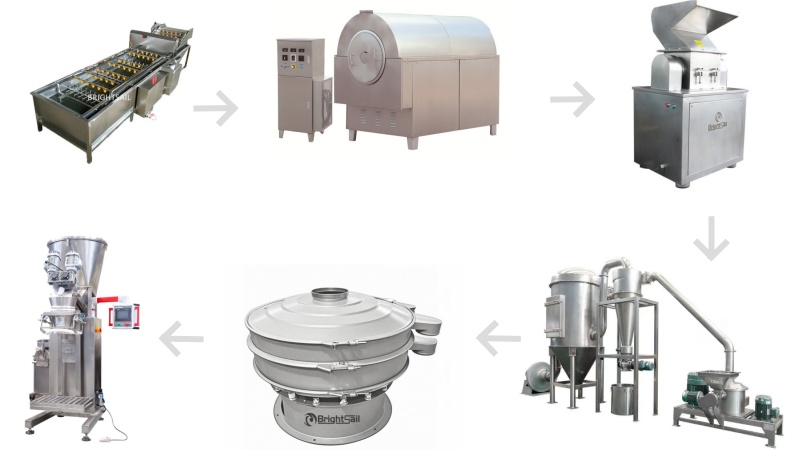
- Install an auxiliary equipment, namely Powder sifting machine (also known as Vibrating sifter), at the discharge port of the mill to screen qualified products, reduce the loss of secondary grinding, and improve processing efficiency;
- Regularly check the wearing parts such as equipment blades and screens, and replace worn parts in time to avoid production capacity impact caused by equipment failure;
For continuous production needs, configure protective devices to avoid equipment overheating and overloading, and ensure stable production capacity.
4. Environment and Operation Specifications
- In high-temperature environments, strengthen equipment heat dissipation to avoid efficiency reduction caused by equipment overheating;
- Standardize the operation process to avoid capacity waste caused by improper operation (such as excessively increasing the classification speed).
III. Conclusion
In summary, the production capacity of Air Classifying Mill (Air Classifier Mill / pulverizer) is not a fixed value, but a dynamic range affected by multiple factors such as raw material characteristics, target fineness and particle size requirements, environmental conditions, and raw material water content. This is a normal phenomenon in the powder processing industry, not a problem with equipment quality. The 50-1000kg/h capacity marked on the BSP-500 Air Classifying Mill is a scientific reference range, which can help customers initially understand the equipment’s processing capacity, but the actual output needs to be adjusted according to specific production conditions.
By adopting practical measures such as optimizing raw material pretreatment, adjusting equipment operation parameters, configuring Powder sifting machine, and strengthening daily equipment maintenance, customers can effectively reduce grinding resistance, avoid invalid consumption, and significantly improve the stability and efficiency of equipment capacity. It is also crucial for customers to establish a rational understanding of production capacity: there is no need to blindly pursue “extreme fineness” or “fixed high capacity”, and balancing production efficiency and product quality according to their own actual needs is the key to maximizing the value of the Air Classifying Mill.
We have long been engaged in the R&D and production of Air Classifying Mill, accumulating rich experience in equipment operation and capacity optimization. If you have more questions about capacity improvement or equipment operation, please feel free to contact us, and we will provide you with professional and customized solutions.