
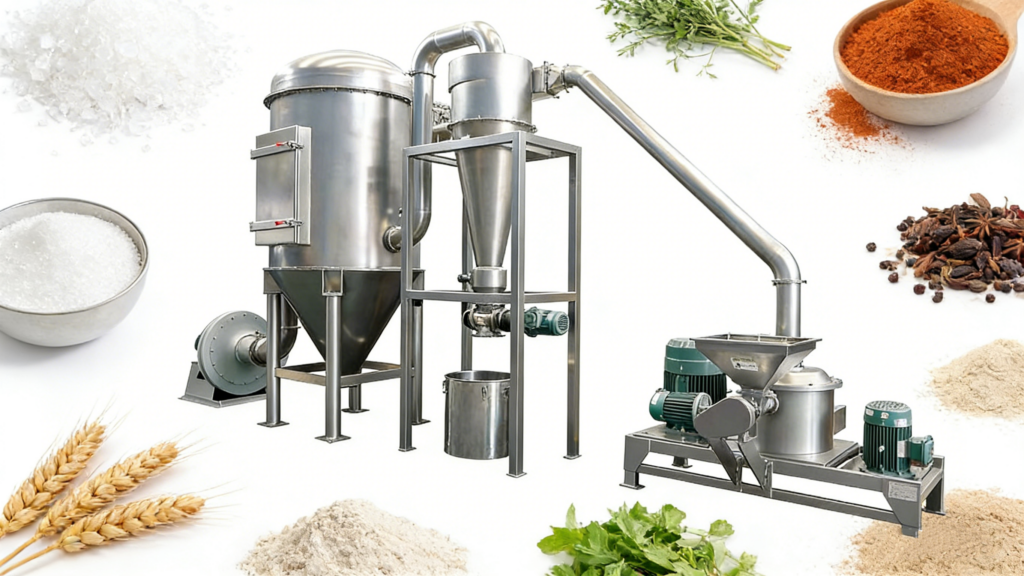
In the world of food powder processing, achieving the perfect particle size distribution is both an art and a science. Whether you’re milling spices, dairy powders, or specialty ingredients, the choice of equipment can make or break your final product’s quality, safety, and efficiency. Among the various milling technologies available, the air classifier mill stands out for its versatility and precision. However, selecting the right one for your specific application requires careful consideration of several key factors.
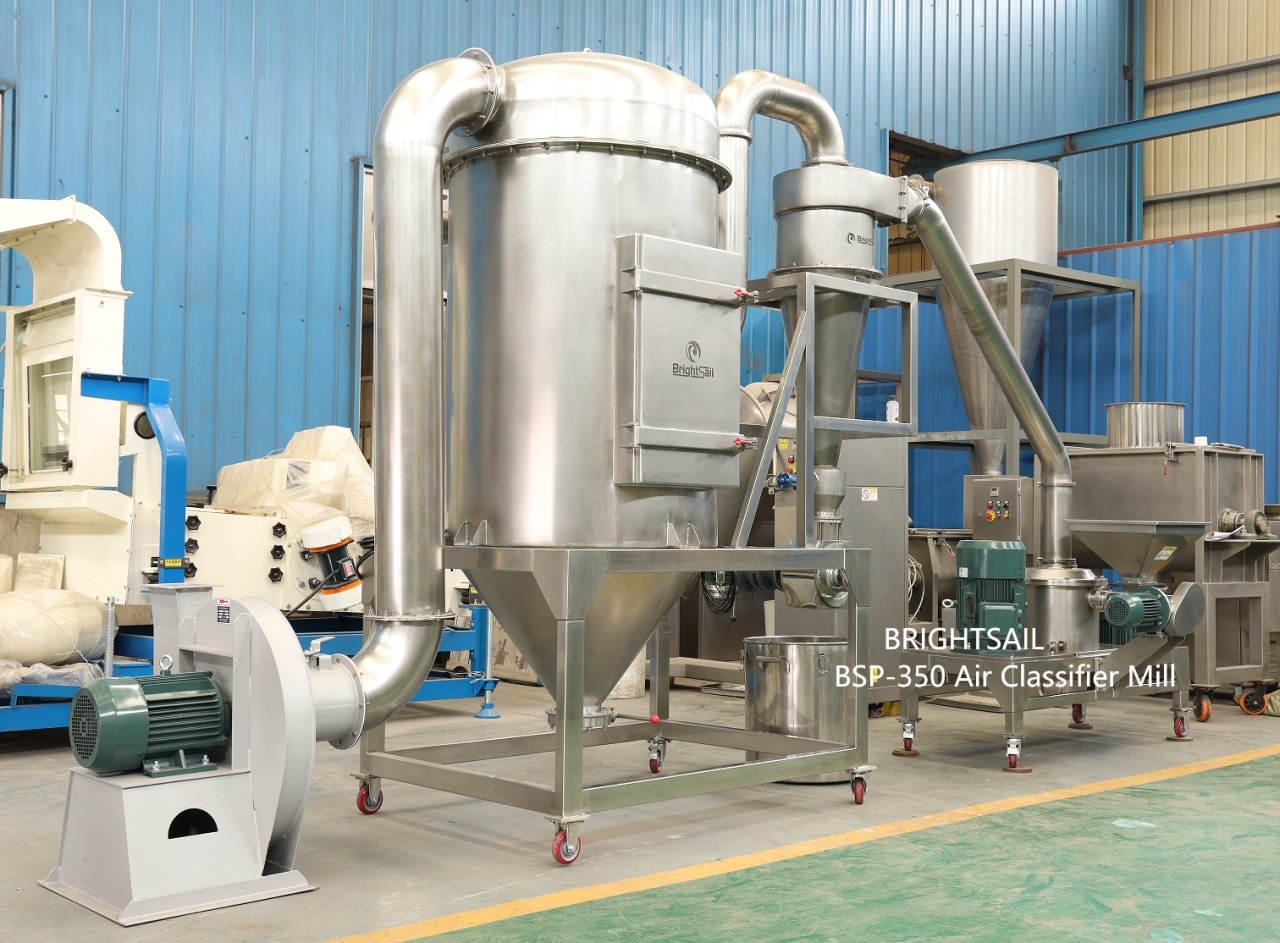
Introduction to Air Classifying Mills
- Air classifying mills are used in various industries, including food processing, for grinding and classification of materials into fine powders.
- The right air classifying mill can improve particle size distribution and produce fine powders with narrow particle size distribution.
- Choosing the right equipment depends on key factors such as material characteristics, desired particle size, and energy efficiency.
- Air classification is a critical process that requires careful consideration of factors like air flow, feed rate, and classifier speed.
- The goal is to achieve optimal performance, reduce operational costs, and ensure product quality.
Understanding Air Classification
- Air classification uses centrifugal force to separate particles based on size, allowing for the production of fine particles with narrow particle size distribution.
- The process involves a grinding chamber where material is ground into smaller particles, and then classified using air classifiers.
- The target particle size and desired particle size distribution are crucial in determining the right air classifier mill for food powder processing.
- Factors to consider include material properties, energy consumption, and the need to cool heat-sensitive materials.
- Air classifiers play a vital role in producing fine powders, and the right air classifier can significantly impact milling efficiency.

Factors to Consider
- Material characteristics, such as hardness and moisture content, affect the choice of air classifying mill.
- The desired particle size and particle size distribution are critical factors in selecting the right equipment.
- Energy efficiency and operational costs are also important considerations, as they can impact the overall profitability of the milling process.
- The initial purchase price, maintenance costs, and safety features should also be evaluated when choosing an air classifying mill.
- Key factors to consider include the volume of material to be processed, throughput requirements, and the need for advanced control systems.
Design Parameters
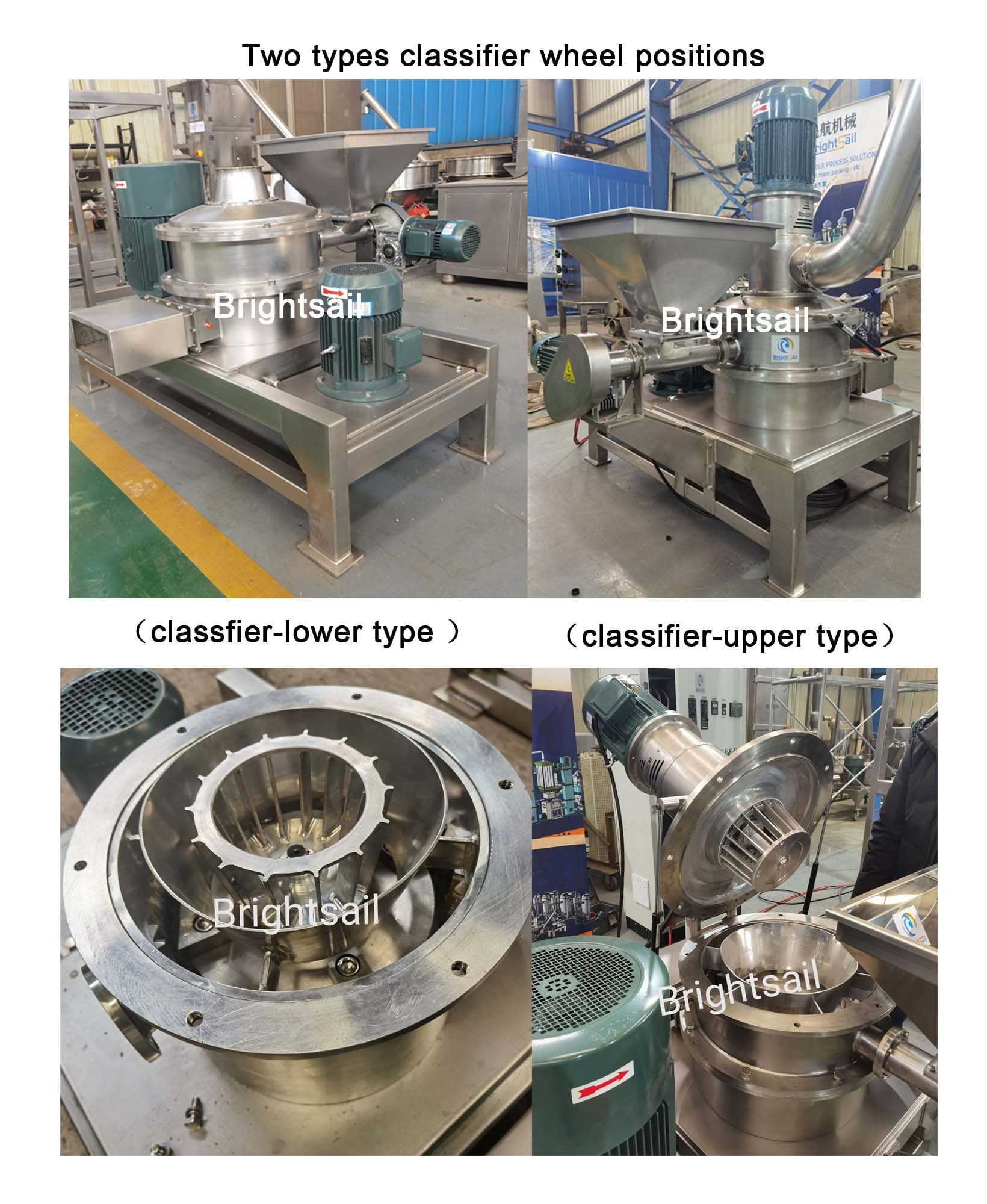
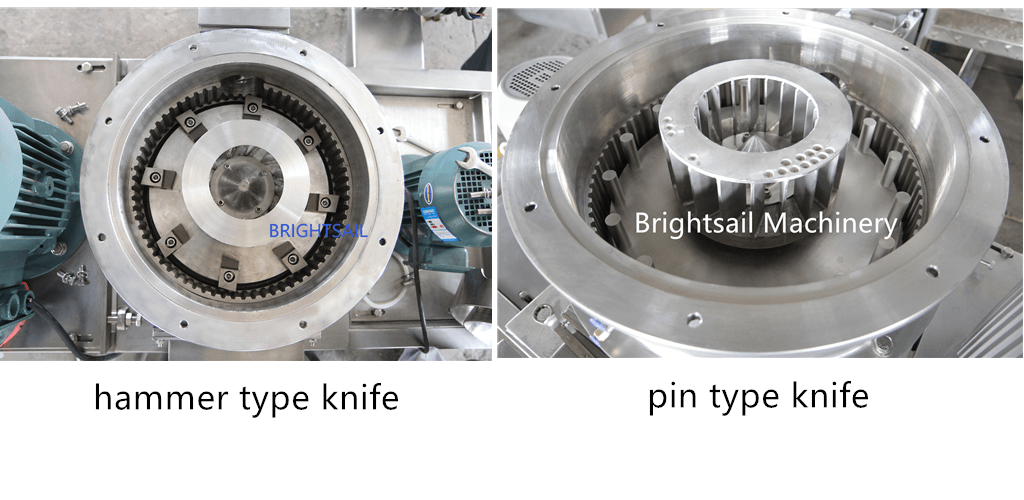
- The design of the air classifying mill, including the grinding chamber and classifier wheel, can impact performance and product quality.
- The air flow and feed rate are critical parameters that must be carefully adjusted to ensure optimal performance.
- Classifier speed and mill design can also affect the particle size distribution and quality of the final product.
- The ability to produce ultra-fine powders and handle abrasive minerals are important considerations in food processing applications.
- Regular maintenance and internal components can also impact the overall performance and lifespan of the air classifying mill.
Mill Performance
- The performance of the air classifying mill can be evaluated based on factors such as particle size distribution, energy efficiency, and operational costs.
- The ability to produce fine powders with narrow particle size distribution is a key indicator of mill performance.
- The air classifying mill should be able to handle varying capabilities and throughput requirements, and adjust to different materials and feed rates.
- Careful consideration of factors like moisture content, feed material, and classification process can help ensure optimal performance and product quality.
- The air classifying mill should also be designed to reduce downtime, prevent cross-contamination, and protect operators from hazards.
Applications of Air Classifying Mills
- Air classifying mills are used in various industries, including food processing, pharmaceuticals, and chemicals.
- The mills are suitable for grinding and classifying a wide range of materials, from softer materials like grains to harder materials like minerals.
- The air classifying mill can produce fine powders with narrow particle size distribution, making it an ideal choice for applications where product quality is critical.
- The mill can also be used to grind and classify materials with high moisture content, and can be designed to handle abrasive minerals and other challenging materials.
- The air classifying mill is a versatile piece of equipment that can be used in a variety of applications, from small-scale pilot plants to large-scale industrial operations.
Choosing the Right Equipment
- Choosing the right air classifying mill requires careful consideration of factors such as material characteristics, desired particle size, and energy efficiency.
- The right air classifier mill can improve particle size distribution, reduce operational costs, and ensure product quality.
- Factors to consider include the initial purchase price, maintenance costs, and safety features, as well as the ability to produce ultra-fine powders and handle abrasive minerals.
- The air classifying mill should be designed to reduce downtime, prevent cross-contamination, and protect operators from hazards.
- The right air classifying mill can help food processors achieve optimal performance, improve product quality, and reduce operational expenses.
- Supplier Expertise & Support
- The manufacturer’s experience in food applications is critical:
- Test Milling: Always request trials with your actual material. A reputable supplier will offer pilot-scale testing.
- Technical Support: Look for strong after-sales service, spare parts availability, and application engineering knowledge.