

I. Introduction: The Importance of Powder Sugar Fineness
Also known as confectioners’ sugar or icing sugar, powder sugar is a versatile raw material utilized across the food, beverage, and cosmetic sectors. Its particle fineness plays a pivotal role in determining product texture, dissolvability, and overall application performance—ranging from coarse grains ideal for decorative purposes to ultra-fine powders that create smooth pastes. To select the appropriate powder sugar grinder, it is essential to first grasp the common fineness specifications and their respective uses.
This guide compiles the most prevalent powder sugar fineness standards, key production considerations, the growing industry trend of in-house powder sugar production among biscuit and chocolate manufacturers, and tailored grinder recommendations from Brightsail. Leveraging industry expertise and market insights, it assists you in aligning your production requirements with the right equipment for informed decision-making.

II. Common Powder Sugar Fineness Specifications
Fineness of powder sugar is typically measured in “mesh” (a particle size unit where higher mesh indicates finer particles) and is also frequently denoted by “X” (an industry-standard symbol with higher X values representing finer powder). Below are the most widely adopted specifications, along with their particle traits and typical use cases:
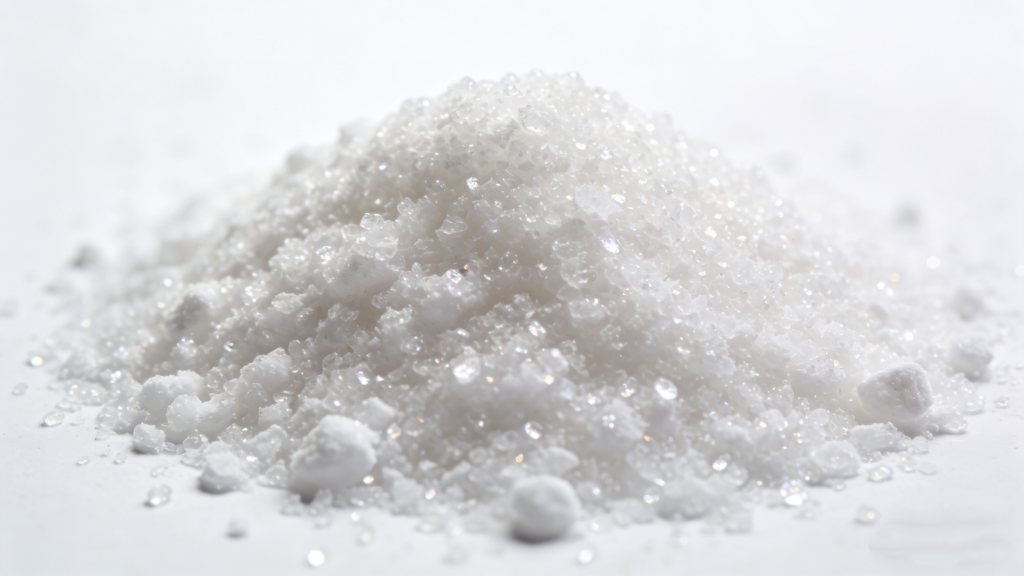
- 1. Coarse Powder Sugar (20-40 Mesh / 6X)
- Particle Traits: Boasts a visible granular texture with slightly larger particles, excellent fluidity, and resistance to agglomeration, while retaining some sugar crystal texture. Referred to as 6X powder sugar in the industry, it is the coarsest standard for regular powder sugar.
- Primary Uses: Food decoration (sprinkled on pastries, cookies, and donuts), beverage preparation (fruit teas, milk teas), industrial additives (candy, chocolate fillings, bread), and pet treats (to boost palatability).
2. Medium Powder Sugar (60-80 Mesh)
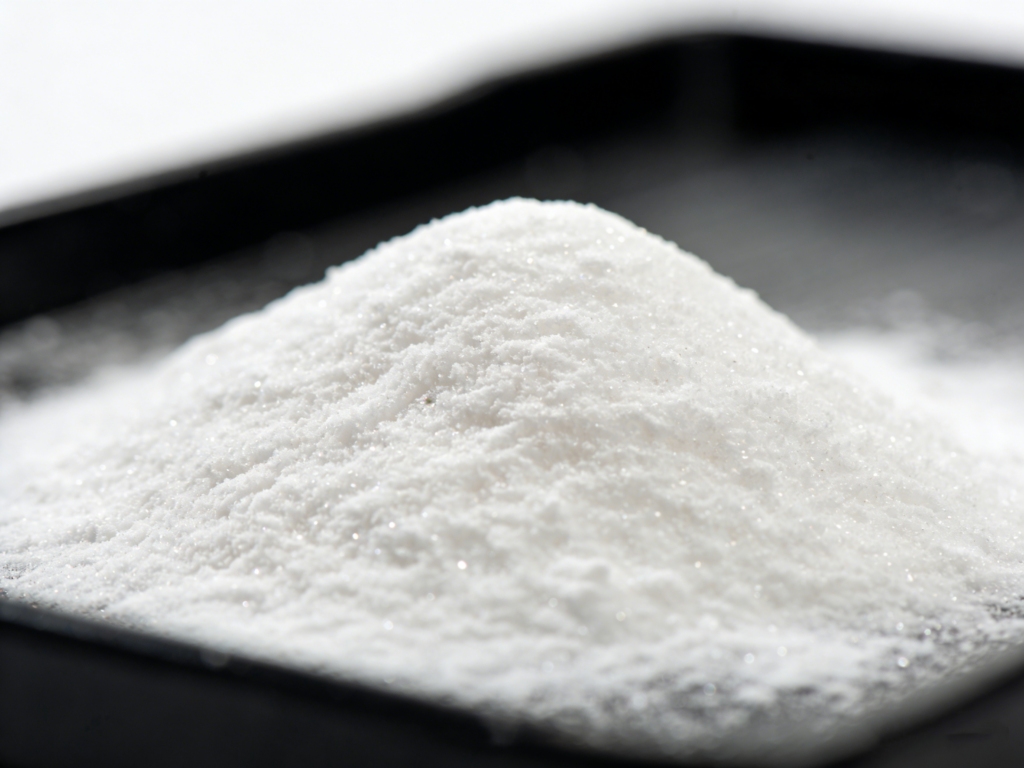
- Particle Traits: Features fine, relatively uniform particles with moderate fluidity, dissolving more quickly than coarse powder sugar without leaving obvious granular residues. It is a commonly used regular fine powder specification with no corresponding X designation.
- Primary Uses: Baking (cakes, muffins, bread), confectionery manufacturing (hard candies, soft candies), dairy products (yogurt, ice cream, milkshakes), and catering (sauces, dressings, marinades).
3. Ultra-Fine Powder Sugar (100-120 Mesh / 10X)
- Particle Traits: Extremely fine to the touch, with good solubility and ease of mixing with other materials (when stored correctly). Known as 10X powder sugar, it is the standard choice for icings and frostings.
- Primary Uses: Icings and frostings (cake frosting, buttercream, royal icing), instant foods (instant drinks, powdered soups), cosmetics (natural exfoliants in facial scrubs), and pharmaceuticals (fillers or sweeteners in oral medications).
4. Ultra-Fine Powder Sugar (150-200 Mesh / 12X)
- Particle Traits: Exceptionally fine, nearly powdery in consistency, with superior solubility (dissolving instantly in water) and high uniformity. However, it is prone to clumping when exposed to moisture and is referred to as 12X powder sugar in the industry.
- Primary Uses: High-end baking (macarons, mousse cakes), liquid foods (juices, syrups, dairy beverages), premium cosmetics (facial masks, lotions), and special dietary products (baby food, dietary supplements).
5. Special Ultra-Fine Powder Sugar (200+ Mesh)
- Particle Traits: Ultra-fine and fluffy, with extremely high solubility and dispersibility, requiring strict moisture control during storage and transportation.
- Primary Uses: High-end cosmetics (powder foundations, blushes, lipsticks), biomedical materials (specialized medications, medical dressings), and advanced food processing (molecular gastronomy, premium chocolate, functional foods).
III. Key Notes on Powder Sugar Fineness & Production
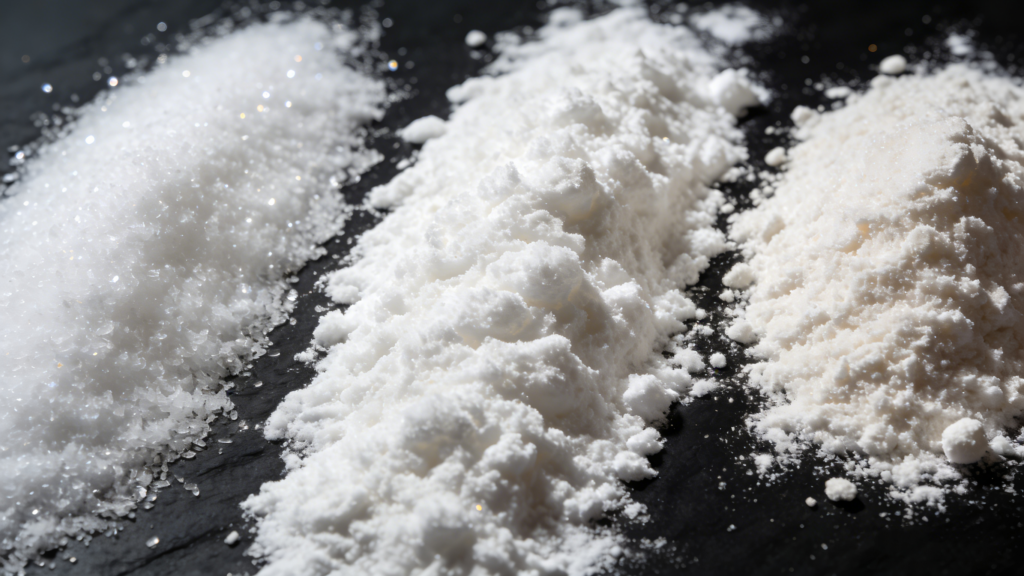
- 1. Fineness & Solubility: Finer powder sugar (higher mesh or X value) dissolves more rapidly—a key consideration for applications requiring quick dissolution, such as instant drinks and icings. Coarser powder sugar (lower mesh or X value, like 6X) is better suited for scenarios where texture is a priority, such as decoration or crunchy toppings.
- 2. Agglomeration Prevention: Finer powder sugar is more susceptible to clumping. Specifically, 6X (20-40 mesh) coarse powder sugar has strong fluidity and resists agglomeration; medium powder sugar (60-80 mesh) has minimal clumping risk; 10X (100-120 mesh) ultra-fine powder sugar requires proper storage to avoid clumping; 12X (150-200 mesh) and 200+ mesh special ultra-fine powder sugar, with their large specific surface area and strong moisture absorption, have the highest clumping risk. Strict moisture control during production, storage, and transportation is essential—including drying during production and sealed storage. Adding common food-grade anti-caking agents (such as starch) is another effective measure to prevent clumping.
- 3. Industry Standards: While regional variations exist in powder sugar fineness standards (e.g., European vs. Asian standards), the 20-200+ mesh range satisfies most global application needs.
- 4. Purity Requirements: Food and cosmetic-grade powder sugar demand high purity (free of impurities and off-flavors), which imposes higher standards on grinder materials (e.g., stainless steel) and processing precision—an area where Brightsail excels with its stainless steel equipment.
IV. Anti-Caking Agents for Powder Sugar: Types & Dosage
To effectively prevent powder sugar clumping (especially ultra-fine varieties), the use of food-grade anti-caking agents is a safe and compliant practice aligned with global food safety standards. Starch is the most widely used anti-caking agent for powder sugar, with Silicon Dioxide (SiO₂) as the secondary choice.
4.1 Common Anti-Caking Agents
- 1. Starch (Corn Starch, Potato Starch): Non-toxic, cost-effective, and compatible with sugar, it is suitable for all powder sugar types and is the preferred choice for most food factories.
- 2. Silicon Dioxide (SiO₂, E551): Offers stronger anti-caking performance, making it ideal for ultra-fine powder sugar or products requiring long-term storage and transportation.
4.2 Recommended Dosage
Both anti-caking agents have a recommended dosage of 3%-5% of the total powder sugar mass, in compliance with FDA and FAO/WHO standards.
V. Industry Trend: Biscuit, Chocolate & Other Food Factories Tend to Produce Powder Sugar Themselves
This industry shift has also driven up demand for suitable powder sugar grinders. Brightsail’s three types of sugar pulverizers—BSU, the high-performance BSP Air Classifier Mill, and the high-capacityBSZ Pin Mill Unit—can be flexibly adjusted to match a factory’s production capacity and required powder sugar fineness (6X, 10X, 12X, and above), fully meeting the core in-house production needs of biscuit, chocolate, and other food manufacturers.
In recent years, a growing number of biscuit, chocolate, and other food factories have opted to produce powder sugar in-house rather than purchasing it from external suppliers. This trend has become increasingly prominent in the industry, with its application scope continuing to expand. Based on industry experience, the key drivers behind this shift are as follows:
- 1. Cost Control: In-house production eliminates intermediate procurement links, transportation costs, and supplier markups. Over the long term, it can significantly reduce production expenses, making it particularly suitable for large-scale biscuit, chocolate, and other food factories with high-volume production needs.
- 2. Quality Control: In-house production enables precise oversight of powder sugar fineness, purity, and hygiene standards. This avoids the negative impact of batch inconsistencies and impurities in purchased powder sugar on the taste and quality of biscuits, chocolate, and other food products—aligning with food-grade production requirements and Brightsail’s strength in stainless steel equipment purity.
- 3. Flexibility: Biscuit, chocolate, and other food production processes have varying powder sugar fineness requirements (e.g., 6X coarse powder sugar for biscuit decoration, 10X/12X ultra-fine powder sugar for chocolate fillings). In-house production allows for flexible fineness adjustments to suit specific production processes, eliminating the need to adapt to fixed specifications of purchased powder sugar.
- 4. Supply Chain Stability: In-house production mitigates risks associated with external procurement, such as supply delays, stockouts, and price fluctuations, ensuring smooth production processes and reducing supply chain vulnerabilities for biscuit, chocolate, and other food factories.
VI. Brightsail Powder Sugar Grinder Selection Guide
Selecting a high-quality powder sugar grinder is vital for efficient, high-quality powder sugar production. Below is a detailed selection guide for Brightsail’s sugar pulverizer series.
Based on powder sugar fineness, production capacity, and factory requirements, Brightsail recommends three commonly used grinders, widely recognized and trusted by customers: universal crushers, high-precision air classifier mills, and large-capacity pin mills.
- 1. BSU Universal Crusher
Equipment Traits: Equipped with a built-in screen, adjustable fineness, user-friendly operation, and suitability for multi-fineness production requirements. - Suitable Fineness: 20-120 mesh (covering 6X, 10X powder sugar), meeting the needs of regular and medium-fine powder sugar production.
- Capacity Range: 100kg-2T per hour, suitable for small to medium-large production volumes.
- Suitable Scenarios: Ideal for small to medium-large factories requiring flexible adaptation to multi-fineness (6X, 10X) production needs, and capable of meeting the in-house production demands of most biscuit, chocolate, and other food factories.
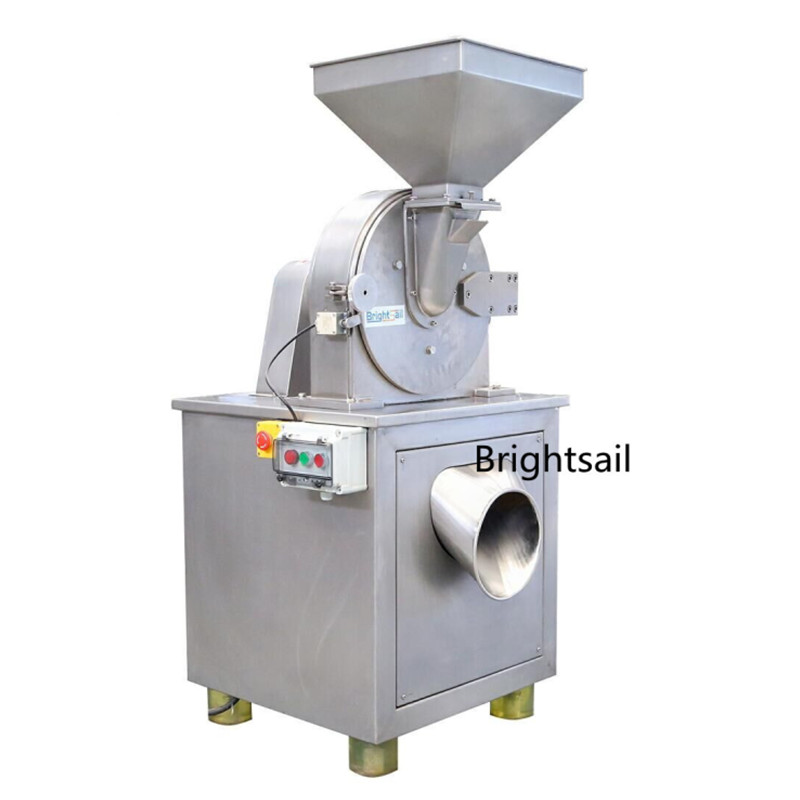
2. BSP Air Classifier Mill
Equipment Traits: No built-in screen, focused on fine powder production, with high processing precision and excellent powder uniformity—making it a professional air classifier mill for ultra-fine powder sugar manufacturing.
Suitable Fineness: Primarily used for fine and ultra-fine powder production (focusing on 12X and above, including 200+ mesh special ultra-fine powder sugar), ensuring the fineness and uniformity of ultra-fine powder sugar.
Capacity Range: 100kg-4T per hour, suitable for medium-large production volumes.
Suitable Scenarios: Medium-large factories with high requirements for fine powder purity and uniformity, suitable for high-end baking, cosmetics, and other fields requiring ultra-fine powder sugar.
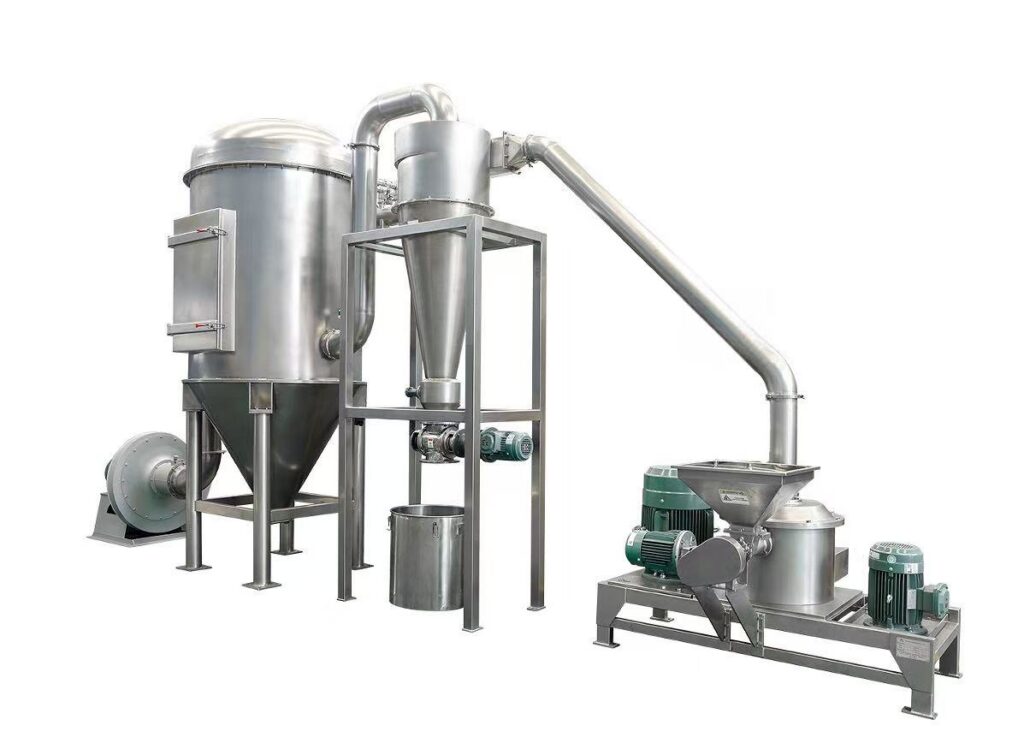
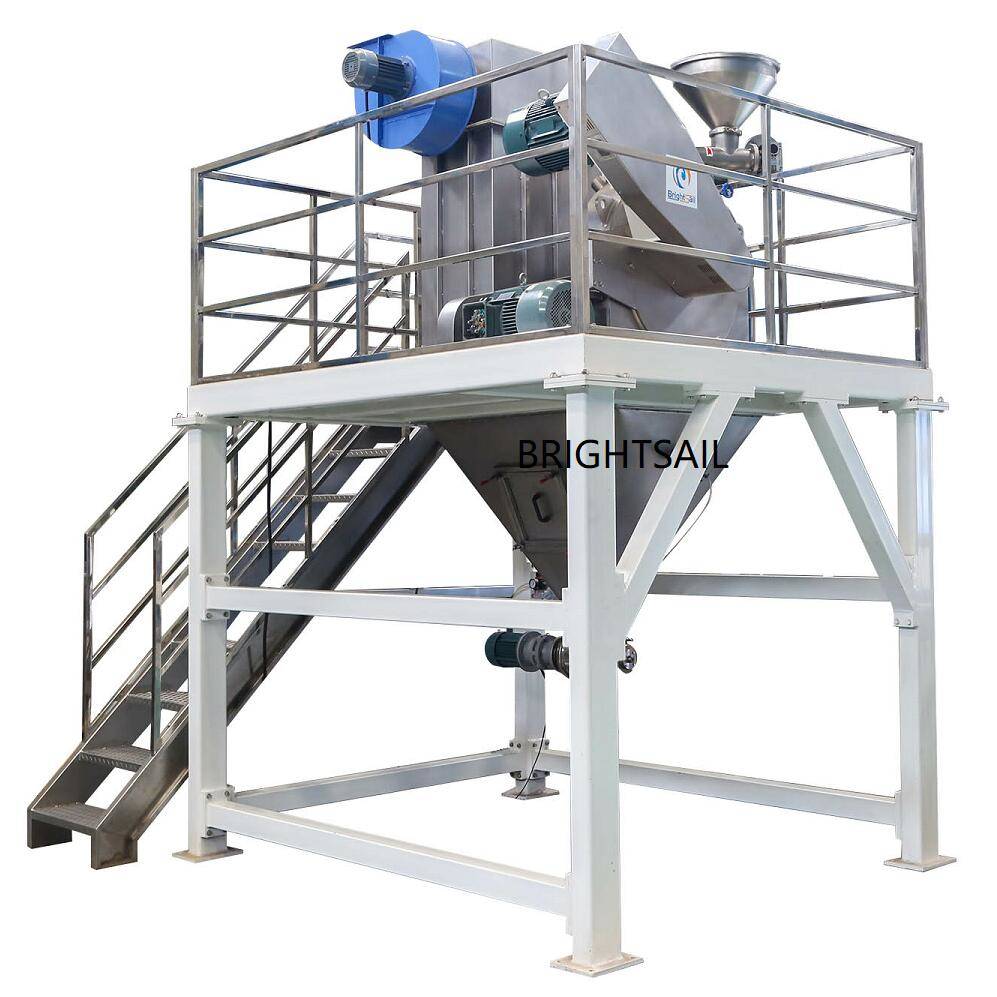
3. BSZ Pin Mill Unit
Equipment Traits: No built-in screen, extremely high production capacity, stable operation, and suitable for large-scale mass production—an ideal pin mill for high-volume non-ultra-fine powder sugar production.
Suitable Fineness: Powder sugar that does not require ultra-fine processing (focusing on 6X, 10X, and other regular and medium-fine powder sugar), ensuring production efficiency while meeting basic fineness requirements.
Capacity Range: Several tons per hour, suitable for large-scale mass production.
Suitable Scenarios: Large-scale factories with high production capacity needs and no ultra-fine requirements for powder sugar, particularly suitable for large biscuit, chocolate, and other food factories with mass production demands.
Precise Selection Correspondence (Fineness + Capacity):
- 1. 6X Powder Sugar (20-40 Mesh): Prioritize the BSU Universal Crusher; for production capacities reaching several tons per hour, select the BSZ Pin Mill Unit.
- 2. 10X Powder Sugar (100-120 Mesh, ultra-fine category): Prioritize the BSP Air Classifier Mill; the BSU Universal Crusher is suitable for small to medium production capacities.
- 3. 12X Powder Sugar (150-200 Mesh, ultra-fine category) and 200+ Mesh Special Ultra-Fine Powder Sugar: Prioritize the BSP Air Classifier Mill to ensure fineness, uniformity, and purity, meeting high-end production needs.
VII. Conclusion
In summary, a thorough grasp of powder sugar fineness specifications (6X, 10X, 12X, etc.) and their respective application scenarios is essential for efficient, high-quality production. As more biscuit, chocolate, and other food factories adopt in-house powder sugar production, choosing the right powder sugar grinder has become a critical factor in optimizing production processes. Brightsail’s BSU Universal Crusher, air classifier mill (BSP Air Classifier Mill), and pin mill (BSZ Pin Mill Unit) are professional sugar pulverizers engineered to meet diverse fineness and capacity requirements, delivering stable operation, high powder purity, and flexible adaptability to suit various production needs.
To address the common challenge of powder sugar clumping, Brightsail offers customized solutions alongside its powder sugar grinders and sugar pulverizers, tailored to your specific powder sugar fineness requirements and factory workshop conditions. For detailed information, personalized equipment recommendations, or professional consultation, please do not hesitate to contact us. Brightsail is committed to supporting your efficient, high-quality powder sugar production while effectively resolving clumping issues.