

Powder grinding machines, including Air Classifying Mill and industrial pulverizer equipment, are highly non-standard processing machinery. Unlike standardized industrial equipment, grinding machines feature strong individual differences because every raw material and production requirement is unique. These machines cover extremely wide application scenarios across food, agricultural, chemical and pharmaceutical industries.
Due to such strong customization attributes, material grinding testing has become an indispensable step before any industrial grinder and equipment procurement. Not only do buyers prefer conducting professional grinding tests to verify machine performance, but reliable suppliers also actively encourage customers to provide real raw materials for trial tests. Grinding testing effectively verifies actual fineness uniformity, stable processing performance and real production capacity, avoiding equipment selection errors and mass production risks. Therefore, understanding professional grinding test knowledge is critical for every powder processin buyer.
1. Required Raw Material Quantity for Grinding Testing
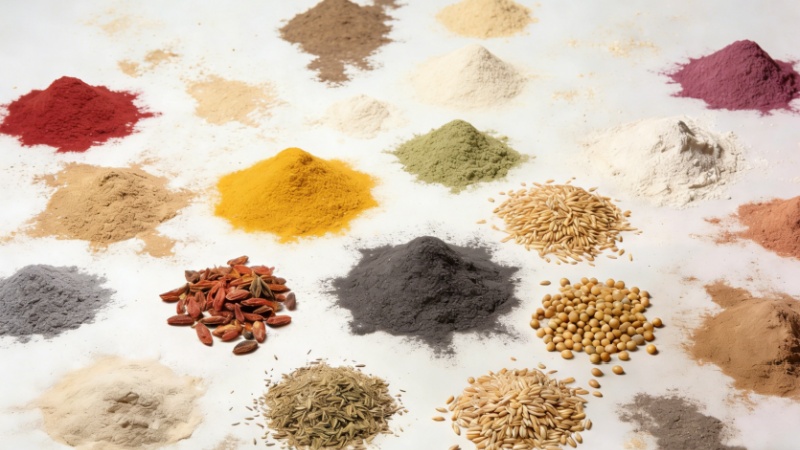
Different testing purposes require different volumes of raw materials. For basic fineness verification and preliminary effect testing, 3 to 5 kilograms of customer raw materials are generally sufficient, helping engineers confirm whether the industrial grinder can reach the target mesh size and observe basic grinding performance.
However, if buyers need accurate and credible production capacity data, small-volume samples cannot support effective verification. Capacity testing requires simulating continuous industrial production, which usually needs dozens of kilograms or more raw materials to obtain stable and referable output range data for all types of pulverizer and grinding equipment.
2. Only 100% Identical Raw Materials Ensure Valid Test Results
Many buyers mistakenly believe that similar raw materials can replace their actual production materials for trial testing on their industrial grinder or pulverizer. In fact, raw materials that are merely similar but not completely identical can only provide vague reference results and cannot reflect real on-site production performance.
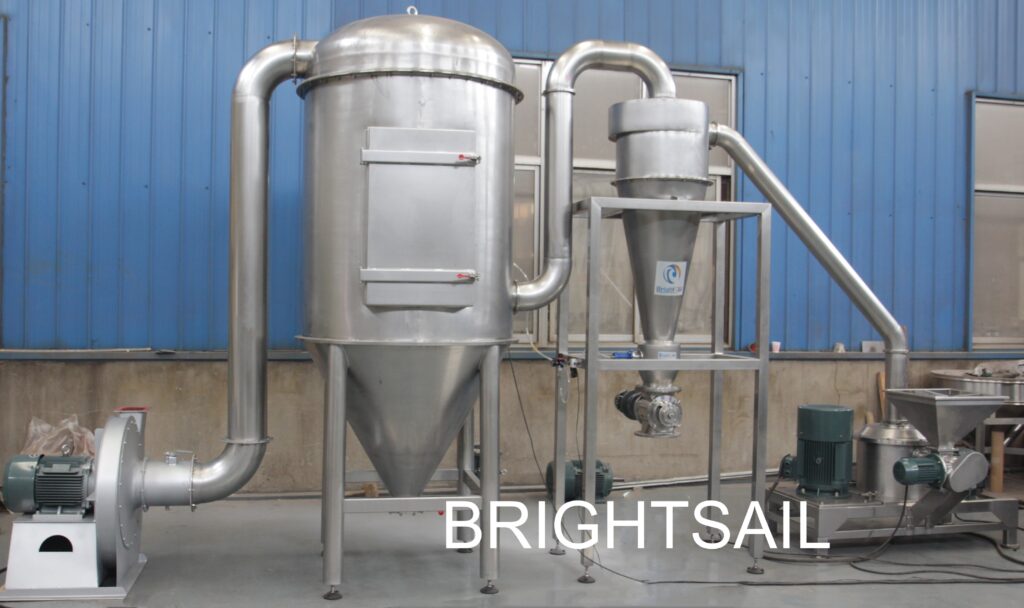
Raw materials from different origins carry different moisture content, fiber toughness, sugar content and surface characteristics, leading to completely different grinding difficulty and final effects. We have a typical cooperation case with a Thailand client who needed to grind oat bran to 200 mesh using an Air Classifying Mill.
Since our team was uncertain about the exact capacity performance, we requested the client’s authentic raw materials for testing. The client suggested purchasing locally sourced oat bran in China for trial. During the test, the purchased oat bran severely stuck inside the grinding chamber and failed normal processing. The client was confused about the inconsistent performance. After the client sent genuine Thailand-produced oat bran, we successfully completed stable grinding and verified qualified fineness and capacity. Eventually, the client purchased a BSP-500 Air Classifying Mill for formal factory production.
3. Accurate Fineness Data, Estimated Capacity Range
After trial grinding via a pin mill or Air Classifying Mill, finished powder samples can be sent to the professional laboratory for particle size detection with a laser particle size analyzer. The particle size distribution data obtained through professional testing is highly accurate and can directly confirm whether the powder meets production standards.
Nevertheless, production capacity data obtained from laboratory testing can only be provided as a reasonable range instead of fixed, absolute values. For example, professional suppliers will mark the capacity range as 600–800kg/h rather than fixed figures.
The core reason for inaccurate test capacity lies in unstable laboratory operating conditions. Normally, Air Classifying Mill and pin mill grinding test requires two professional engineers to cooperate: one staff controls the feeding speed while another monitors the equipment operating current in real time. When the current rises, the feeding speed must be reduced to avoid overload; when the current is stable or low, the feeding speed can be increased appropriately.
Limited raw material quantity leads to fluctuating feeding speed throughout the test, which cannot simulate the stable, continuous feeding state of formal large-scale production. Thus, laboratory test capacity cannot fully represent actual factory output, which may be slightly higher or lower than the test data.
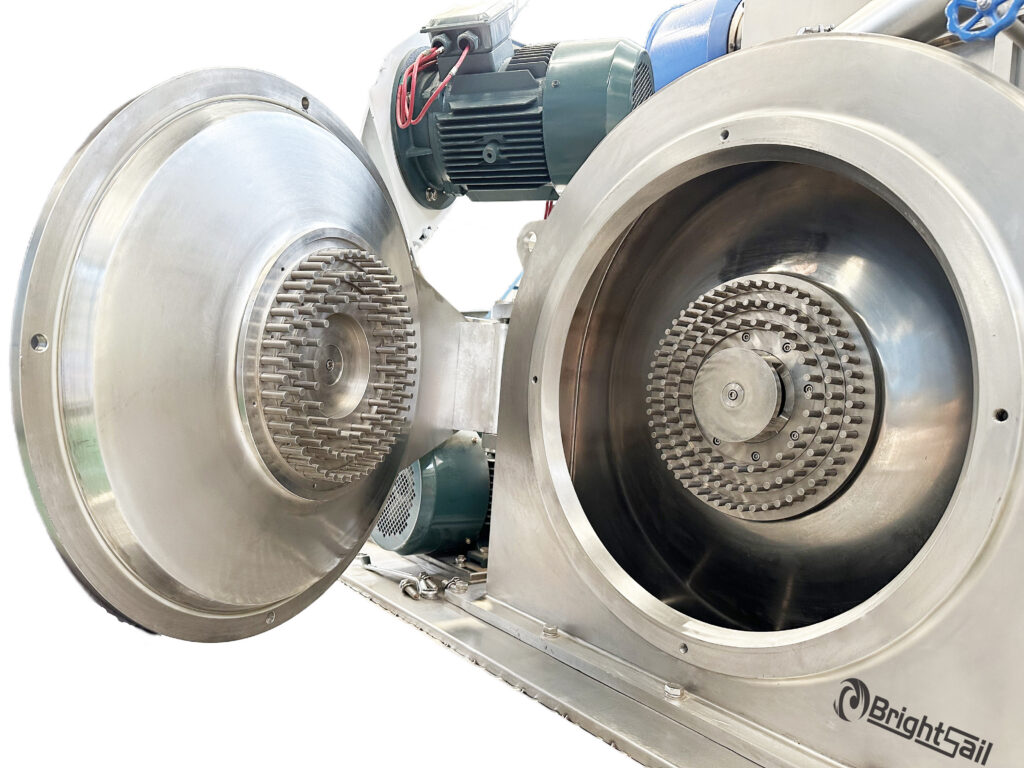
Additionally, short-time trial tests cannot expose long-term operational risks. For oily and sticky raw materials, the equipment may run smoothly within the first 5 minutes of testing. However, after long-hour continuous operation, fine powder will gradually adhere to the grinding chamber, pipeline and internal components, causing blockage, unstable fineness and declining output. For such materials, a wide chamber pin mill is the ideal solution, which can also be equipped with a liquid nitrogen auxiliary system for low-temperature anti-stick grinding.
4. Do Not Only Trust Visual Test Effects
Most buyers intuitively judge industrial grinder machine quality based on short-time trial effects. However, some equipment performs well within tens of minutes of testing but fails to maintain stability during long-term mass production. Therefore, buyers should fully refer to professional engineer suggestions instead of only trusting visual test results and peer experience.
We have a typical failure case with an American customer who needed to produce fine shrimp powder. The customer insisted on purchasing a disc mill for coarse shrimp powder processing, following peer recommendations. Our professional engineers clearly reminded the client that disc mills are more suitable for brittle crystal materials, unlike professional pulverizer units designed for biological powder processing. When processing high-fiber biological materials like shrimp powder, the machine generates serious heat after long-hour operation, causing material deterioration and unstable production.
The customer insisted on their own choice, and we completed equipment delivery accordingly. After on-site operation, the machine suffered severe overheating and failed to meet continuous production demands. Finally, the client returned to BRIGHTSAIL to purchase updated professional blade components to optimize production.
5. Consider On-Site Environmental Differences
Ambient temperature and humidity greatly affect grinding performance of Air Classifying Mill and other industrial grinder devices, especially for heat-sensitive, moisture-prone and sticky materials. The environmental conditions of the supplier’s testing factory are usually different from the buyer’s actual production workshop.
For example, BRIGHTSAIL’s testing workshop faces temperature changes between hot summers and cold winters with relatively high humidity. In contrast, some buyers’ workshops feature lower temperature and drier air, which is more friendly for powder grinding and effectively reduces adhesion and overheating risks.
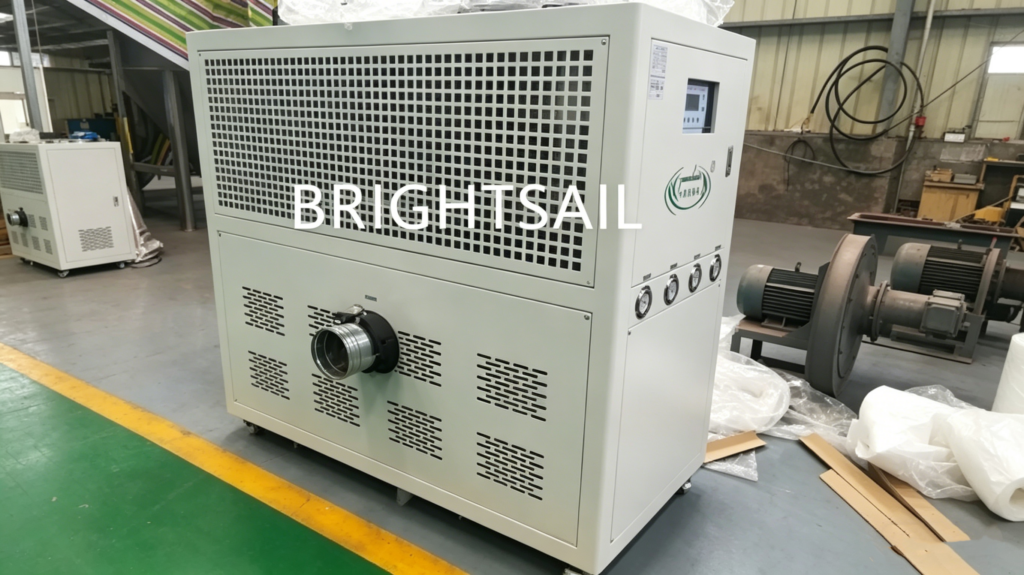
Some overseas factories are located in tropical regions with year-round high temperatures and high humidity. For heat-sensitive raw materials in these regions, buyers need to equip auxiliary cooling devices such as industrial air coolers or liquid nitrogen systems. Professional suppliers will fully evaluate environmental differences in advance to predict potential on-site production problems and provide targeted matching solutions.
6. Standard Rules for Trial Test Fees
Most professional machinery suppliers follow unified and transparent testing charging standards for pulverizer and industrial grinder trial services. Small-scale conventional material testing is completely free for customers. However, if buyers require repeated multiple tests for the same raw material to verify stability, suppliers will charge a reasonable testing labor fee.
Besides, low-temperature grinding tests requiring liquid nitrogen assistance will generate extra material costs, so corresponding liquid nitrogen fees will be charged separately. All charging items are transparent and confirmed with customers before testing.
7. Full Raw Material Information Disclosure
Buyers have the responsibility to fully disclose complete raw material information before running tests on any industrial grinder or Air Classifying Mill, especially for chemical raw materials. Suppliers must confirm material attributes to ensure workshop operational safety.
If the raw materials are toxic, corrosive, flammable or explosive, professional manufacturers will refuse trial testing. Standardized safety management protects both factory staff and customers, avoiding potential safety hazards during testing and formal production.
8. What If Customers Cannot Attend the Grinding Test On-Site?
Many global purchasers are located in overseas countries with long distances and tight schedules, making it impossible to travel to the supplier’s factory to witness industrial grinder, pulverizer, Air Classifying Mill or pin mill trial tests in person. This is a very common situation in international powder machinery cooperation.
To solve this problem and ensure full test transparency for overseas clients, professional suppliers like BRIGHTSAIL provide real-time video live streaming for all grinding testing procedures. Customers can join video calls remotely, watch the entire trial process online, including raw material feeding, equipment operation, powder discharging, and finished sample collection.
Remote live test streaming allows global buyers to clearly observe the actual working status of the industrial grinder, verify real fineness performance, check for material adhesion or blockage issues, and confirm approximate production status without traveling abroad. This convenient and reliable testing method has been widely adopted by numerous overseas customers, ensuring test authenticity while greatly saving customers’ time and travel costs.
Conclusion
Grinding testing is the most critical pre-purchase step for Air Classifying Mill and pulverizer selection. Test validity depends on authentic raw materials, sufficient sample quantity, simulated production environment, remote live verification and professional engineer judgment.
Buyers should not judge equipment performance merely through short-time visual effects or fixed test data. Choosing a supplier with standardized testing processes, rich application experience and transparent testing rules can effectively avoid industrial grinder selection mistakes and achieve stable, high-yield, qualified powder production.