
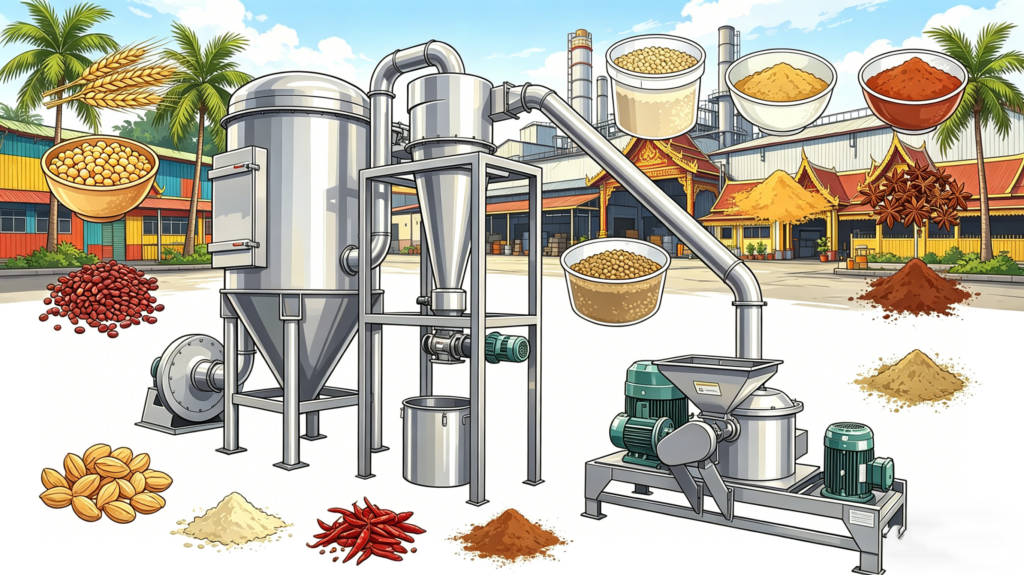
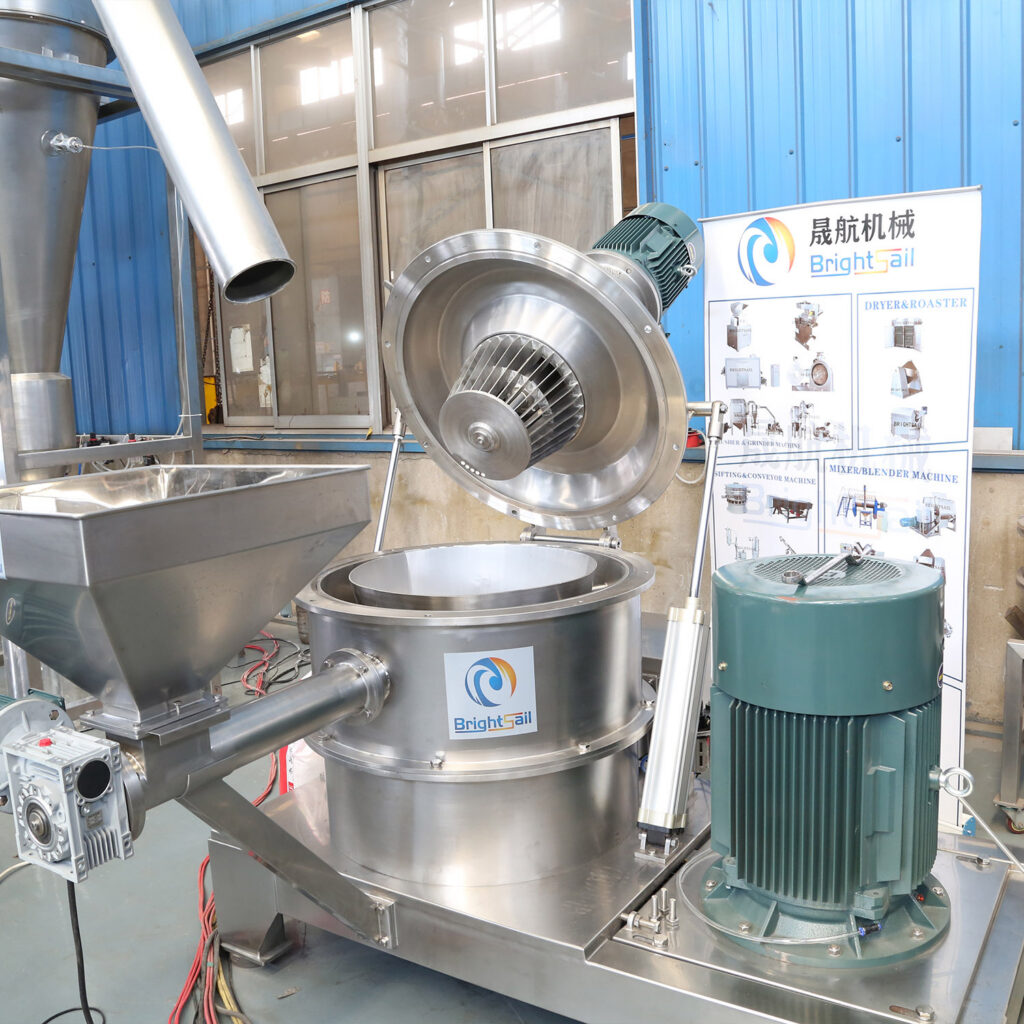
The Air Classifying Mill is a classic and widely adopted grinding solution across multiple industries. Due to its versatile performance, it has become a mainstream option for chemical, food, agricultural and powder processing production. However, with countless manufacturers and similar models on the market, many buyers feel confused and make wrong choices easily.
Most purchasers only compare prices and basic speed parameters, ignoring core design differences and practical performance. To help you distinguish high-quality equipment from ordinary models, we sorted out professional and practical standards. This guide shares how to judge the quality and select a reliable equipment supplier.

1. Judge by Formal Particle Size Test Report
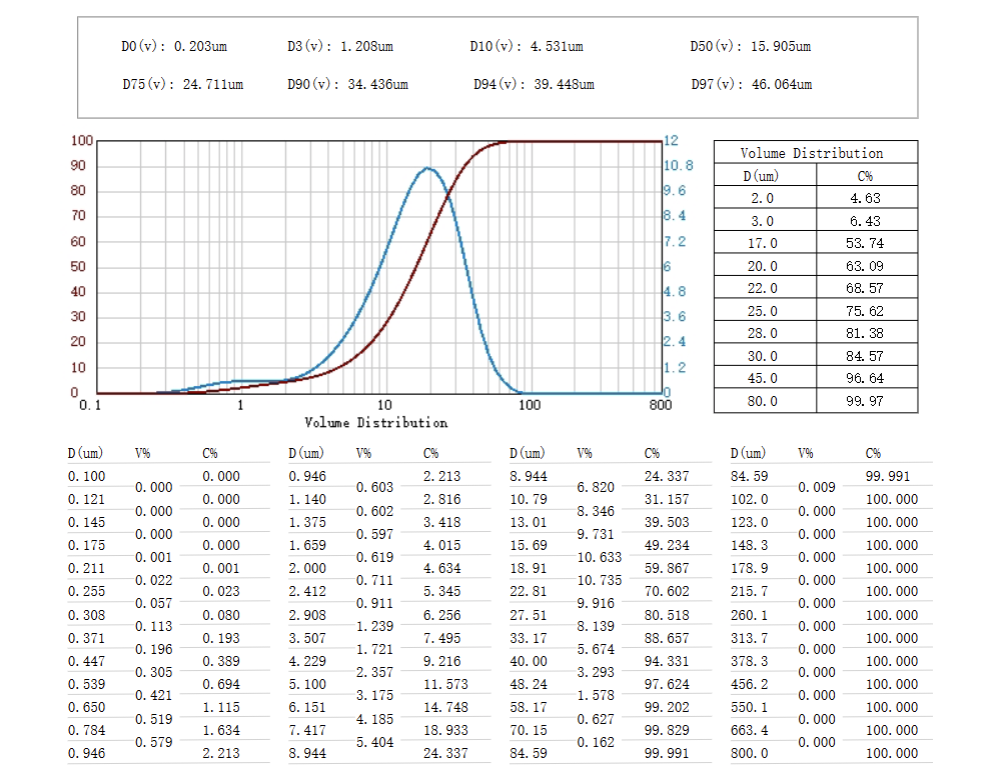
When purchasing grinding equipment, never trust simple verbal descriptions of fineness. The most direct and effective reference is the official particle size test report with real material testing data.
This point is especially critical for ultra-fine chemical powder processing. A qualified powder particle size curve must show one complete and independent peak. The narrower the peak width, the more concentrated the particle size range, which means more uniform finished powder.
Uniform particle distribution greatly improves downstream product stability and commercial value. Manufacturers that cannot provide complete test data often have unstable grinding performance, leading to inconsistent finished powder during mass production.
2. Focus on Linear Speed, Not Only Rotation Speed
Most buyers only pay attention to rotation speed, because higher rotating speed usually brings better processing accuracy and much finer powder. Even so, most suppliers rarely take the initiative to explain linear speed to customers, which is the hidden key factor. Simply put, the linear speed of a grinding pulverizer refers to the circumferential speed of hammer blades, cutting blades, or gear tooth tips, measured in meters per second (m/s). It represents the traveling distance of the outermost rotor impact point every second, directly generating the impact kinetic energy for material crushing. As a decisive technical indicator, linear speed fundamentally governs grinding efficiency, finished powder fineness, component wear rate, and overall equipment energy consumption.
It is unscientific to simply compare rotation speed between different models. Small-sized machines naturally run at a high speed, while large industrial equipment operates at a relatively low rpm. If you only judge performance by rpm data, you will get completely wrong conclusions.
Professional manufacturers match rational linear speed according to material hardness, stickiness and target fineness. Proper linear configuration prevents overheating, material adhesion and excessive wear, keeping the whole system stable for long-term operation.
3. Customized Core Components, Not Uniform General Design
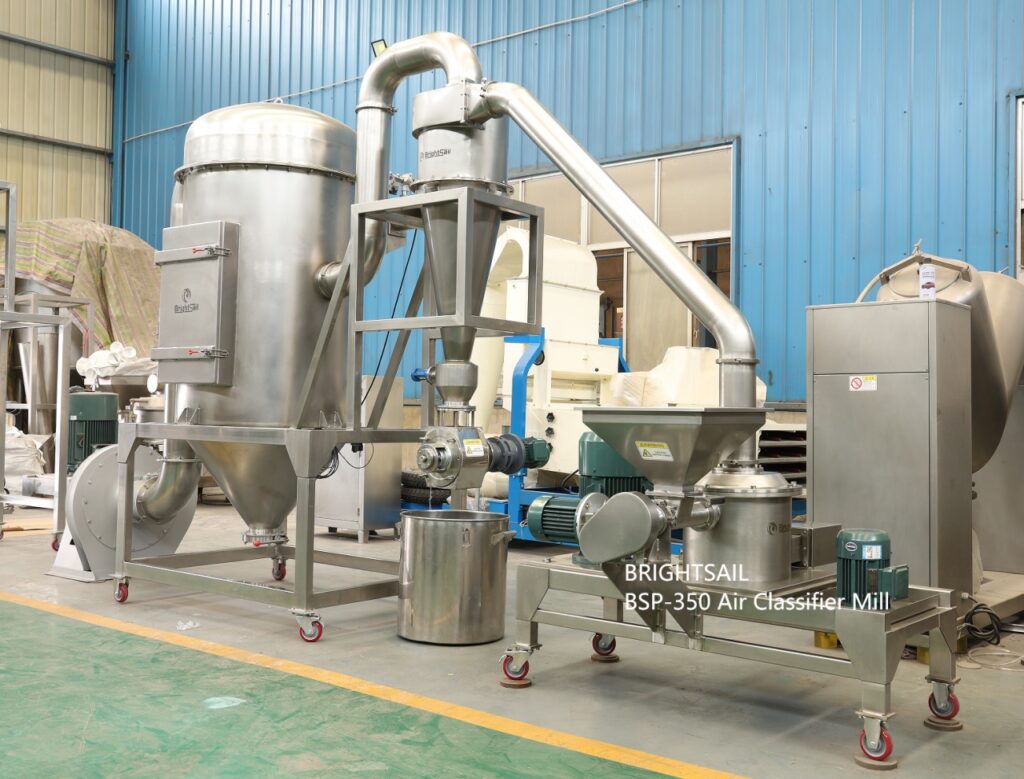
An Air Classifying Mill covers a wide range of materials with different abrasiveness, oil content, moisture and viscosity. A universal one-size-fits-all structure is a sign of unprofessional manufacturing. Reliable brands tailor core parts for different application scenarios.
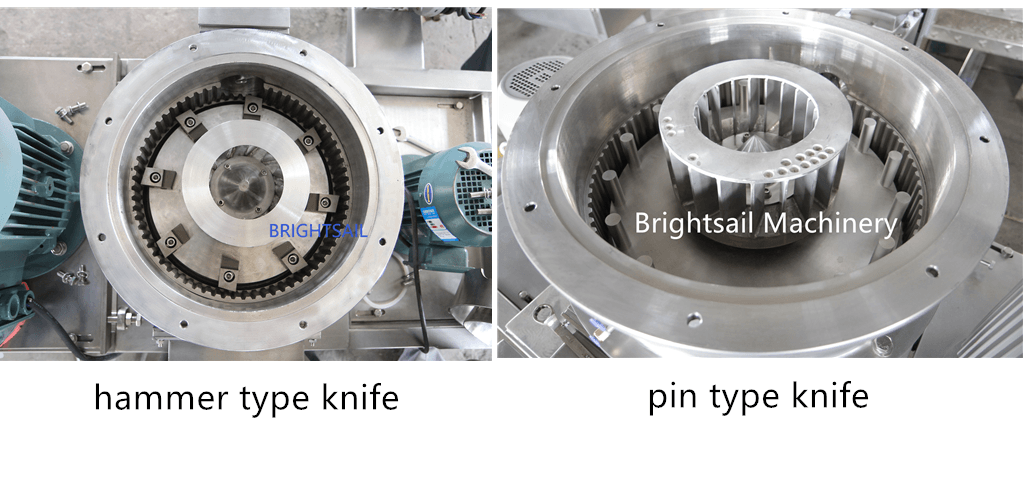
Blades, toothed rings, classifier wheels and grinding chambers should be fully customized:
– For high-abrasive materials like rice husk: Standard blades wear out rapidly. We redesigned blade material and outline, greatly extending service life for our Indonesia customer.
– For sugar processing: Cylindrical blades work perfectly for 200–300 mesh icing sugar, while square blades are adopted for 400–500 mesh fine powder to achieve superior fineness.
– For slightly oily or sticky materials: Optimized classifier wheels reduce adhesion. Meanwhile, wide chamber options lower internal temperature and allow easier daily cleaning. Beyond chamber structure optimization, BRIGHTSAIL upgrades the entire auxiliary system for high-oil raw materials to solve adhesion and blockage issues thoroughly. We adopt large-radius bend pipes to reduce material accumulation at turning points, install air hammers at every pipe corner to continuously shake off adhered powder, and equip quick-release rotary airlock valves. For extra sticky oily powder, we even apply Teflon coating on airlock components and internal piping surfaces, greatly minimizing powder sticking and simplifying routine disassembly and cleaning.
Customized upgrades on materials and structures greatly improve production efficiency and overall user satisfaction.
4. Equipment Continuous Operation Stability
In actual industrial production, most grain and food processing factories face seasonal order surges. During peak seasons, production lines often run 24 hours a day without shutdown. Therefore, whether the Air Classifying Mill supports long-duration continuous operation is one of the most critical indicators that directly determines overall factory production stability and output capacity.
Most modern factories require 24-hour non-stop production under high load. Long-time continuous operation easily causes bearing damage and unexpected downtime, affecting the whole production schedule.
To solve this pain point, BRIGHTSAIL equips large Air Classifying Mill units with exclusive protective structures. Reinforced bearing design and optimized transmission systems ensure stable round-the-clock operation, lowering failure rates and long-term maintenance costs.
5. Evaluate Supplier Global Application Experience
The same raw material carries completely different physical features in different countries, including moisture, sugar content, fiber hardness and natural humidity tolerance. All these factors directly change grinding difficulty and final output.
A typical example is mango raw materials from China and India; their unique composition leads to totally different capacity and grinding results. A machine running efficiently in Germany may not reach the same output in South Asia or other tropical regions.
Experienced manufacturers accumulate abundant global case data. They adjust tiny structures and operational parameters according to local material traits, solving actual on-site problems quickly.
BRIGHTSAIL continuously collects on-site feedback from worldwide clients, iterating equipment design to fit diversified raw materials and working conditions.
This also explains why many buyers are willing to invest in premium grinding equipment from German manufacturers. German powder machinery factories have over a century of manufacturing heritage and unrivaled global field application experience, which enables their machines to deliver consistent and reliable performance across diverse scenarios. In recent years, however, outstanding Chinese industrial equipment suppliers have also matured rapidly in this niche field. As one of the most professional manufacturers, BRIGHTSAIL has deeply focused on powder grinding technology and accumulated massive verified project experience in food and general chemical industries, providing cost-effective, stable, and customized Air Classifying Mill solutions for global buyers.
6. Verify Supplier Professionalism Through Quotation Capacity Description
Many buyers only check equipment price when receiving quotations, ignoring the description accuracy of production capacity, which is another key standard to distinguish professional and unprofessional suppliers. Many generic quotation sheets simply list fixed output data, such as “500kg/h for sugar grinding”. This kind of vague description is extremely unrigorous and cannot serve as valid production reference.
In fact, the output of an Air Classifying Mill is never fixed. It fluctuates drastically based on raw material varieties, moisture content, hardness, and target powder fineness. A truly professional supplier will provide customized capacity data based on the buyer’s specific processing requirements. The formal quotation will list clear output ranges corresponding to confirmed raw materials and target mesh sizes, rather than universal fixed values.
For example, professional quotations will clearly distinguish different scenarios: white sugar grinding at 200 mesh, white sugar grinding at 400 mesh, or brown sugar processing. Each scenario matches an independent and accurate capacity range. This detailed, scenario-based description proves that the supplier has sufficient practical experience and rigorous business attitude, effectively avoiding later disputes over insufficient output and unqualified production efficiency.
7. Additional Supplier Selection References
– Professional raw material testing and customized processing solutions
– Food-grade sanitary design for easy disassembly and deep cleaning
– Complete remote and on-site technical support
– Stable spare parts supply for long-term after-sales service
Conclusion
Selecting a qualified Air Classifying Mill is never based on price and basic parameters alone. The core evaluation factors cover standardized particle size testing, rational speed matching, application-oriented component customization, long-running stability, scenario-based quotation capacity definition, and rich global application experience.
Avoid generic machines with fixed design. Only targeted configuration can match your raw materials perfectly. Choosing an experienced supplier helps you avoid selection mistakes and achieve stable, high-efficiency powder processing.