
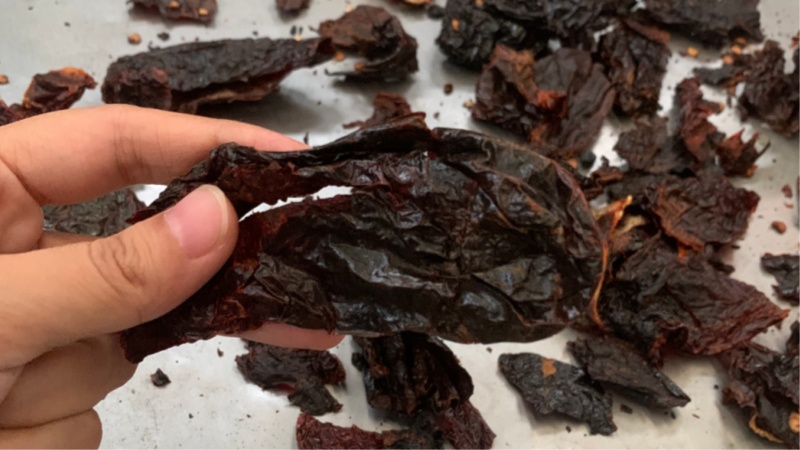
Last month a spice processor in the United States asked us to quote a machine for grinding Mexican chili peppers. We recommended our screen-type hammer mill — the classic design, with a ring of perforated screen wrapping the lower grinding chamber.
Then he saw a different machine at a local dealer. Same working principle, but the chamber had a toothed ring, and the screen frame carried teeth as well. It looked like the more advanced machine, and he was ready to switch.
So we walked him through the difference. What follows is that explanation — because the same decision comes up with almost every buyer choosing a hammer mill for spices, herbs or chemicals, and it usually comes down to one part inside the grinding chamber.
Two Hammer Mill Types: Both Have a Screen — the Difference Is the Teeth
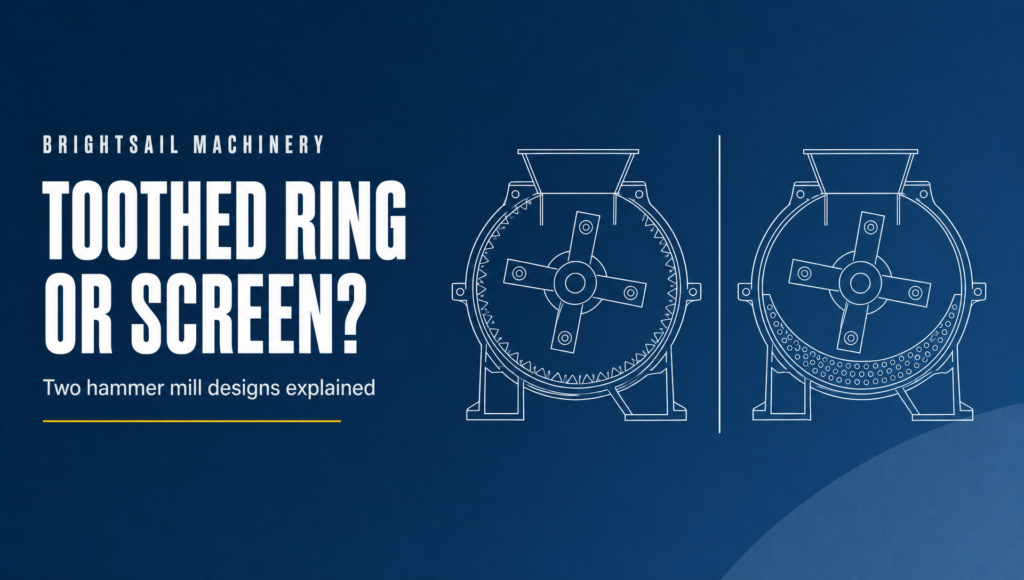
This is the first thing to get straight, because the two machines are often described as if one of them has no screen at all. Both have one. The real difference is what sits in the grinding chamber around the rotor.
Swing-hammer mill with a toothed ring. The rotor carries pivoted swing hammers. The inner wall of the chamber is lined with a toothed ring (a corrugated liner), and the screen frame below it is toothed too, so the teeth form a continuous ring around the hammers’ path.
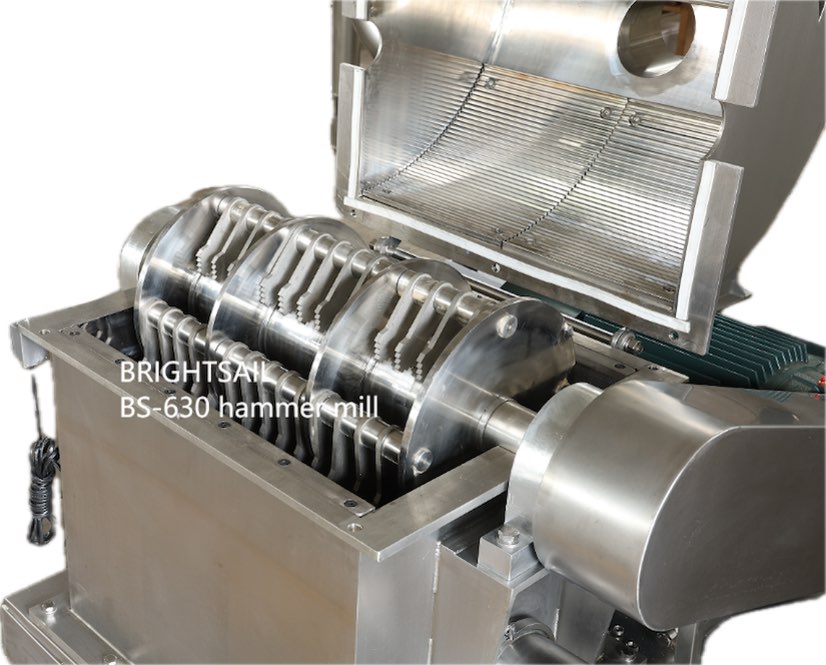
Standard screen-type hammer mill. The rotor carries flat hammer blades mounted on horizontal pins. A semi-cylindrical perforated screen wraps the lower chamber. There are no stationary teeth anywhere in the grinding chamber.
What the Toothed Ring Actually Does
In a screen-type mill, material is reduced mainly by impact: the hammers strike it, and anything small enough to pass the screen apertures leaves the chamber.
A toothed ring adds a second and third mechanism. After the initial impact, particles have to travel through the narrow gap between the passing hammer tips and the stationary teeth. In that gap they are sheared, scraped and rubbed against the teeth before they can reach the screen.
The practical result: at the same screen aperture, a toothed ring hammer mill can produce a finer powder. The teeth keep working on particles that would otherwise have already passed through the screen.
That extra shearing action is why the toothed design performs best on fibrous and tough materials — herbs, stems, roots and other botanicals. Fibers resist a single impact, and it takes repeated cutting and rubbing to break them down. That is exactly what a toothed ring does.
For high-fibre materials such as turmeric, ginger, cinnamon bark and other roots and barks, this makes the toothed-ring design the one we recommend — not simply an option, but the better match.
Where the Toothed Ring Is Not the Best Fit
Both designs have their own trade-offs, and it is fair to lay them out. A toothed ring is not an upgrade over a screen — it is a different design, and one that is more selective about the materials it suits.
Oily materials are where the toothed ring is at a disadvantage. Chili powder carries natural oil, and when grinding oily spices the powder tends to build up on the teeth rather than falling away cleanly. A toothed ring has more surface and more crevices than a smooth screen, so it is less forgiving of oil — and this is the most common cause of hammer mill clogging. Cleaning takes longer, and production stops more often.
The most important difference: a clogged screen can be worked around, a clogged toothed ring usually cannot.
- A clogged screen has a fix. Fit a screen with larger apertures so material keeps discharging and grinding stays continuous, and use a vibrating sifter for powder downstream to hold the fineness. Continuity comes from the larger screen; fineness comes from the sifter. Output and fineness are both covered, and the line does not stop.
- A clogged toothed ring is a different problem. You cannot simply change the aperture to get around it. Material that cannot leave the chamber keeps being rubbed and sheared inside, and the machine runs hotter and hotter. Rising temperature affects the aroma and colour of oily products, and heat-sensitive materials suffer most. In practice, production usually stops for manual cleaning. A clogged screen is a problem you can adjust around; a clogged toothed ring is closer to a problem that forces a shutdown.
- One clarification: a toothed-ring machine can also be fitted with a cooling air unit. Cooling air addresses temperature, not adhesion — material still builds up on the teeth. Cooling extends how long the machine can run, but the clogging risk stays higher than on a screen-type machine, because cooling changes temperature rather than adhesion.
It is one more wear part. A screen-type mill wears hammers and screens. A toothed-ring mill wears hammers, screens and the ring. Routine maintenance cost is higher.
Our own trial run with cumin is the clearest example. We tested cumin through a toothed-ring machine, and the chamber clogged quickly — the powder packed onto the teeth and the machine stopped performing. It is the kind of result that is easy to discover after delivery, and much better to know before ordering.
“Just dry the material harder” works, but drying is not free. If a customer dries chili to a very low moisture content, a toothed-ring machine will usually handle it. But that drying step costs fuel, time and handling. It belongs in the comparison — not just the machine price.
Side-by-Side Comparison
| Swing hammer + toothed ring | Blade hammers + screen | |
|---|---|---|
| Primary grinding action | Impact + shearing + attrition | Impact |
| Fineness at the same screen aperture | Finer — teeth act as a secondary grinding stage | Standard for the screen used |
| Oily spices (chili, cumin) | Higher risk of build-up on the teeth | More stable; screen is easier to clean |
| Fibrous materials (herbs, roots, botanicals) | Strongly recommended | Limited by impact-only action |
| Recovering from clogging / low fineness | Cannot be worked around by changing apertures — production stops for cleaning, and the chamber runs hotter and hotter | Fit a larger-aperture screen for continuity, and let a vibrating sifter hold the fineness |
| Wear parts | Hammers + screen + toothed ring | Hammers + screen |
| Maintenance cost | Higher | Lower |
| Adapting to a different material later | More sensitive to material changes | More universal |
| Long continuous runs | A cooling air unit can also be fitted; but temperature climbs quickly if the ring clogs, and clogging risk stays higher than on a screen-type machine | Can be paired with a cooling air unit; discharge is more stable |
How to Choose a Hammer Mill: Three Questions
- Does the material contain oil? Chili, cumin and similar oily spices carry natural oil. Choose the screen-type mill. Oil plus teeth is a maintenance problem waiting to happen. One more threshold is worth stating up front: materials with a noticeably higher oil content are outside a hammer mill’s range altogether and need a different process — oil content is the first screening criterion.
- Is the material fibrous? Herbs, roots, stems and other botanicals are where a toothed ring earns its cost. For these materials we actively recommend it.
- Will the material change later? If the customer is a spice processor who may grind other products in the future, the screen-type mill is the safer, more universal choice.
The framing that helps most is this: don’t ask which machine is more advanced. Ask which machine matches the material you run today — and the one you may run next year.
Back to the Chili Grinding Project
- The customer’s requirement was simple: grind Mexican chili peppers. We recommended the screen-type hammer mill.
- He saw a toothed-ring machine locally and began to lean toward it, assuming it was the better machine.
- We explained the three points above: yes, a toothed ring grinds finer at the same aperture — but chili is oily, so build-up and cleaning become the bigger risk, and maintenance cost rises. For herbs and fibrous botanicals we would have recommended the toothed-ring machine without hesitation. The issue was never that one design is worse; it is that the design has to match the material.
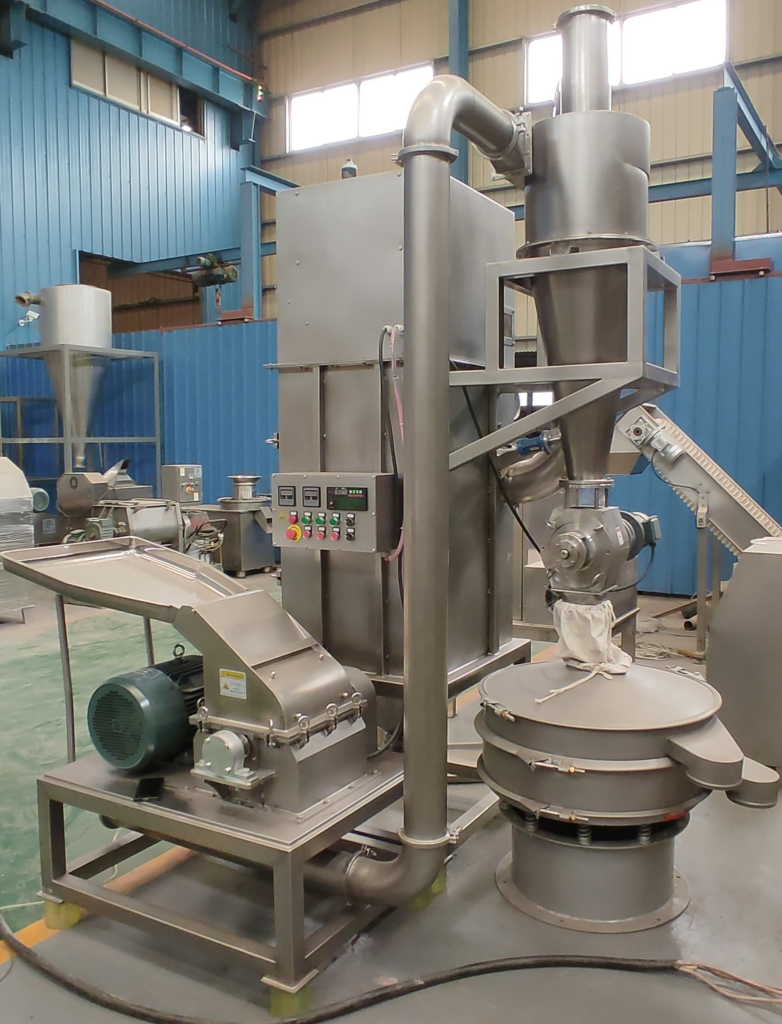
- He was still concerned about fineness. Rather than moving him onto a machine his material did not suit, we proposed something more practical: fit a screen with larger apertures so material keeps discharging and grinding stays continuous, then let a vibrating sifter hold the fineness. Continuity from the screen, fineness from the sifter — less cost, less risk.
- Final order: a screen-type hammer mill plus a cooling air unit, which feeds cool air into the grinding chamber so the machine can run continuously without overheating. (A cooling air unit is not exclusive to the screen-type design — it can be fitted to a toothed-ring machine too. The difference is that clogging risk stays higher on a toothed ring.)
Four Myths Worth Retiring
- “A toothed ring means a better machine.” It means a specialized one. It is a tool for fibrous material, not an upgrade over a screen.
- “Same screen aperture, same fineness.” With a toothed ring, the same aperture yields a finer powder, because the teeth grind again before material exits.
- “Drying the material solves everything.” Drying helps with oil-related build-up, but it adds real cost and does not change how the machine wears.
- “Compare the purchase price and pick the cheaper one.” The toothed ring is an additional wear part. Over 12 to 24 months it usually outweighs the initial price difference.
FAQ
Is a toothed ring the same as a screen? No. The screen controls which particles leave the chamber. The toothed ring sits in the chamber as a stationary grinding surface and works on the material before it reaches the screen.
Why does the toothed-ring design produce finer powder? Because particles are sheared and rubbed between the passing hammers and the stationary teeth after the initial impact, so they are smaller by the time they reach the screen.
Which hammer mill type should I choose for grinding chili or cumin? The screen-type design. Both are oily, and powder build-up on the teeth leads to clogging and extra cleaning downtime.
Which design should I choose for herbs or fibrous botanicals? The toothed-ring design. Fibrous material needs the repeated shearing action that a plain screen-type chamber does not provide.
Can a toothed ring hammer mill grind turmeric, ginger or other fibrous roots? Yes — this is exactly where the toothed design performs best. Turmeric, ginger, cinnamon bark and similar roots and barks need repeated shearing rather than a single impact, so the teeth do real work here. The one condition is feed moisture: the drier the root, the more stable the throughput.
What is the difference between a hammer mill and a pulverizer? A pulverizer is the broader term — screen-type and toothed-ring hammer mills, disc mills, turbo mills and air classifier mills all fall under it. Within hammer mills, the practical choice is between a plain hammer mill with a screen (impact only) and one with a toothed ring (impact plus shearing). In short, hammer mill vs pulverizer is not an either/or: every hammer mill is a pulverizer, but not every pulverizer is a hammer mill.
What if I want the toothed-ring design for an oily product anyway? Drying the material to a low moisture content helps, as does running shorter cycles and cleaning on a fixed schedule. We will tell you honestly whether it is worth it for your material.
What if the screen clogs, or the screen-type machine does not grind finely enough? Fit a screen with larger apertures to keep discharge flowing and grinding continuous, then use a vibrating sifter downstream to hold the fineness. Output and fineness are both covered, and the line keeps running. If you need ultra-fine powder, an air classifier mill is the next step up.
What happens if the toothed ring clogs? It cannot be worked around by changing apertures, so production normally stops for manual cleaning. With material unable to leave the chamber, it is rubbed and sheared repeatedly inside, and the machine runs hotter and hotter. That affects oily and heat-sensitive materials most, and it is the main reason we recommend the screen-type design for oily products.
How do I keep the chamber cool during long runs? A cooling air unit that feeds cool air into the grinding chamber is the usual solution, and it is what this customer ordered alongside the mill. Two things to keep in mind: a toothed-ring machine can be fitted with a cooling air unit as well — cooling addresses temperature, not adhesion, so its clogging risk stays higher than a screen-type machine’s; and if material builds up and cannot discharge, chamber temperature climbs much faster, so feed rate and screen condition need to be watched together.
Still Deciding Which Hammer Mill Fits?
There is no design that is always better. There is only the design that fits your material, your target fineness and the way you plan to run the machine.
For oily spices such as chili and cumin, the screen-type mill is the better match. For high-fibre materials such as turmeric, ginger, cinnamon bark and other botanicals, the toothed-ring design is the better match — at the same screen aperture it delivers the finer powder. Both are good machines; they are good at different jobs.
Tell us what you are grinding — oil content, fiber content, feed moisture and target fineness — and our engineers will recommend a design rather than a catalogue number, whether you need a chili grinding machine, a spice grinding machine or a herb grinding machine for fibrous botanicals.