

Powder particle consistency is one of the most critical indicators across food, chemical, pharmaceutical, grain processing and advanced powder manufacturing sectors. The particle size of finished powders directly impacts product quality, production yield and commercial value. Many processing plants frequently encounter recurring operational issues: inconsistent particle distribution, reduced throughput during ultra-fine grinding runs, material adhesion caused by improper parameter setup, and unstable fineness results when switching raw materials.
In most scenarios, poor grinding outcomes do not stem from defective machinery. Instead, they result from improper single-parameter tuning and insufficient understanding of coordinated machine settings, material-specific traits and equipment mechanical boundaries. This in-depth guide explains professional tuning methods for Air Classifier Mill, Air Classifying Mill, ACM, and ACM grinder units. It covers working principles, standardized operational procedures, application-specific solutions, troubleshooting techniques and verified overseas customer cases to support reliable mass production and equipment optimization.

1. Core Principle: What Determines Powder Fineness?
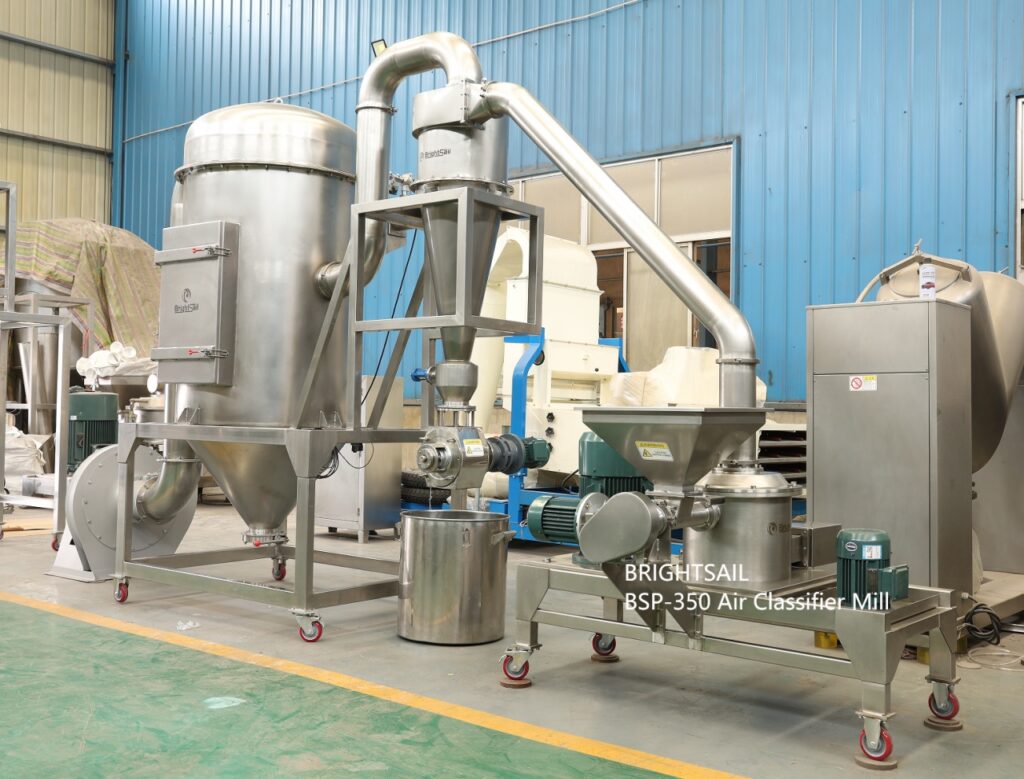
Unlike traditional screen-equipped grinding devices, industrial pulverizer units adopt a screenless operational design. Final particle fineness is governed by two core mechanisms: mechanical impact grinding and dynamic air classification screening.
To simplify the working logic: mechanical grinding breaks bulk raw materials into fine particles, while the air classification system sorts qualified powder sizes. Fan airflow delivers finished particles out of the grinding chamber and dissipates frictional heat, and consistent feeding volume maintains stable operational load.
All tuning operations for Air Classifying Mill equipment follow the same foundational rules:
- The classifier wheel sets the maximum particle fineness threshold
- Fan airflow regulates powder conveying speed and internal airflow balance
- Controlled feeding rate stabilizes chamber grinding density and machine load
- Grinding chamber structure defines material adaptability and temperature performance
Independent adjustment of any single parameter will disrupt internal operational balance, triggering fluctuating fineness, limited production capacity, material wall buildup and heat-induced product degradation.
2. Five Core Fineness Adjustment Dimensions
2.1 Classifier Wheel Speed (Highest Priority)
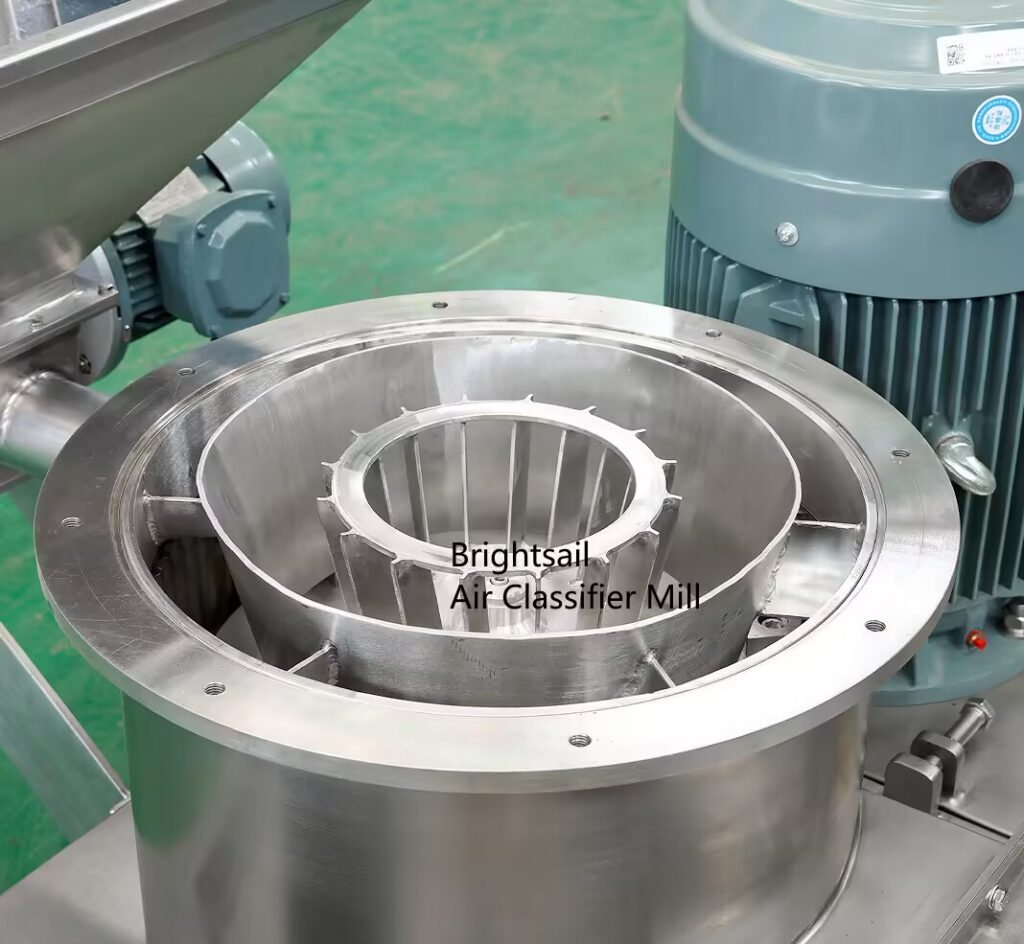
The classifier wheel serves as the precision control component for every ACM grinder. It acts as the primary threshold for separating qualified fine powder from oversized particles.
- Higher rotating speed: Stronger particle interception capacity, producing finer and more uniform finished powder
- Lower rotating speed: Relaxed screening standards, allowing coarser particles to pass through and boosting overall output
Operators should always prioritize classifier wheel calibration before adjusting fan airflow or feeding speed to avoid unbalanced grinding conditions.
2.2 Fan Airflow (Airfield & Conveying Control)
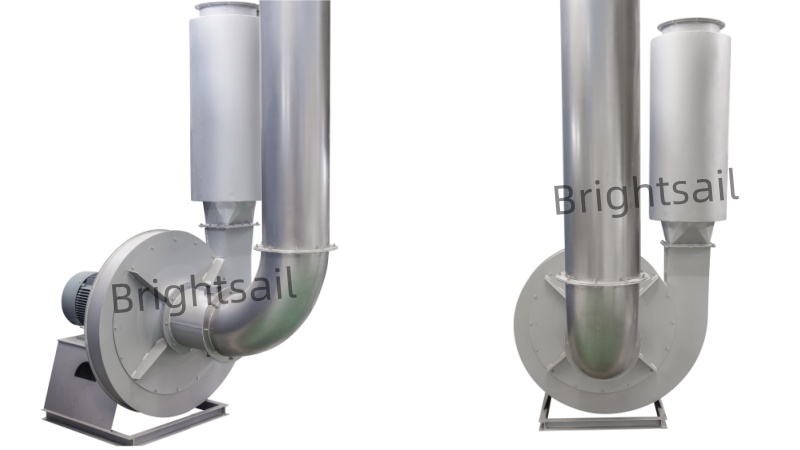
The fan system transports screened fine powder out of the grinding chamber while removing frictional heat generated during continuous grinding. Operators can adjust airflow volume via duct butterfly valves based on production demands.
- Higher airflow volume: Enhanced conveying force, slightly coarser finished particles and improved hourly capacity
- Lower airflow volume: Reduced internal air velocity for finer powder output; excessive airflow reduction may cause powder accumulation and chamber blockage
2.3 Feeding Rate (Machine Load Balance)
Steady feeding speed directly stabilizes material density inside the grinding chamber. Overfeeding leads to crowded chamber conditions, incomplete particle fragmentation and inconsistent fineness results.
- Lower feeding rate: Extends material retention time for sufficient impact grinding, delivering finer, more homogeneous powder
- Higher feeding rate: Increases machine operational load, produces relatively coarser powder and elevates production throughput
2.4 Chamber Structure (Wide Chamber vs Narrow Chamber)
Different chamber structural designs alter internal airflow circulation and heat generation, leading to distinct grinding performance across diverse materials:
- Narrow chamber: Compact internal space increases material impact frequency and grinding force alongside higher operational temperature. This setup suits heat-resistant dry materials requiring ultra-fine processing.
- Wide chamber: Optimized internal space enables smoother air circulation and lower operating temperature, effectively minimizing material wall adhesion. It matches most food-grade, slightly sticky and heat-sensitive raw materials.
2.5 Main Motor Grinding Speed (Easily Overlooked)
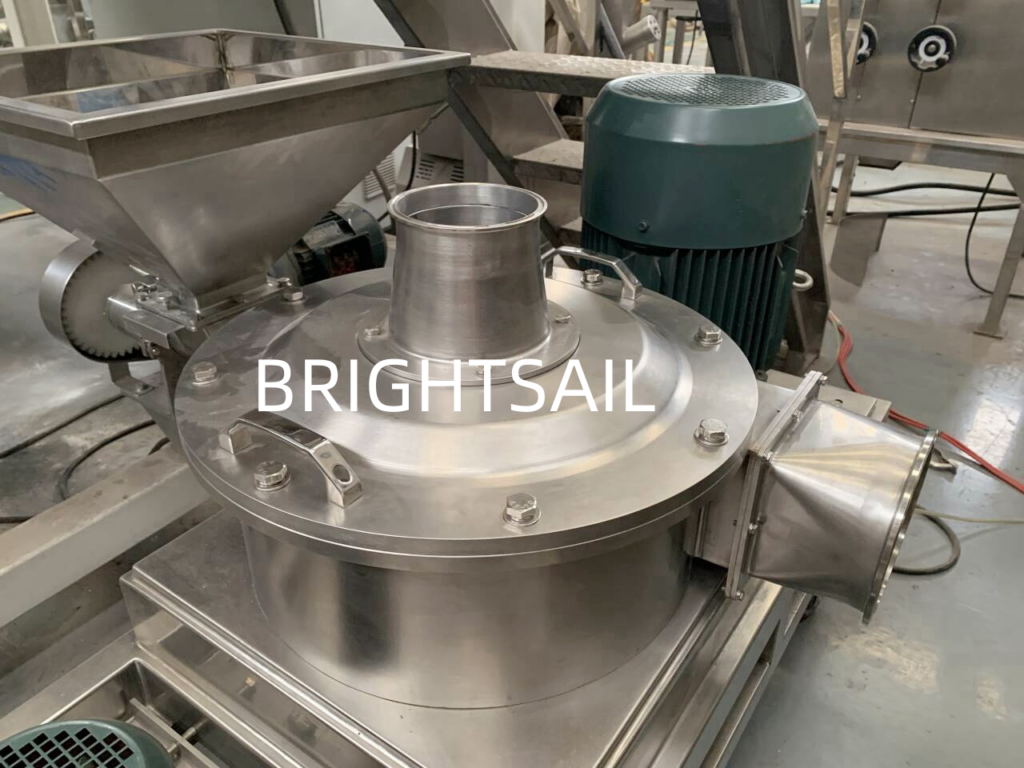
Most on-site operators only adjust classifier wheel speed and fan airflow while neglecting main rotor speed. The classifier wheel merely screens finished particle sizes, whereas the main motor speed determines the fundamental grinding intensity of the entire Air Classifier Mill.
- Higher main motor speed: Faster hammer impact velocity achieves thorough material fragmentation for finer base powder
- Lower main motor speed: Weakens impact force to restrict excessive grinding and generate coarser particle output
It is vital to note that standard ACM machinery is engineered for ultra-fine particle processing. Simply reducing classifier wheel speed cannot offset the equipment’s inherent strong grinding power. Adjusting main motor speed is mandatory when manufacturers need to produce coarse powder batches.
2.6 Wear Parts & Machine Condition
Worn hammers, pin discs and chamber liners weaken grinding impact force. Even with unchanged operational parameters, finished powder gradually becomes coarser and inconsistent. Routine inspection and timely replacement of consumable components are essential to sustain stable long-term mass production.
3. Standard Tuning Workflow for Mass Production
3.1 Finished Powder Too Coarse
Recommended tuning sequence: Reduce feeding rate → Increase classifier wheel speed → Slightly lower fan airflow
Reducing feed volume ensures every material particle receives adequate grinding impact. Subsequent classifier speed improvement enhances screening precision, and minor airflow adjustments stabilize internal chamber airflow for qualified fine powder output.
3.2 Finished Powder Too Fine (Low Capacity / Overheating)
Recommended tuning sequence: Increase fan airflow → Reduce classifier wheel speed → Moderately raise feeding volume
Manufacturers first optimize powder conveying efficiency, relax particle screening criteria, and appropriately boost feeding volume to balance qualified fineness and maximum production yield.
4. Material-Specific Tuning Solutions
4.1 Grain, Bean & Pasta Waste
Material features: Low oil content, mild viscosity, heat sensitivity and high caking tendency under sustained grinding heat
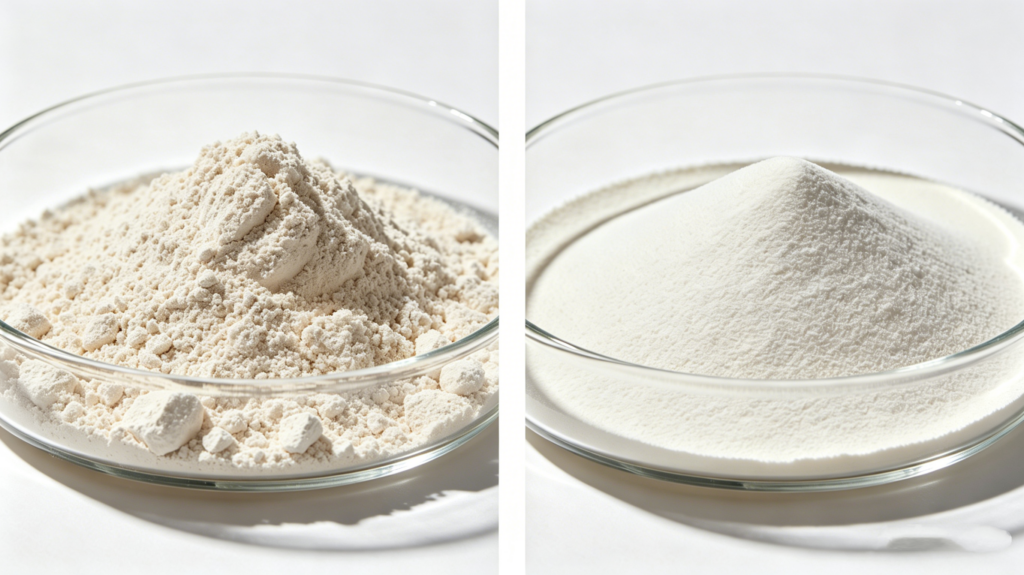
Solution: Deploy wide-chamber Air Classifying Mill configuration with medium fan airflow and moderate classifier rotation speed. The typical particle range for protein and starch physical separation sits at D90 30–60μm, delivering stable separation results without adhesion or agglomeration.
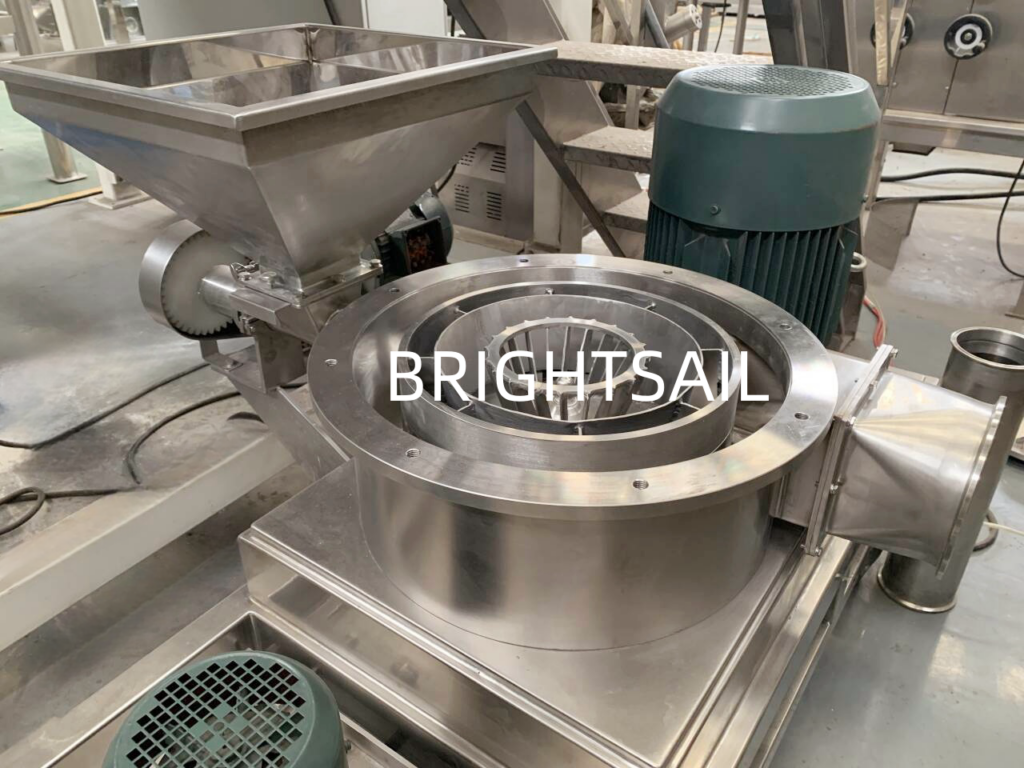
4.2 General Dry Chemical Powder
Material features: Heat-resistant, fully dry, non-viscous and naturally brittle
Solution: Adopt narrow-chamber setup, elevated classifier speed and controlled low feeding volume to produce consistent, high-precision ultra-fine chemical powder.
4.3 Spices & Heat-Sensitive Herbal Materials
Material features: Heat-prone flavor volatilization, active ingredient loss and easy thermal deterioration
Solution: Utilize wide-chamber equipment paired with optional cool air grinding accessories to preserve original material aroma and active nutritional components.
4.4 High-Oil Cocoa Materials
Material features: High grease content, strong adhesion and frequent agglomeration during mechanical processing
Solution: Apply vertical straight-through machine structure with high airflow and low classifier speed. This setup shortens material chamber retention time and stably manufactures uniform 200-mesh cocoa liquor.

5. Common Production Faults & Real Customer Cases
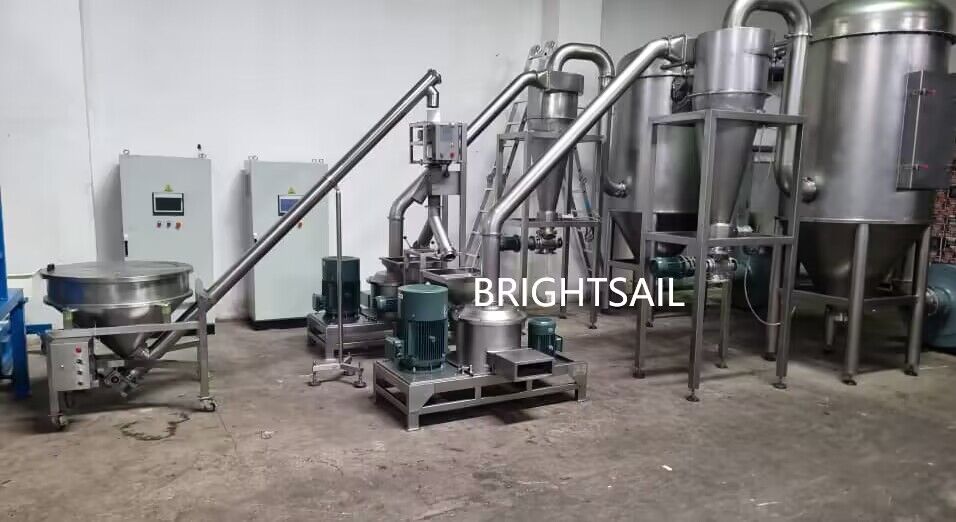
5.1 Unstable Fineness (European Calcium Carbonate Case)
Customer Background: A European processing plant produced ultra-fine calcium carbonate using a standard pulverizer. Despite repeated adjustments to classifier and main motor speeds, finished powder fluctuated drastically between oversized and ultra-fine particles, failing to meet consistent commercial production standards.
Root Cause: The factory’s fan operated at fixed constant speed without variable frequency control. Unregulated high airflow extracted incompletely ground particles directly out of the chamber, resulting in severe particle size inconsistency.
Solution: We recommended installing a VFD (variable frequency drive) for flexible fan regulation. Reduced airflow slowed internal air velocity during ultra-fine powder processing, extending material grinding duration and stabilizing chamber airflow. After coordinated parameter calibration, the plant achieved fully stable particle fineness and improved product qualification rates.
Experience: Adjustable fan airflow is indispensable for ultra-fine powder manufacturing. Solely tuning mechanical rotation speeds cannot resolve persistent particle size instability.
5.2 Powder Always Too Fine (Sugar Powder Customer Case)
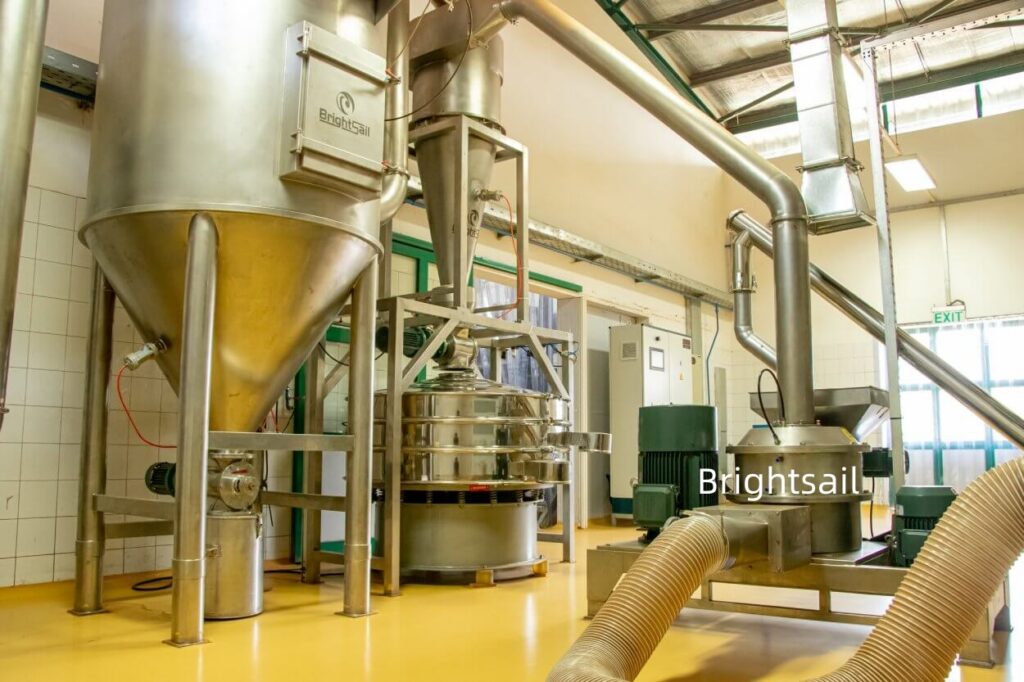
Customer Background: A sugar processing enterprise purchased an ACM grinder targeted for 200-mesh fine sugar production. When accepting new orders requiring 60-mesh coarse sugar, the team failed to produce qualified coarse powder even after lowering classifier and main motor speeds.
Root Cause: The Air Classifier Mill is mechanically optimized for powerful ultra-fine grinding. Electronic speed reduction has operational limits and cannot fully offset the equipment’s inherent high grinding intensity.
Solution: We guided the customer to replace the motor pulley for mechanical base speed reduction. Combined with relaxed classifier screening parameters, the equipment successfully delivered stable, qualified 60-mesh coarse sugar powder.
Experience: Classifier wheels only screen finished particles, while main motor speed defines overall grinding capability. Mechanical hardware modification is necessary when electronic parameter tuning cannot meet coarse powder production requirements.
5.3 Over-Fine Chemical Powder (European Chemical Customer Case)
Customer Background: A European chemical manufacturer operated an Air Classifying Mill to process brittle chemical powders. Following product formula updates, the factory needed coarser finished particles. All conventional adjustments, including reduced classifier speed, lower main speed and increased airflow, failed to coarsen final powder.
Root Cause: Brittle chemical raw materials crush extremely easily. Standard toothed chamber liners create continuous shear and impact force inside the grinding chamber, fragmenting particles even under minimal operational settings.
Solution: We customized smooth non-toothed liner rings to replace standard toothed components. The flat liner structure eliminates shear force and minimizes particle impact, fundamentally lowering grinding aggressiveness. Paired with precise parameter tuning, the factory successfully produced qualified coarse chemical powder.
Experience: All parameter adjustments have inherent limitations. Extremely brittle, easily crushed materials require structural upgrades and customized wear parts to achieve ideal coarse powder results.
6. Universal Tuning Principles for Mass Production
1. Parameters Must Adapt to Materials: All listed operational settings serve only as reference benchmarks. Final calibration must adapt to individual material moisture levels, oil content, brittleness and on-site working environments.
2. Stabilize Operation Before Tuning: Operators should only adjust parameters after confirming steady feeding performance and balanced internal airflow.
3. Multi-Parameter Linkage: Independent single-parameter changes inevitably cause unbalanced throughput, fineness drift and thermally induced material damage.
4. Structure Prevails Over Parameters: Material challenges such as adhesion and thermal sensitivity cannot be solved solely by parameter tuning, requiring targeted structural upgrades and customized accessories.
7. Conclusion
Precision fineness tuning for ACM systems relies on coordinated optimization of mechanical structure, multi-dimensional parameter settings and material property matching. The classifier wheel controls screening precision, fan airflow stabilizes internal air circulation, feeding rate balances operational load, customized chamber structures adapt to diverse materials, and consistent equipment maintenance ensures long-term stable production. However, it is important to clarify that this type of Air Classifier Mill is professionally engineered for fine and ultra-fine powder manufacturing. It delivers outstanding performance for powder sizes ranging from dozens of mesh to ultra-fine grades, yet it is not suitable for producing extremely coarse powder such as 20-mesh or 40-mesh particles. Every grinding machine has its own positioning and application boundaries. This is why we maintain a complete lineup of grinding equipment, providing dedicated machinery for coarse powder, medium-fine powder and ultra-fine powder production to cover all processing requirements.
Mastering these professional tuning strategies resolves common manufacturing challenges including unstable particle size, unqualified fineness, limited throughput and material adhesion. It helps food, chemical, spice and grain processing enterprises achieve efficient, stable and high-value powder manufacturing.