
Recently, we received two typical inquiries from global clients. An African client needs a sugar grinding machine for icing sugar processing, requiring the chamber temperature to be controlled below 40°C with a water jacket cooling system. Another European client customized a spice grinding machine and specifically required low temperature grinding technology to completely preserve the natural aroma of spices.
It is obvious that more and more manufacturers of heat-sensitive materials are paying attention to low temperature grinding and cryogenic grinding machine solutions. What exactly is low temperature grinding? Which production scenarios require a cryogenic grinding machine? What are the real differences between water jacket cooling, cold air injection, and liquid nitrogen freezing grinding? In this article, we will fully explain the core knowledge, selection logic, and common pitfalls of low-temperature pulverization.
1. What Is Low Temperature Grinding? Why Do We Need Cryogenic Grinding Machines?
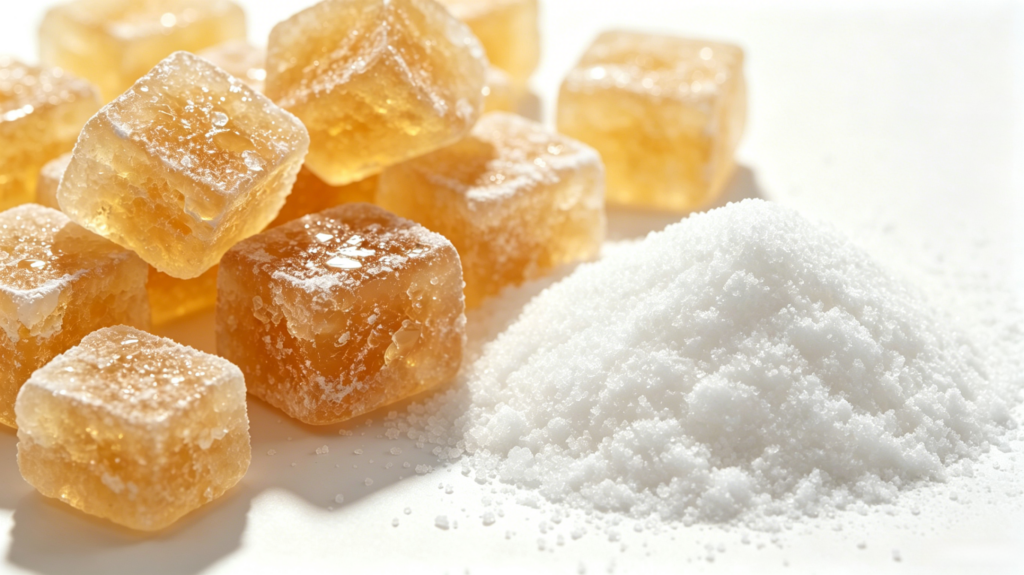
Most industrial grinders, spice grinding machines, and sugar grinding machines on the market adopt high-speed impact and shear grinding principles. The rotating speed usually reaches several thousand RPM, and some air classifying mills even exceed 10,000 RPM. High-speed mechanical operation and continuous material friction inevitably generate massive heat inside the grinding chamber, making temperature rise an unavoidable problem in conventional grinding.
For high-end processing scenarios such as food, spices, and health products, high temperature will directly damage the aroma, nutrients, color, and taste of powder products. A professional cryogenic grinding machine realizes stable low temperature grinding by adopting water cooling, cold air cooling, and liquid nitrogen freezing technologies to actively control chamber temperature, offset grinding heat, and protect the quality of heat-sensitive materials.
2. Which Scenarios Require Low Temperature Grinding?
Low-temperature processing is not necessary for all materials. However, the following three working scenarios require low temperature grinding and a cryogenic grinding machine to guarantee final product quality:
- 1. Strict requirements for finished product quality
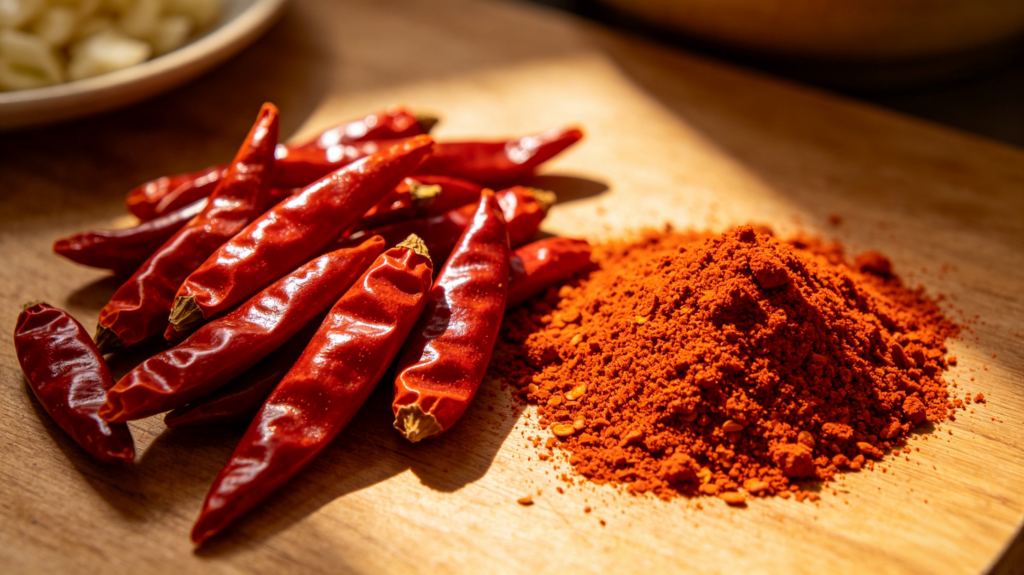
High-end spices, functional foods, and health products have strict standards for flavor and nutrition. High temperature in conventional grinding will cause aroma volatilization, nutrient loss, and dull color. Only reliable low temperature grinding equipment can effectively preserve the flavor, color, and active ingredients of materials.
- 2. Heat-sensitive materials prone to melting and sticking
Some raw materials soften, become sticky, or even melt under high temperature. Ordinary grinders easily suffer from material adhesion and chamber blockage, resulting in discontinuous production. Low temperature grinding with a professional cryogenic grinding machine is essential for stable production.
- 3. Precise control of material moisture content
High grinding temperature accelerates moisture evaporation, causing false weight loss, unstable water content, and inconsistent batch quality. Adopting low temperature grinding effectively stabilizes the moisture ratio and ensures batch consistency of finished powder.
3. Is Low Temperature Grinding Necessary for Icing Sugar Processing?
Many clients assume that sugar melts easily, so icing sugar production must adopt low temperature grinding. However, actual industrial production proves the opposite: conventional sugar powder production hardly requires cryogenic processing.
White sugar has a high melting point and brittle texture. It stays in the chamber of a sugar grinding machine for an extremely short time. The instantaneous temperature rise will not cause melting, sticking, or quality deterioration. Ordinary grinders and air classifying mills can achieve stable mass production.
The only exception is the production of ultra-fine icing powder above 1000 mesh. In this case, materials suspend and stay longer in the chamber, leading to obvious heat accumulation. Our engineers will evaluate whether to configure low temperature grinding solutions according to actual working conditions.
It is worth emphasizing that low temperature grinding and cryogenic grinding machines are not absolute upgrades. Blindly applying cryogenic processing will lead to negative problems such as moisture absorption, condensation, and powder mildew. In addition to icing sugar, dried fruits and dried vegetables are also not recommended for low temperature grinding. These materials contain natural sugar components, making them highly hygroscopic. When exposed to low-temperature cold air inside the grinding chamber, they easily absorb moisture rapidly, resulting in caking, quality degradation and poor storage stability.
4. Three Mainstream Low Temperature Grinding Methods (Real Effect Comparison)
The industry has three levels of temperature control solutions: water jacket cooling, direct chamber cold air injection, and liquid nitrogen cryogenic grinding machine ultra-low temperature processing. These solutions are compatible with grinders, spice grinding machines, sugar grinding machines, and air classifying mills, with huge differences in cooling effect and operating cost.
- 1. Water Jacket Cooling (Overhyped Pseudo-Low Temperature)
Many manufacturers promote water jackets as standard low temperature grinding configurations, which is actually exaggerated marketing with extremely limited cooling effect.
The working principle is to install a circulating water jacket on the outer wall of the grinder chamber. However, industrial grinding equipment has a very thick structure. The conventional chamber wall is about 10mm thick, and the internal gear ring of an air classifying mill is 15mm thick. Together, they form a 25mm thick metal heat barrier. The circulating cooling water outside cannot penetrate the thick metal to take away internal grinding heat.
The actual temperature reduction is only 5–8°C, which cannot achieve real low temperature grinding. Moreover, the huge temperature difference easily causes condensation, bringing serious food hygiene risks. Therefore, the water jacket cannot be regarded as a professional cryogenic grinding machine solution.
- 2. Direct Cold Air Injection (Most Practical & Cost-Effective)
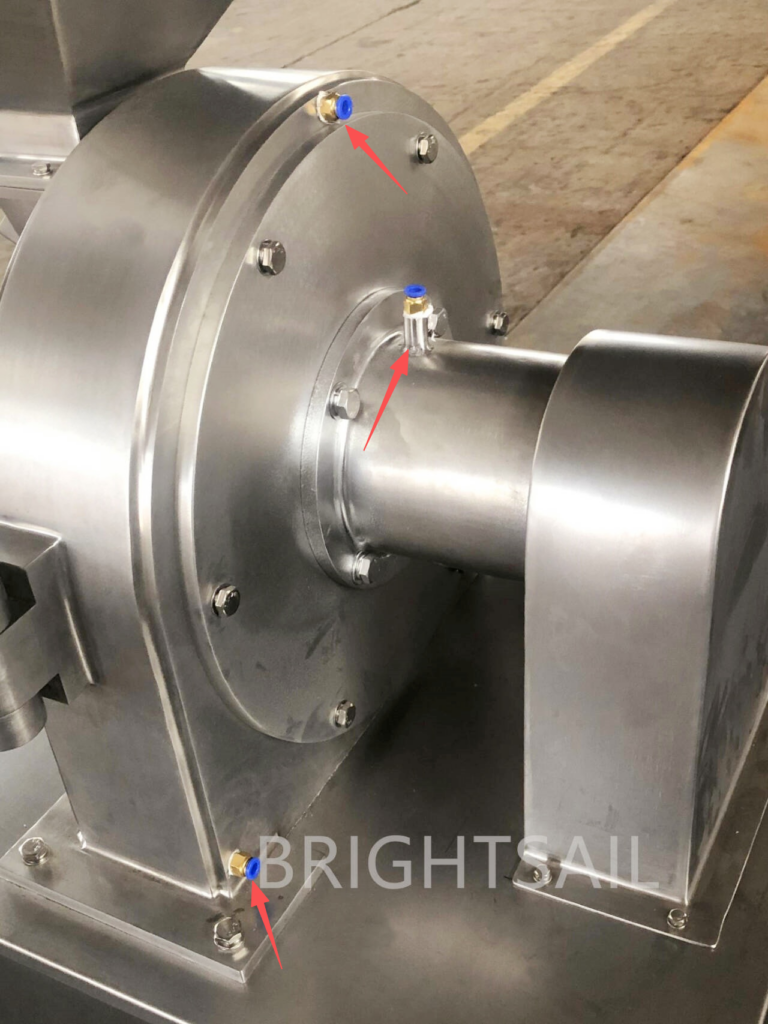
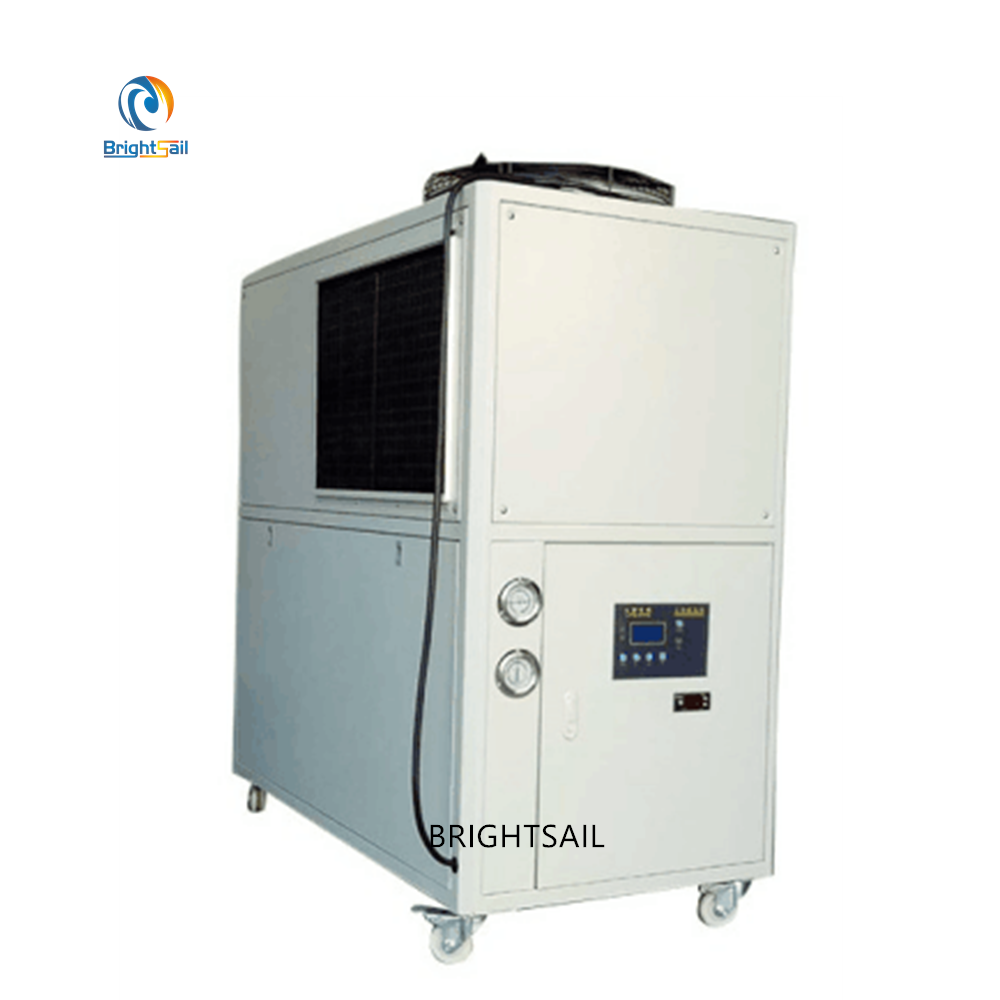
Injecting constant-temperature cold air (0°C, 5°C, 10°C) directly into the grinding chamber is the most mature and balanced low temperature grinding method in the industry. The cold air directly contacts materials and the chamber wall without metal thermal resistance, realizing stable and controllable temperature reduction, which is perfect for most food and spice processing scenarios.
For most high-end spice grinding machine users, cold air cooling is the best alternative to expensive cryogenic grinding machine equipment. It retains spice aroma and color without excessive production cost growth.
- 3. Liquid Nitrogen Cryogenic Grinding (Ultimate Ultra-Low Temperature Solution)
Liquid nitrogen grinding with a cryogenic grinding machine is the real ultimate low-temperature processing technology in the industry. Raw materials are frozen and embrittled by liquid nitrogen at ultra-low temperature, then pulverized instantly. The finished powder remains cold after discharging.
This technology maximally retains spice essential oil, natural flavor, and nutrients, making it the first choice for high-end spices and premium heat-sensitive materials. Although the equipment investment and liquid nitrogen operating cost of a cryogenic grinding machine are relatively high, more and more processing enterprises have invested in this project in recent years.
The core reason is the continuous upgrading of public dietary standards. Consumers have increasingly strict requirements on the original flavor and zero-loss quality of food and spices. Products processed by professional low temperature grinding technology have higher market premiums and stronger competitiveness. Nevertheless, due to high operating costs, liquid nitrogen cryogenic grinding is mostly applied to high-value products and is not yet popular among small and medium-sized factories.
5. Key Precautions for Low Temperature Grinding (Critical Pitfall Avoidance)
Many clients have a misunderstanding: purchasing a cryogenic grinding machine and applying low temperature grinding will definitely improve product quality. In actual production, lower temperature does not mean better quality — only matched temperature control brings stable production and high-quality powder.
- 1. Low-temperature grinding is not suitable for all materials
As mentioned above, sugar-containing materials such as icing sugar, dried fruits, and dried vegetables are highly hygroscopic. Exposing these materials to low-temperature air will cause rapid moisture absorption, resulting in powder caking, quality deterioration, and poor storage performance. Blindly using low temperature grinding will only bring more production problems.
- 2. The lower the temperature, the better (Dew Point Risk)
Temperature control must follow the dew point principle. Excessively low chamber temperature creates a huge temperature difference between the indoor environment and the grinding cavity, leading to condensation. Water droplets adhering to powder and equipment walls cause mold growth, bacterial reproduction, and serious food hygiene hazards. Unregulated ultra-low temperature processing is the main cause of unqualified powder products.
- 3. Control the temperature difference between room temperature and discharge temperature
A reasonable and small temperature difference between the workshop environment and finished powder temperature can effectively avoid moisture absorption and condensation, maintaining stable powder quality in long-term production.
- 4. Equip the grinding machine with insulation layers
Professional low temperature grinding and cryogenic grinding machine configurations are equipped with complete thermal insulation structures. The insulation layer reduces internal and external air convection, fundamentally lowering condensation risks and stabilizing low-temperature grinding effects.
6. Conclusion
Low temperature grinding and cryogenic grinding machine technologies greatly optimize the processing quality of heat-sensitive materials such as spices, foods, and health products. However, different cooling solutions have huge differences in cooling effect, cost, and applicable materials.
Water jacket cooling is a pseudo-low-temperature solution with limited effect and hidden hygiene risks. Cold air injection is the most cost-effective and mainstream solution for most standard spice and food production. Liquid nitrogen cryogenic grinding provides ultimate quality preservation but is only suitable for high-value products due to its high cost.
Selecting the right grinding method according to material characteristics is the core of stable production. Inappropriate low-temperature settings will instead cause moisture absorption, condensation, caking, and quality loss. We will continue to update more practical cases and industry skills of low temperature grinding to help manufacturers optimize production processes and improve product competitiveness.