
1. Introduction
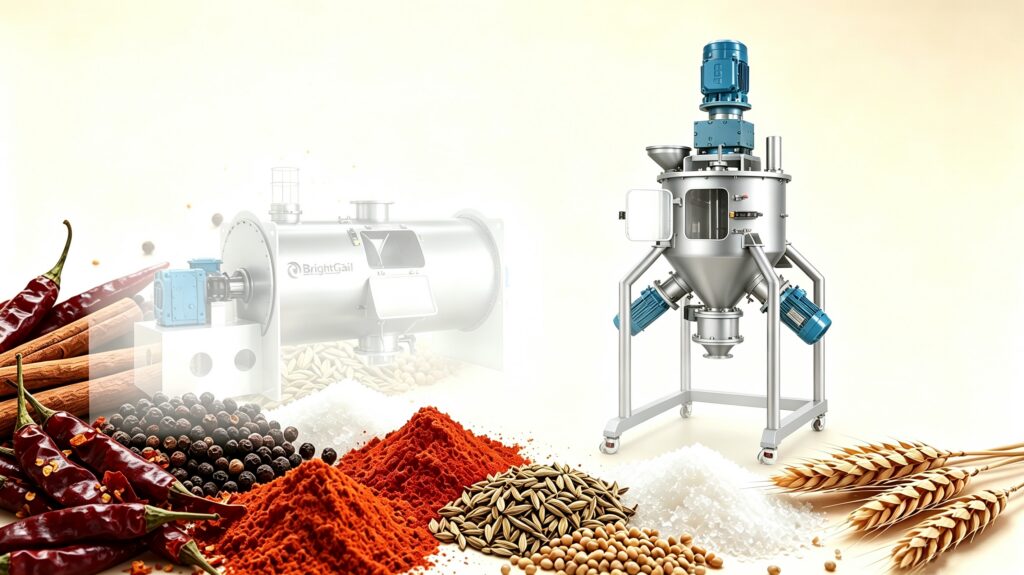
Mixed spice blends are widely used in industrial seasoning, catering processing, meat product manufacturing, and instant food production. Unlike single-ingredient spice grinding, mixed spice formulas usually consist of more than a dozen different raw materials, including seeds, roots, stems, leaves, fibrous herbs, low-oil and high-oil spices.
Food and spice manufacturers worldwide develop their exclusive blend recipes, such as Chinese thirteen-spice powder and international curry powder, requiring professional curry powder grinder equipment for stable production. An increasing number of spice factories, seasoning companies, meat processing plants, and instant food manufacturers choose to produce custom mixed spice powder in-house to stabilize flavor quality and protect formula confidentiality.
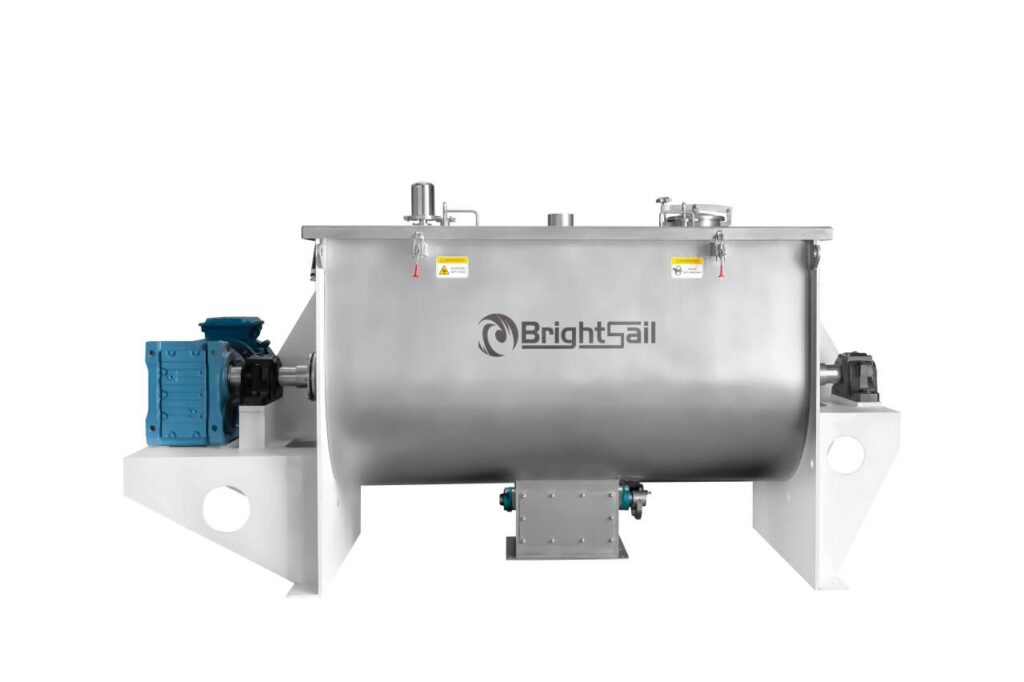
However, grinding blended spices is one of the most challenging processes in the industry. Each ingredient has unique hardness, density, fiber content, oil content, and heat sensitivity. Processing diverse spices together with a singleindustrial spice grinder often leads to inconsistent particle size, powder segregation, uneven texture, inconsistent taste, color deviation, and unstable batch quality. These issues frequently cause customer complaints and product rejection.
A key debate in spice manufacturing has always been: Should you mix spices first then grind, or grind each spice individually then blend?
The optimal workflow depends entirely on production capacity, budget, and formula composition. In this article, we share real overseas customer cases and professional industrial solutions to help processors achieve uniform particle size with the right spice milling machine workflow and equipment selection.

2. Budget-Friendly Workflow for Small & Medium Production: Mix First, Grind Later
For small to medium-sized factories with limited investment and flexible batch production needs, the most practical and cost-effective process is: pre-crushing → uniform mixing → collective grinding → sieving → secondary blending.
The procedure starts with pre-breaking large and uneven raw materials. All ingredients are then blended uniformly before being sent to the commercial spice grinding machine for final powder processing. This simple workflow requires low equipment investment and suits multi-batch small-scale production.
Even so, this method has an obvious technical flaw: different spices have completely different grinding difficulty. Most small factories use a universal hammer mill with a fixed 1mm screen and constant speed. Under unified parameters, soft materials like turmeric grind into fine powder easily, while hard seeds such as cumin and coriander produce much coarser particles.
The final mixed spice powder suffers from severe particle segregation: fine powder floats on the top while coarse grains sink to the bottom, resulting in inconsistent taste and poor product appearance.
To solve this problem, the industry adopts a mature closed-loop correction process: grinding → sieving → coarse powder regrinding → final remixing.
After grinding, the powder is sieved to separate unqualified coarse particles, which are re-fed into the powder grinder machine for secondary milling. All qualified fine powder goes back to the mixer for full homogenization. This batch-based workflow (100kg–200kg per batch) effectively eliminates particle segregation and stabilizes finished product quality, ideal for small and medium spice processors.
3. Custom Machine Selection Based on Spice Formula
There is no one-size-fits-all spice grinder for mixed spice blends. Equipment selection must be determined by the main ingredients and overall oil content of the formula. Based on our successful cases in Sri Lanka, Southeast Asia, and Europe, we summarize the most suitable machines for different blend types:
curry grinder
1. Seed-dominant blends (curry powder, cumin, coriander, pepper) – Core application for systems
For formulas mainly composed of oily spice seeds, the BSZ contraplex pin mill is far more suitable than a traditional hammer mill. As a professional spice pin mill, it features screen-free operation, instant impact grinding, and low heat generation. It avoids screen clogging, reduces oil separation, and delivers much more uniform particle size for high-end curry powder, serving as the ideal curry powder milling machine for export-grade curry seasoning production.

2. Chili-dominant blends (barbecue seasoning, spicy mixed powder)
For chili-based spicy seasonings, a standard hammer mill or 3-stage heavy-duty hammer mill unit is the best choice. It offers high throughput, strong adaptability to tough chili fibers, and stable continuous production without material blocking.
3. Turmeric & ginger-dominant fine powder blends (60–80 mesh)
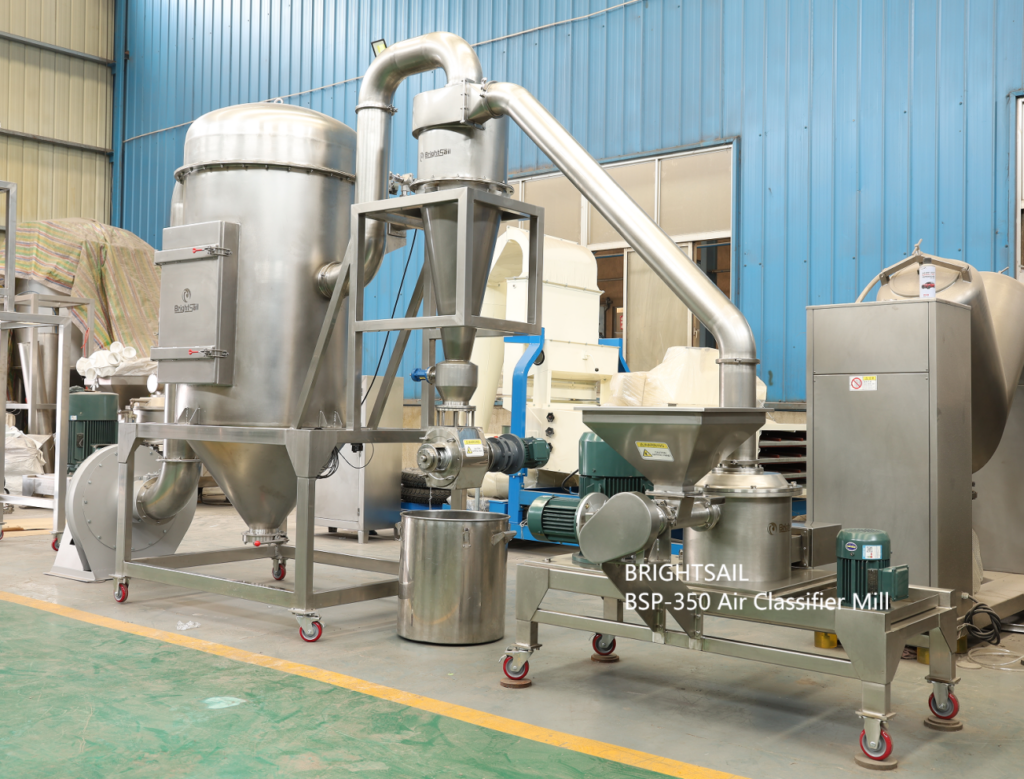
For ultra-fine, clean, and bright spice powder dominated by dry fibrous ingredients like ginger and turmeric, the air classifier mill (ACM) delivers superior fineness and uniformity.
A common industry misunderstanding is that ACM mills cannot process mixed spices. In fact, ACM machines work perfectly for low-oil blend formulas. If the overall oil content is low and no sticky oily ingredients prevail, the ACM spice pulverizer produces ultra-fine powder with stable quality and precise particle classification.
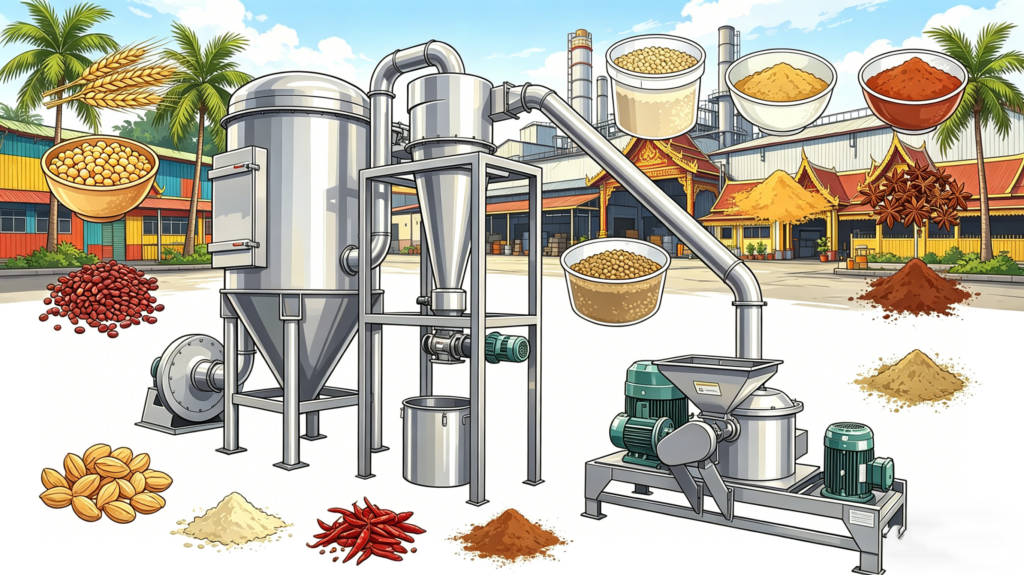
4. High-End Factory Workflow for Large-Scale & Export-Grade Production: Grind Separately, Then Mix
For large-scale manufacturers and export-oriented spice brands with strict quality standards, the “mix-first-grind-later” method cannot meet high-end requirements. Blending dozens of ingredients with different hardness, oil content, and fiber properties before grinding inevitably causes uneven fineness, inconsistent flavor release, and unstable batch performance.
Therefore, premium factories adopt a refined production process: categorised individual grinding → unified particle size → precise batching → final homogenized blending.
The core principle is to avoid forcing all spices into one industrial spice grinder. Instead, ingredients are classified and processed by matched professional machines to reach uniform fineness separately, then precisely batched and mixed to guarantee consistent flavor, density, and particle distribution.
In actual mass production, complex spice formulas are divided into four categories with dedicated milling solutions:
1. Common spice seeds (cumin, coriander, pepper): Processed by BSZ contraplex pin mill; hammer mills are also available for cost-sensitive production.

2. High-fiber root spices (ginger, turmeric, cinnamon): Perfectly matched with air classifier mill (ACM) for ultra-fine and uniform powder.
3. Chili and tough fibrous spices: Processed by standard or 3-stage hammer mill units for high-capacity stable production.
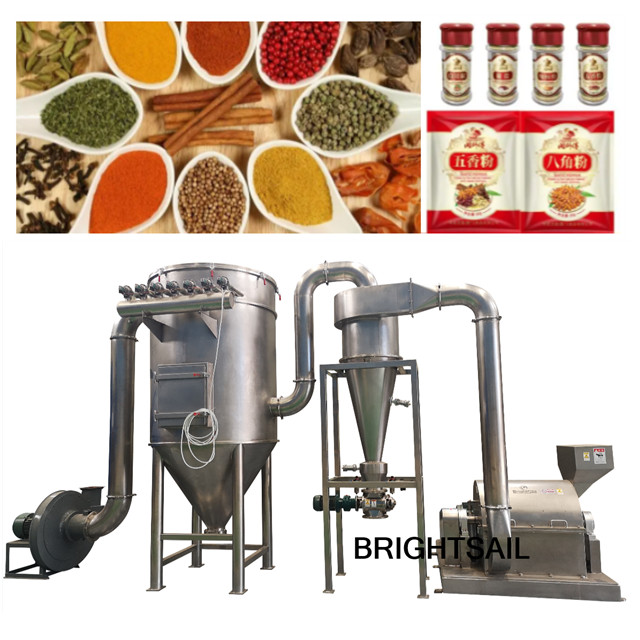
4. Ultra-high-oil luxury spices (nutmeg, clove, cardamom): These heat-sensitive oily spices cannot be processed by room-temperature grinding. They require a spice cryogenic grinding machine — BSZ large-chamber contraplex pin mill equipped with a liquid nitrogen cooling system. Ultra-low temperature solidifies grease, prevents oil leakage and caking, and protects original aroma, avoiding quality degradation when mixed with dry spices.
5. Professional Production Tradeoffs & Industrial Practical Tips
Many customers ask whether they need one dedicated spice milling machine for each single spice. From an economic perspective, purchasing dozens of grinders is unnecessary and cost-ineffective.
The most practical industrial solution iscategory-based centralized grinding. Spices with similar physical properties are grouped and processed by one dedicated machine. Four sets of professional grinding equipment can cover all common mixed spice formulas, balancing investment cost and production stability.
Nevertheless, some top-tier large factories adopt one-machine-one-material configuration. The main purpose is not to increase output, but to reduce cross-contamination, save cleaning time, and protect confidential formulas, which is essential for high-end customized and export-grade spices.
The biggest challenge of this high-end workflow lies in precise batching and secondary blending. Multi-type spice powders with different fineness and density require accurate weighing and intelligent mixing systems, which form the core standardized production barrier for premium seasoning manufacturers.
6. Conclusion
The core difficulty of mixed spice blending and grinding is never insufficient machine fineness, but mismatched equipment and unreasonable production workflows. Uniform particle size depends on scientific classification and parameter adjustment, not unified rough grinding.
Small and medium-sized manufacturers with limited budgets can adopt the economical “mix first, grind later, sieve and re-blend” process, equipped with hammer mills and contraplex pin mills. Dry and fine-focused formulas can choose air classifier mills for better powder performance.
Large-scale and export-oriented factories must adopt refined segmented processing: grind different spice categories with matched industrial spice grinder equipment, and apply spice cryogenic grinding for ultra-high-oil luxury ingredients to stabilize aroma and particle quality.
By matching reasonable workflows and professional spice grinding machines, manufacturers can completely solve common pain points such as particle segregation, uneven fineness, inconsistent taste, and unstable batches, achieving standardized, high-quality, export-grade mixed spice and curry powder mass production with professional mixed spice powder grinder solutions.