
Preface
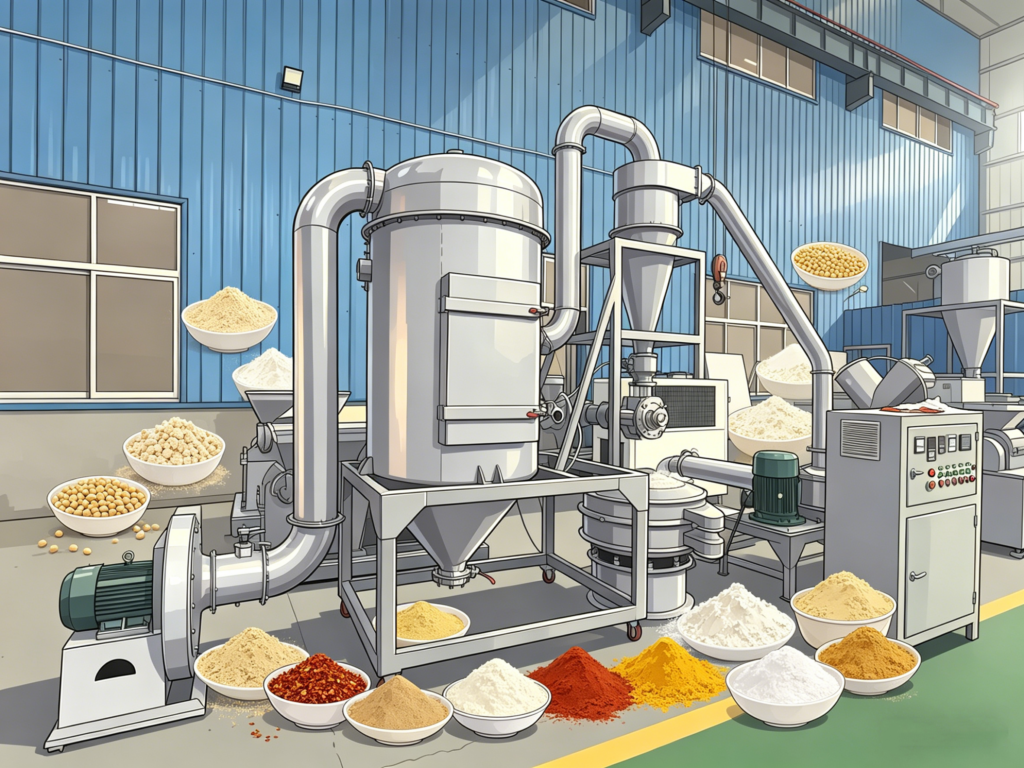
- Core Premise: Our company conducts grinding tests for different customers and different materials every week. Among them, the test demand for Air Classifier Mill (hereinafter referred to as Pulverizer, or simply “ultra-fine”) is particularly prominent.
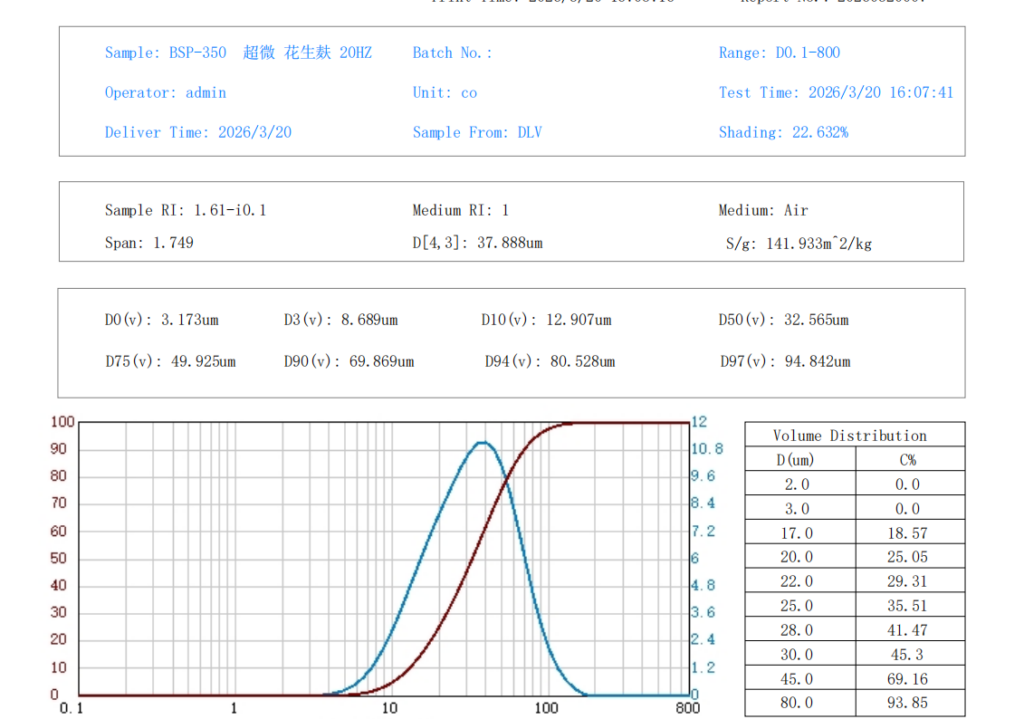
- Test Status: In most cases, the powder crushed by the Pulverizer can 100% meet customer requirements, with a qualified pass rate (for example, if the customer requires 120 mesh, the particle size analysis report shows that almost all pass).
- Core Question: Since the test results are perfect, why do we still recommend customers to install a Vibrating Sifter Machine (or Vibrating Sifter) under the cyclone separator? Why do some customers take the initiative to request adding this configuration?
I. Raw Material Errors Between Testing and Actual Production, Needing Vibrating Sifter for Final Filtration
- Test Scenario: The raw materials used are strictly screened, with high purity and no impurities, which can perfectly adapt to the grinding accuracy of the Air Classifying Mill (Pulverizer), resulting in ideal test results.
- Actual Production Scenario: Raw materials cannot be 100% pure, and are prone to mixing with hard-to-grind impurities, which cannot be effectively removed by the Pulverizer.
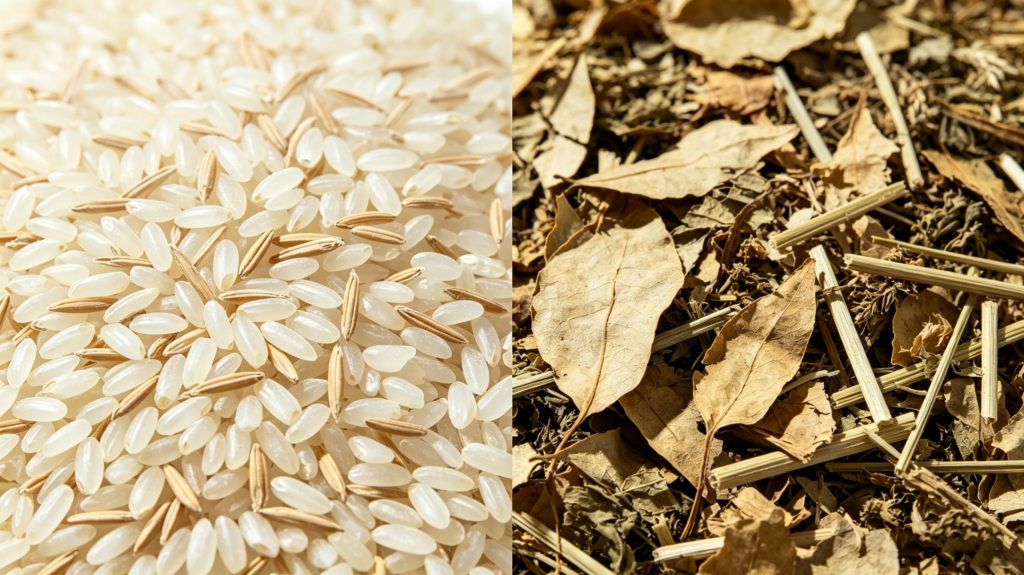
- Case 1: A small amount of rice husk may be mixed in rice raw materials. Rice husk is hard and difficult to be ground into fine powder, and the Vibrating Sifter can sift out such unground impurities.
- Case 2: It is impossible to completely remove stems/hard veins from plant leaf raw materials. Under the same classification frequency, the grinding fineness of stems and leaves is quite different. The Air Classifier Mill cannot distinguish between them, and the Vibrating Sifter Machine can sift out the coarse materials.
II. Powders Are Prone to Agglomeration, and Vibrating Sifter Can Remove Unqualified Agglomerates
- Core Law: The finer the powder, the more likely it is to agglomerate. Agglomerates are not qualified powders and need to be sifted out by a Vibrating Sifter.
- Key Scenario: Powders in the food industry are most prone to agglomeration, with specific classifications and characteristics:
- Sugary and high-dairy powders: Milk powder, whey powder, milk tea powder, cocoa powder, chocolate powder, which stick into lumps when damp or heated.
- Starch and colloid powders: Corn starch, tapioca starch, modified starch, maltodextrin, xanthan gum, guar gum, which clump after absorbing moisture and will re-agglomerate even after grinding.
- High-protein and oil-containing powders: Soy protein, pea protein, peanut protein, sesame powder, walnut powder, coconut milk powder, which stick into lumps after oil seepage.
- Seasonings and spices: Chili powder, pepper powder, turmeric powder, garlic powder, salt and sugar-containing compound seasonings, which absorb moisture very quickly and clump immediately after grinding.
- Sugar powders: Icing sugar, glucose, lactose, maltose, which melt and stick into hard lumps when absorbing moisture.
III. Mechanical Operation Hidden Dangers: Coarse Particles Mixed Due to Residual Materials at Startup, Needing Vibrating Sifter for Interception
- Core Problem: Although the Pulverizer (Air Classifier Mill) is equipped with a classifying wheel, there is a problem of residual materials in the machine cavity during actual operation, which affects the purity of the finished product.
- Residual Reason: When the machine is shut down, the internal space of the Air Classifying Mill is large, and a layer of old powder will adhere to and deposit around the classifying wheel, guide disc and grinding disc.
- Startup Hidden Danger: When just started, the air flow and rotation speed are unstable, the classifying wheel has not reached the rated speed, and the air flow field has not been fully established, resulting in temporarily weakened classification accuracy.
- Direct Consequence: The coarse particles, agglomerates and unground deposits in the residual old powder are directly rolled out by the air flow at the moment of startup without full grinding, leading to obviously coarse discharge in the first few kilograms. Customers are likely to mistake the Pulverizer for poor performance, but it is actually the residual materials at startup.
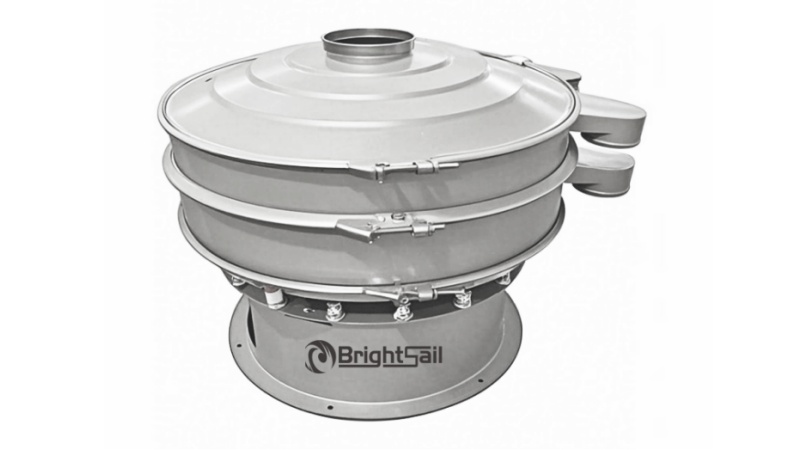
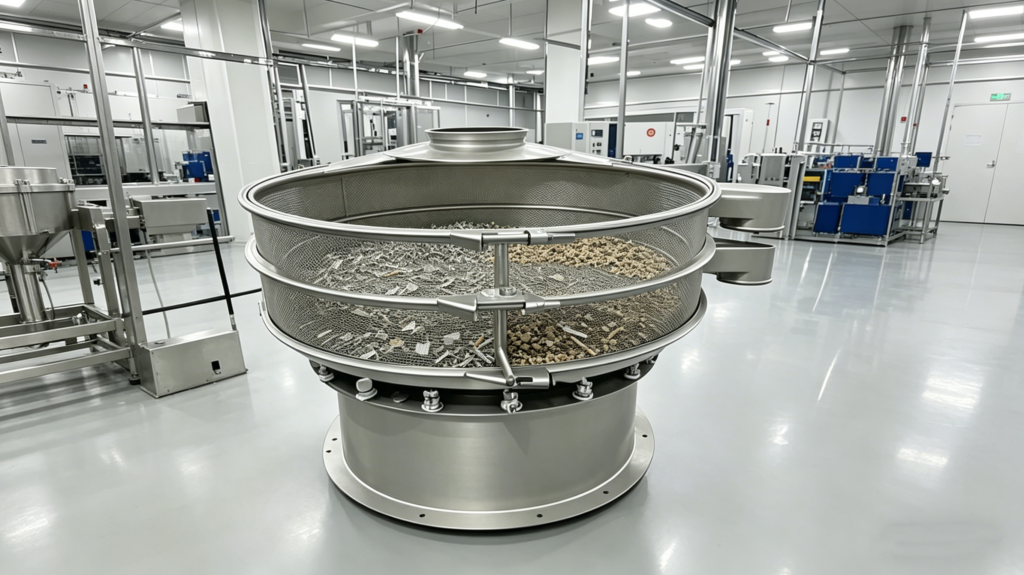
- Role of Vibrating Sifter: Precisely intercept the coarse particles left at startup to avoid them mixing into the finished product.
IV. Vibrating Sifter Can Improve Grinding Efficiency, Avoid Over-Grinding, and Enhance Product Quality
- Industry Misunderstanding: Many new users blindly pursue the finer the powder, the better, and adjust the classification frequency to a very high level (for example, requiring 150 mesh but actually grinding to 300 mesh), resulting in over-grinding.
- Core Value of Vibrating Sifter:
- It allows reducing the classification speed, eliminating the need for repeated re-grinding of coarse powder, and greatly improving production capacity.
- It shortens the residence time of powder in the Air Classifier Mill (Pulverizer) cavity, reduces the grinding temperature, avoids powder damage due to high temperature, and improves product quality.
- Industry Consensus: Professional users are well aware of this and recognize the role of Vibrating Sifter Machine in improving efficiency and optimizing quality.
V. Vibrating Sifter Is a Safety Line in the Food Powder Industry to Intercept Foreign Bodies
- Core Position:Vibrating Sifter is one of the indispensable safety lines in the food powder industry.
- Actual Hidden Danger: In actual production, it is inevitable that foreign bodies (such as metal fragments, plastic, fibers) will fall into the powder.
- Industry Requirement: Such foreign bodies are absolutely not allowed to be mixed into food powder, and the Vibrating Sifter Machine can accurately intercept them to keep the bottom line of food safety.
VI. Conclusion
- Reiterate the Core: The Air Classifier Mill (Pulverizer) is responsible for basic grinding and classification to ensure the basic fineness of the powder; the Vibrating Sifter is responsible for terminal inspection, solving problems such as the gap between testing and actual production, mechanical hidden dangers, agglomeration , and foreign bodies.
- Core Summary: The Vibrating Sifter Machine is not an “unnecessary step”, but a key configuration to ensure product quality, avoid the risk of batch unqualified products, and improve production efficiency and stability.
- Extended Appeal: Whether recommended by our company or actively requested by customers, installing a Vibrating Sifter is the optimal choice for actual production needs, especially suitable for industries such as food that have high requirements for purity and safety.